College of Agronomy, Inner Mongolia Agricultural University, Hohhot, 010019, Inner Mongolia, China.
Swift Current Research and Development Centre, Agriculture and Agri-Food Canada, Swift Current, SK, S9H 3X2, Canada.
Sci Rep. 2020 Nov 16;10(1):19896. doi: 10.1038/s41598-020-76978-3.
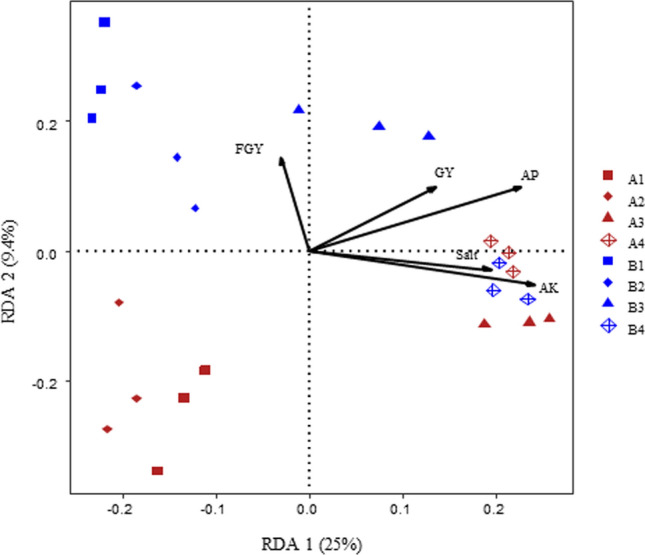
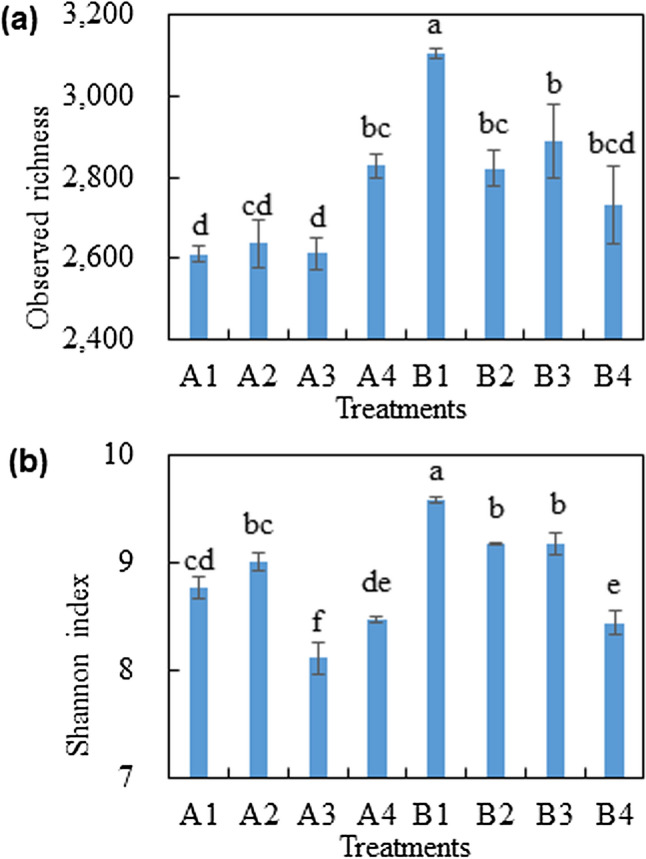
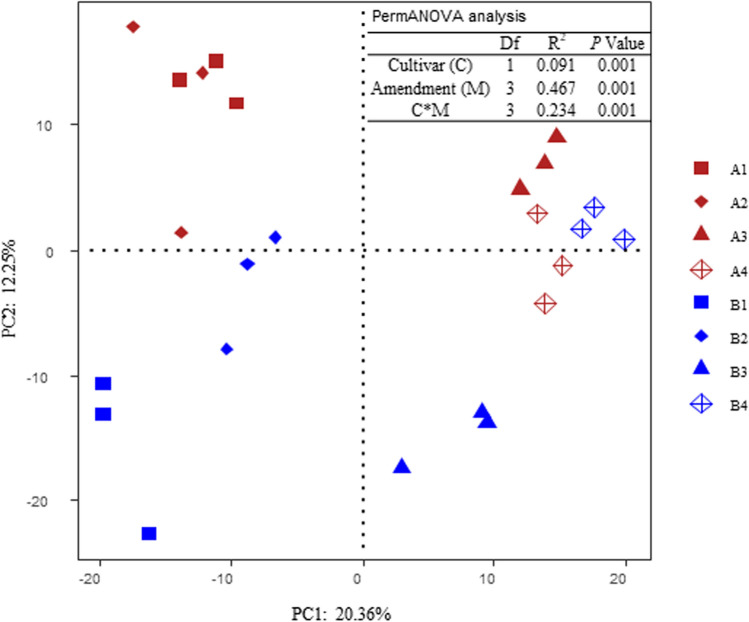
Saline-alkaline conditions can limit crop productivity and the role of soil microbes in nutrient cycling in arid and semi-arid regions throughout the world. A better understanding of how soil amendments and plant varieties affect rhizosphere microbial communities in saline-alkaline environments is important for the development of sustainable and productive agricultural systems under these challenging conditions. The objective of this study was to determine the effect of organic soil amendments on crop yield, soil physicochemical properties and rhizosphere bacterial communities of two oat cultivars in a saline-alkaline soil. The experiment was conducted in a semi-arid region of Northern China and involved growing two oat cultivars with varying levels of saline-alkaline tolerance under four different amendment treatments: (1) control (no amendments), (2) bio-fertilizer, (3) rotten straw, and (4) combination of bio-fertilizer and rotten straw. The combined bio-fertilizer and rotten straw amendment treatment resulted in the highest oat yields, reduced soil pH, and increased soil salt content for both cultivars. Baiyan2 (tolerant cultivar) had a higher bacterial α-diversity, relative abundance of Proteobacteria and Acidobacteria, and lower relative abundance of Firmicutes compared to Caoyou1 (sensitive cultivar). The rotten straw treatment and combined amendment treatment decreased bacterial α-diversity and the abundance of Proteobacteria, and increased the abundance of Firmicutes, which were positively correlated with soil salt, available nitrogen, phosphorous and potassium for both cultivars. Our study suggested using tolerant oat cultivars with the combined application of rotten straw and bio-fertilizer could be an effective strategy in remediating saline-alkaline soils.
在世界各地的干旱和半干旱地区,盐碱性条件会限制作物的生产力,并影响土壤微生物在养分循环中的作用。更好地了解土壤改良剂和植物品种如何影响盐碱性环境中的根际微生物群落,对于在这些具有挑战性的条件下开发可持续和高产的农业系统非常重要。本研究的目的是确定有机土壤改良剂对两种燕麦品种在盐碱性土壤中的作物产量、土壤理化性质和根际细菌群落的影响。该实验在中国北方的半干旱地区进行,涉及在四种不同的改良剂处理下种植两种耐盐碱性不同的燕麦品种:(1)对照(无改良剂)、(2)生物肥料、(3)腐秆剂和(4)生物肥料和腐秆剂的组合。生物肥料和腐秆剂的组合改良剂处理可使两种燕麦品种的产量最高,降低土壤 pH 值,增加土壤盐分含量。与 Caoyou1(敏感品种)相比,Baiyan2(耐品种)具有更高的细菌α多样性、相对丰度的变形菌门和酸杆菌门,以及较低的相对丰度的厚壁菌门。腐秆剂处理和组合改良剂处理降低了细菌α多样性和变形菌门的丰度,增加了厚壁菌门的丰度,这与两种燕麦品种的土壤盐分、有效氮、磷和钾呈正相关。我们的研究表明,使用耐盐碱性燕麦品种,并结合使用腐秆剂和生物肥料,可能是修复盐碱性土壤的有效策略。