Yekta Reza, Vahid-Dastjerdi Leily, Norouzbeigi Sahar, Mortazavian Amir M
Student Research Committee, Department of Food Science and Technology, National Nutrition and Food Technology Research Institute, Faculty of Nutrition and Food Technology, Shahid Beheshti University of Medical Sciences, Tehran, Iran.
Food Safety Research Center, Department of Food Science and Technology, National Nutrition and Food Technology Research Institute, Faculty of Nutrition Sciences and Food Technology, Shahid Beheshti University of Medical Sciences, Tehran, Iran.
Food Control. 2021 May;123:107754. doi: 10.1016/j.foodcont.2020.107754. Epub 2020 Nov 11.
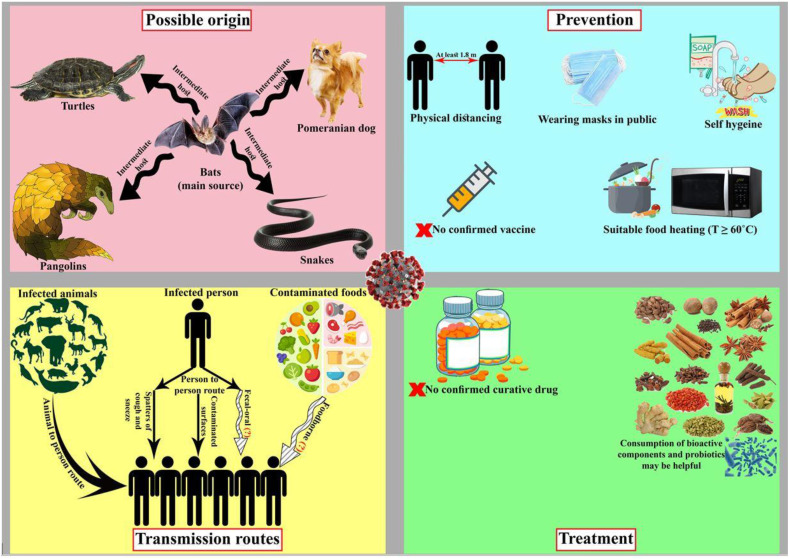
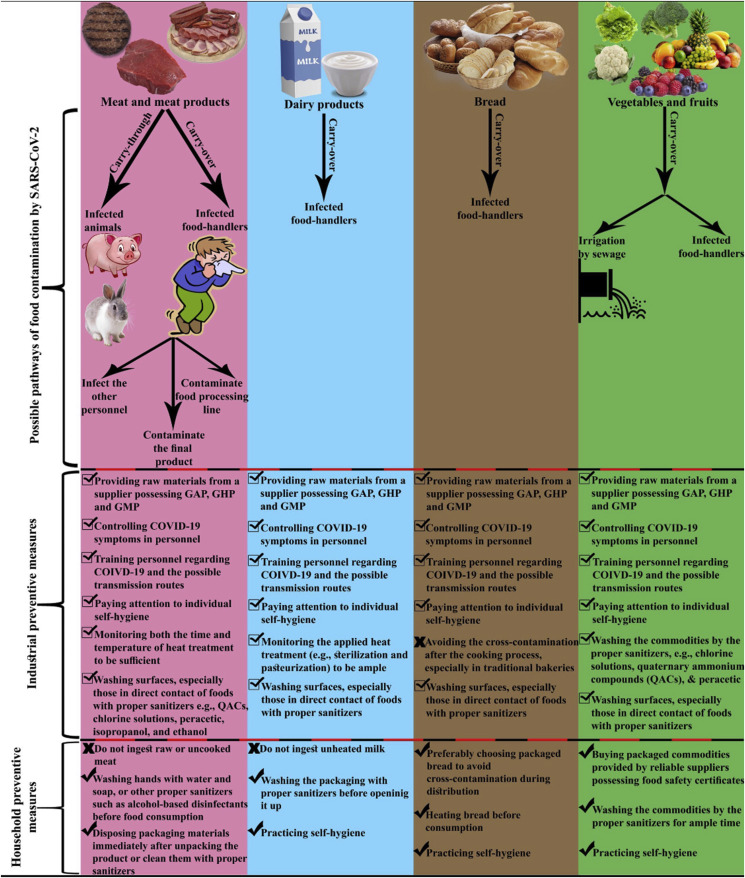
At present, humanity is confronting with a novel life-threatening challenge from the COVID-19 pandemic infectious disease caused by the novel coronavirus SARS-CoV-2. To date, the various transmission modes of SARS-CoV-2 have not been completely determined. Food products might be carriers for SARS-CoV-2. The COVID-19 pandemic not only can spread through the respiratory tract like SARS and MERS but also the presence of the SARS-CoV-2 RNA in feces of several patients, shows the possibility of their fecal-oral route spread. Besides, people with gastric problems, including gastric intestinal metaplasia and atrophic gastritis, may be susceptible to this kind of COVID-19 infection. Accordingly, food may act as a potential vehicle of SARS-CoV-2 due to whether carry-through or carry-over contaminations. Considering carry-over, SARS-CoV-2 spread from personnel to food products or food surfaces is feasible. Beyond that, some shreds of evidence showed that pigs and rabbits can be infected by SARS-CoV-2. Thus, viral transmission through meat products may be conceivable, indicating carry-through contamination. As the spread rate of SARS-CoV-2 is high and its stability in different environments, especially food processing surfaces, is also remarkable, it may enter foods in whether industrialized processing or the traditional one. Therefore, established precautious acts is suggested to be applied in food processing units. The present review elucidates the risk of various staple food products, including meat and meat products, dairy products, bread, fruits, vegetables, and ready-to-eat foods as potential carriers for transmission of SARS-CoV-2.
目前,人类正面临由新型冠状病毒SARS-CoV-2引发的新型冠状病毒肺炎这一危及生命的挑战。迄今为止,SARS-CoV-2的各种传播方式尚未完全确定。食品可能是SARS-CoV-2的载体。新型冠状病毒肺炎不仅可以像SARS和中东呼吸综合征那样通过呼吸道传播,而且一些患者粪便中存在SARS-CoV-2 RNA,这表明了其粪口途径传播的可能性。此外,患有胃部问题(包括胃肠化生和萎缩性胃炎)的人可能易感染这种新型冠状病毒肺炎。因此,由于携带污染或残留污染,食品可能成为SARS-CoV-2的潜在传播媒介。考虑到残留污染,SARS-CoV-2从人员传播到食品或食品表面是可行的。除此之外,一些证据表明猪和兔子可被SARS-CoV-2感染。因此,通过肉类产品进行病毒传播是可以想象的,这表明存在携带污染。由于SARS-CoV-2的传播速度快,且其在不同环境(尤其是食品加工表面)中的稳定性也很显著,它可能在工业化加工或传统加工过程中进入食品。因此,建议在食品加工单位采取既定的预防措施。本综述阐明了各种主食产品(包括肉类和肉类产品、乳制品、面包、水果、蔬菜和即食食品)作为SARS-CoV-2潜在传播载体的风险。