Department of Interdisciplinary Medicine, University of Bari "Aldo Moro", Bari, Italy.
Department of Basic Medical Sciences, Neuroscience and Sense Organs, University of Bari "Aldo Moro", Bari, Italy.
Nephrol Dial Transplant. 2021 Feb 20;36(3):452-464. doi: 10.1093/ndt/gfaa264.
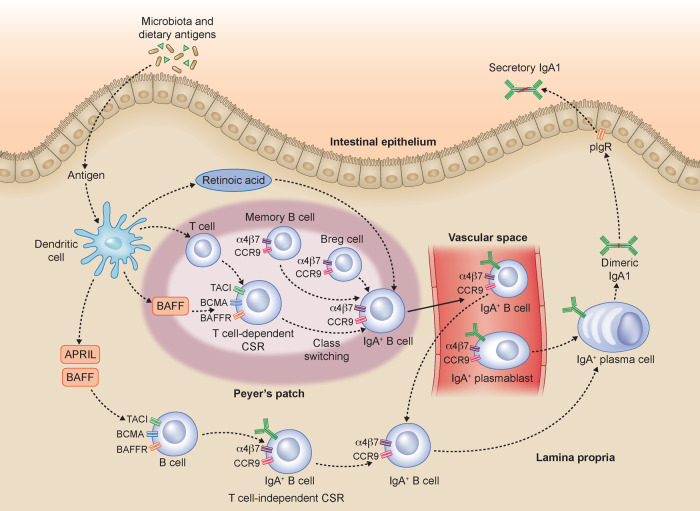
Immunoglobulin A nephropathy (IgAN) is the most frequent primary glomerulonephritis. The role of the microbiota and mucosal immunity in the pathogenesis of IgAN remains a key element. To date, the hypothetical relationship between commensal bacteria, elevated tumour necrosis factor (TNF) superfamily member 13 [also known as B-cell activating factor (BAFF)] levels, perturbed homoeostasis of intestinal-activated B cells and intestinal IgA class switch has not been clearly shown in IgAN patients.
We studied the intestinal-renal axis connections, analysing levels of BAFF, TNF ligand superfamily member 13 (APRIL) and intestinal-activated B cells in IgAN patients, healthy subjects (HSs) and patients with non-IgA glomerulonephritides.
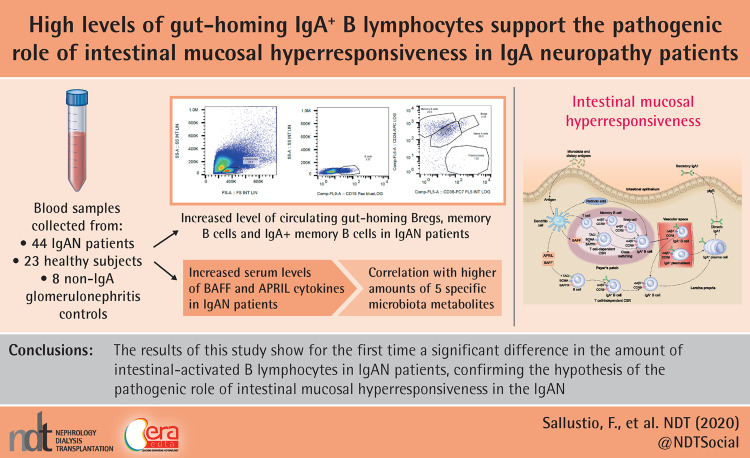
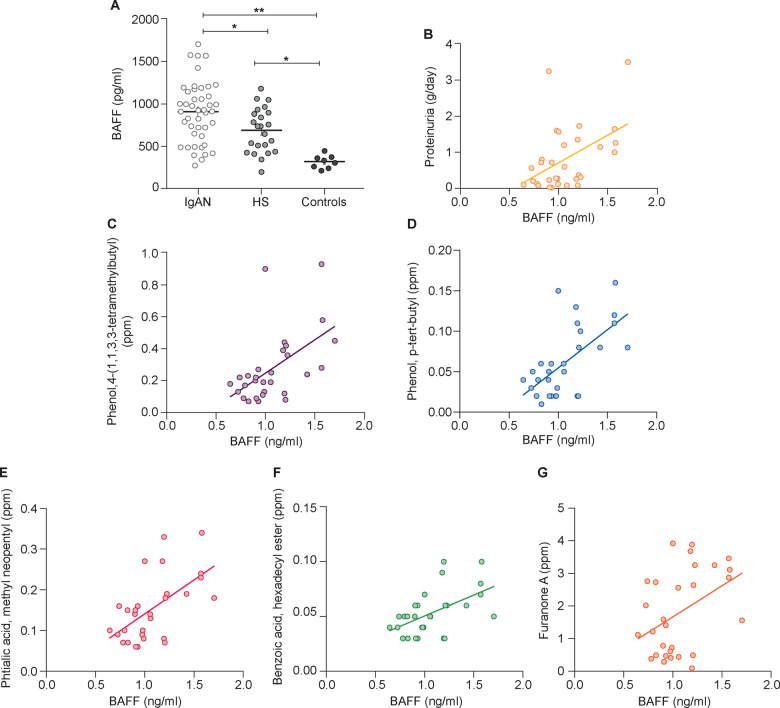
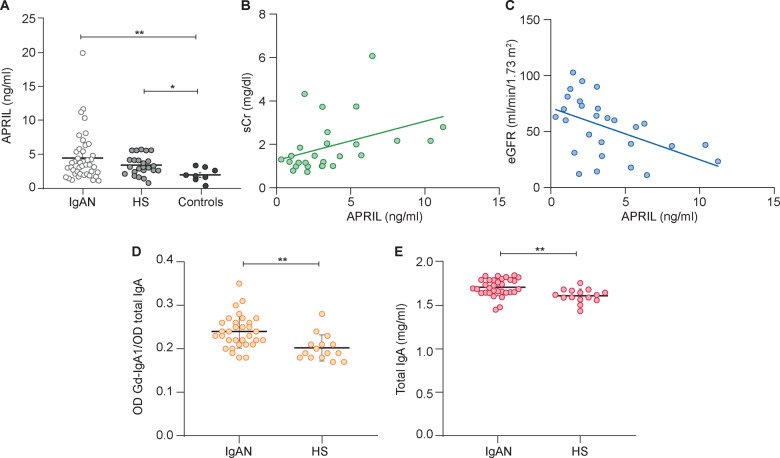
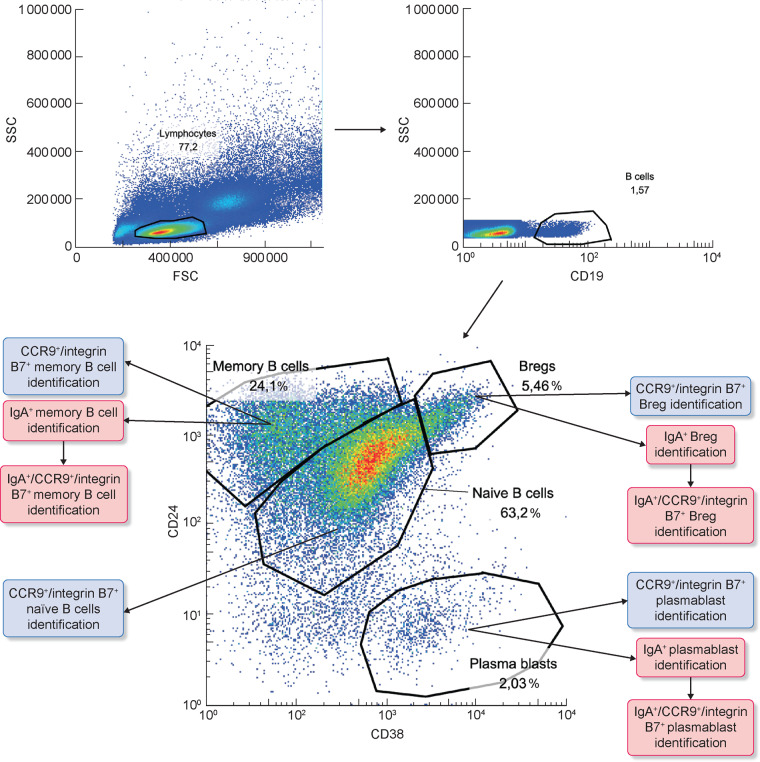
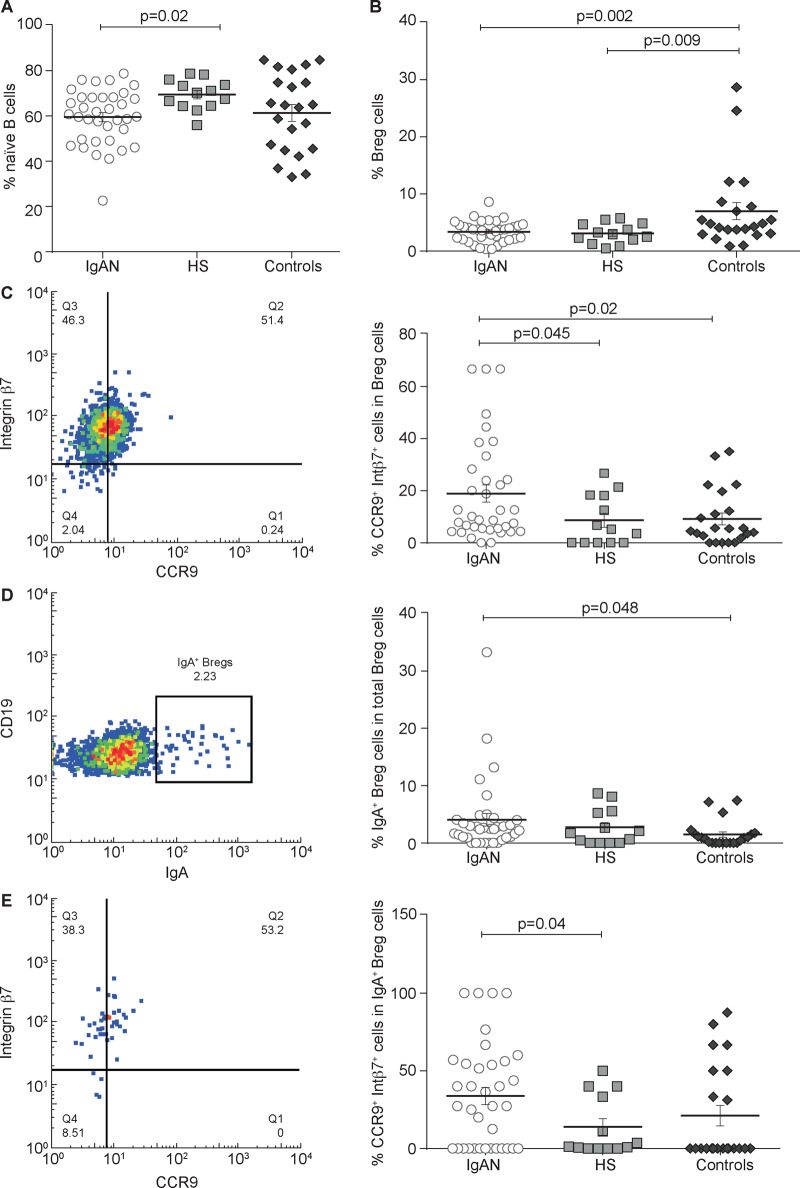
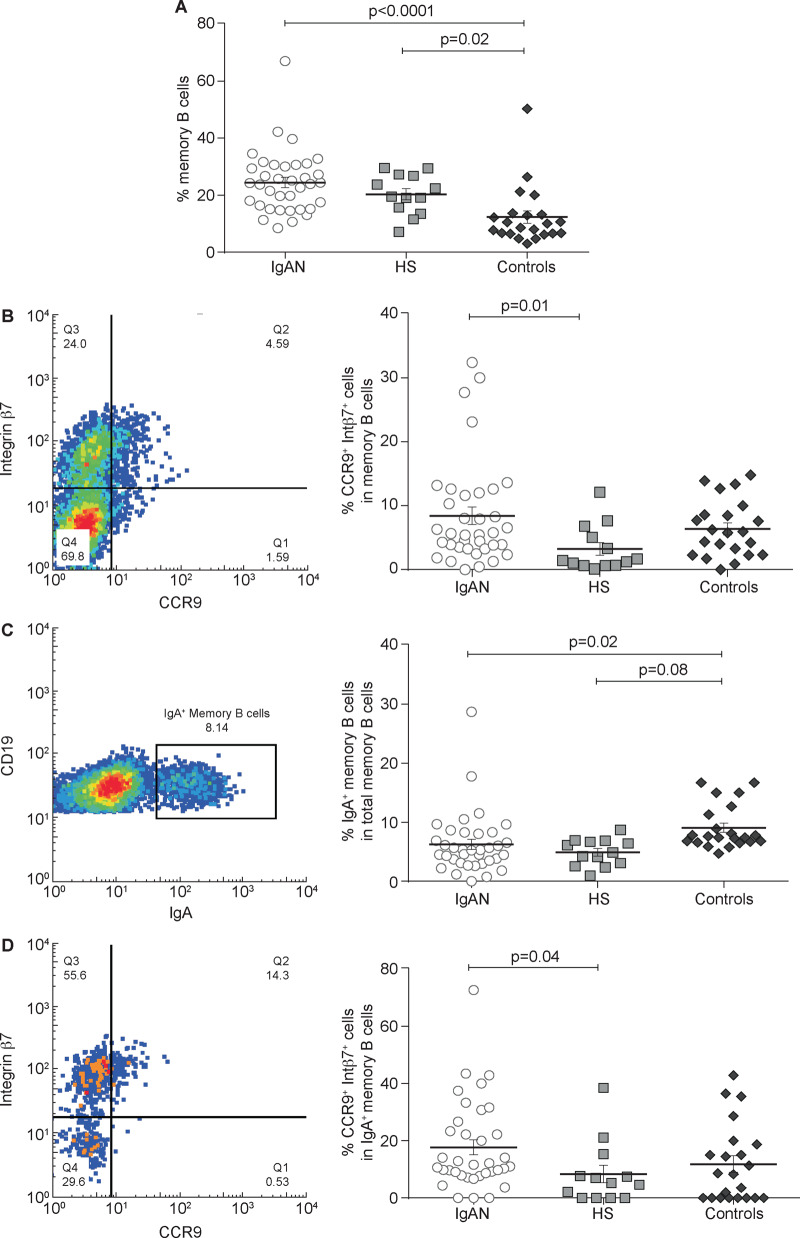
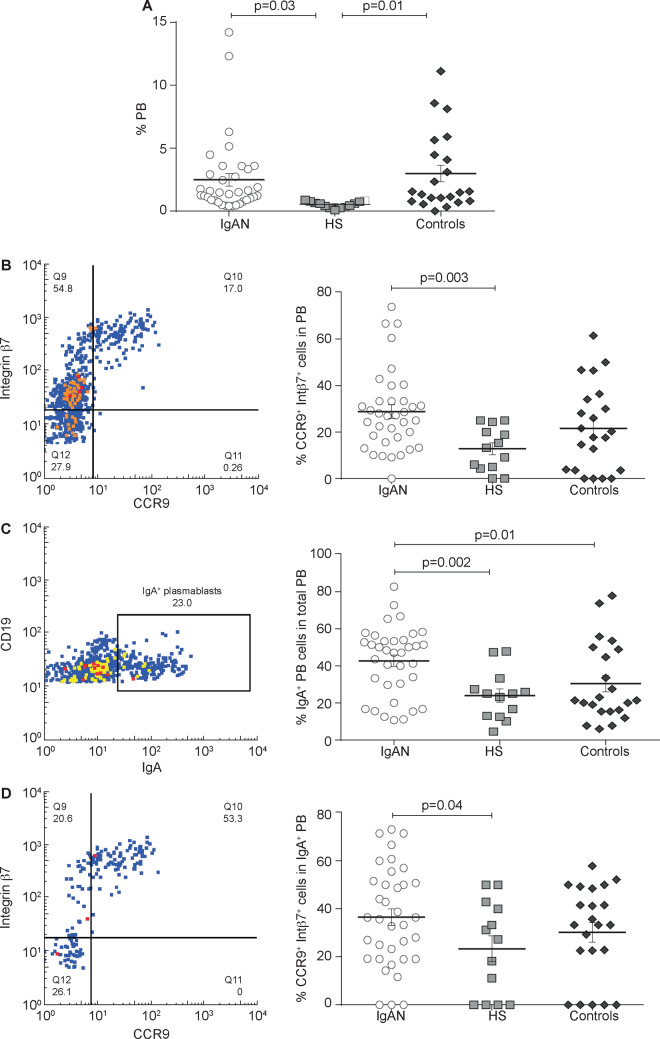
IgAN patients had increased serum levels of BAFF cytokine, correlating with higher amounts of five specific microbiota metabolites, and high APRIL cytokine serum levels. We also found that subjects with IgAN have a higher level of circulating gut-homing (CCR9+ β7 integrin+) regultory B cells, memory B cells and IgA+ memory B cells compared with HSs. Finally, we found that IgAN patients had high levels of both total plasmablasts (PBs) and intestinal-homing PBs. Interestingly, PBs significantly increased in IgAN but not in patients with other glomerulonephritides.
Our results demonstrate a significant difference in the amount of intestinal-activated B lymphocytes between IgAN patients and HSs, confirming the hypothesis of the pathogenic role of intestinal mucosal hyperresponsiveness in IgAN. The intestinal-renal axis plays a crucial role in IgAN and several factors may contribute to its complex pathogenesis and provide an important area of research for novel targeted therapies to modulate progression of the disease.
免疫球蛋白 A 肾病(IgAN)是最常见的原发性肾小球肾炎。微生物群和黏膜免疫在 IgAN 发病机制中的作用仍然是一个关键因素。迄今为止,共生细菌、肿瘤坏死因子(TNF)超家族成员 13[也称为 B 细胞激活因子(BAFF)]水平升高、肠道激活 B 细胞的内稳态紊乱以及肠道 IgA 类转换之间的假设关系尚未在 IgAN 患者中得到明确证明。
我们研究了肠-肾轴的联系,分析了 IgAN 患者、健康受试者(HS)和非 IgA 肾小球肾炎患者的 BAFF、TNF 配体超家族成员 13(APRIL)和肠道激活 B 细胞的水平。
IgAN 患者的 BAFF 细胞因子血清水平升高,与五种特定微生物群代谢物的含量增加以及 APRIL 细胞因子血清水平升高相关。我们还发现,与 HS 相比,IgAN 患者具有更高水平的循环肠道归巢(CCR9+β7 整合素+)调节性 B 细胞、记忆 B 细胞和 IgA+记忆 B 细胞。最后,我们发现 IgAN 患者的总浆母细胞(PBs)和肠道归巢 PBs 水平均较高。有趣的是,IgAN 患者的 PBs 显著增加,但在其他肾小球肾炎患者中则没有增加。
我们的研究结果表明 IgAN 患者与 HS 之间肠道激活 B 淋巴细胞的数量存在显著差异,证实了肠道黏膜高反应性在 IgAN 发病机制中的致病作用假说。肠-肾轴在 IgAN 中起着至关重要的作用,并且有几个因素可能导致其复杂的发病机制,为调节疾病进展的新型靶向治疗提供了一个重要的研究领域。