Arranz Martínez Fernando, Martín Ferrer Raúl, Palacios-Navarro Guillermo, Ramos Lorente Pedro
Department of Computer Science and Systems Engineering, University of Zaragoza, 44003 Teruel, Spain.
Department of Electronic Engineering and Communications, University of Zaragoza, 44003 Teruel, Spain.
Sensors (Basel). 2020 Nov 15;20(22):6523. doi: 10.3390/s20226523.
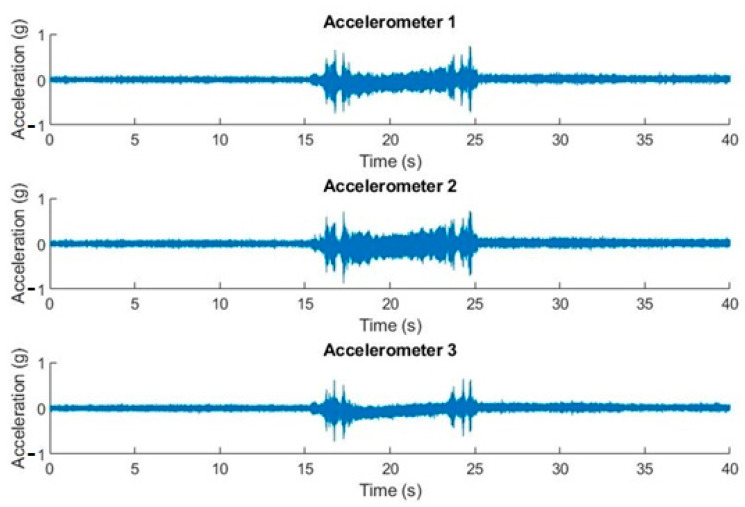
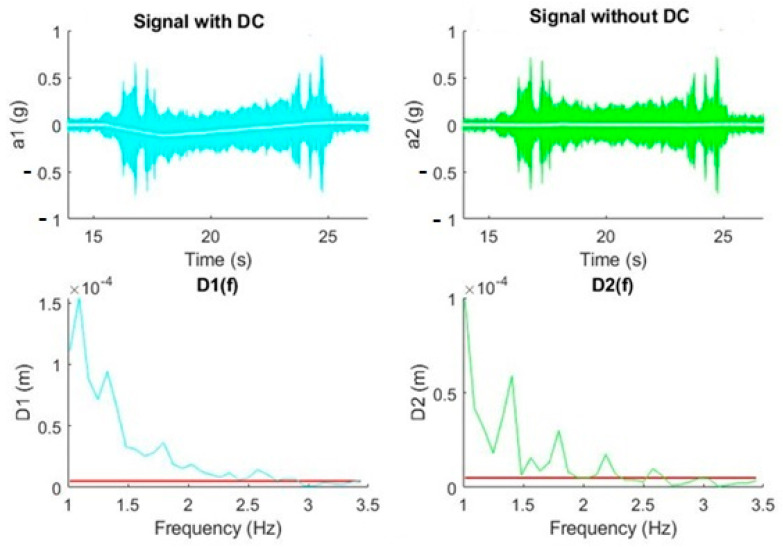
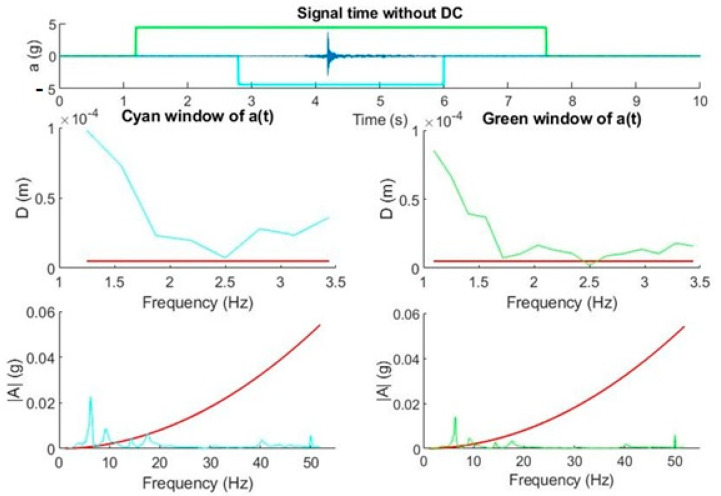
The location of large telescopes, generally far from the data processing centers, represents a logistical problem for the supervision of the capture of images. In this work, we carried out a preliminary study of the vibration signature of the T80 telescope at the Javalambre Astrophysical Observatory (JAO). The study analyzed the process of calculating the displacement that occurs because of the vibration in each of the frequencies in the range of interest. We analyzed the problems associated with very low frequencies by means of simulation, finding the most critical vibrations below 20 Hz, since they are the ones that generate greater displacements. The work also relates previous studies based on simulation with the real measurements of the vibration of the telescope taken remotely when it is subjected to different positioning movements (right ascension and/or declination) or when it performs movement actions such as those related to filter trays or mirror cover. The obtained results allow us to design a remote alarm system to detect invalid images (taken with excess vibration).
大型望远镜的位置通常远离数据处理中心,这给图像采集的监控带来了后勤保障方面的问题。在这项工作中,我们对位于哈瓦拉姆布雷天体物理观测台(JAO)的T80望远镜的振动特征进行了初步研究。该研究分析了在感兴趣的频率范围内,由于振动而产生的位移的计算过程。我们通过模拟分析了与极低频相关的问题,发现低于20Hz的振动最为关键,因为它们会产生更大的位移。这项工作还将基于模拟的先前研究与望远镜在进行不同定位运动(赤经和/或赤纬)或执行与滤光片托盘或镜盖相关的运动动作时远程获取的振动实际测量结果联系起来。所获得的结果使我们能够设计一个远程报警系统,以检测无效图像(因过度振动而拍摄的图像)。