Targonski Colin, Bender M Reed, Shealy Benjamin T, Husain Benafsh, Paseman Bill, Smith Melissa C, Feltus F Alex
Department of Electrical and Computer Engineering, Clemson University, Clemson, SC 29634, USA.
Department of Biomedical Data Science and Informatics, Clemson University, Clemson, SC 29634, USA.
Patterns (N Y). 2020 Aug 17;1(6):100087. doi: 10.1016/j.patter.2020.100087. eCollection 2020 Sep 11.
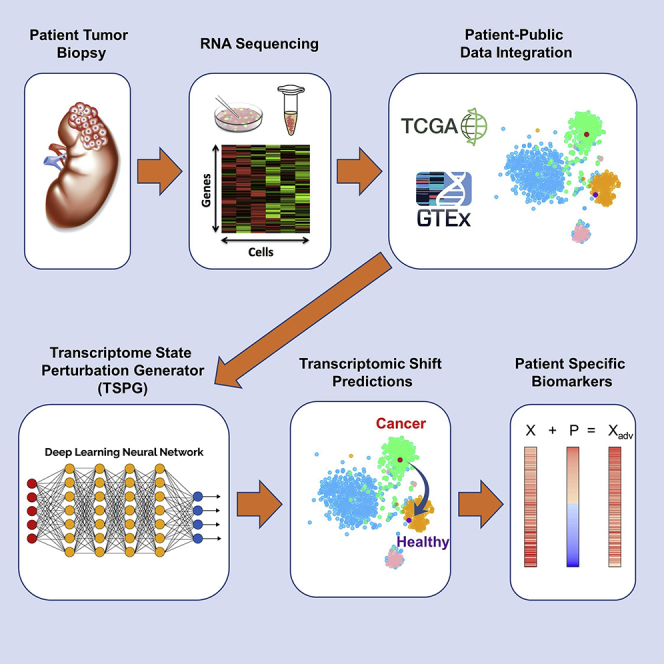
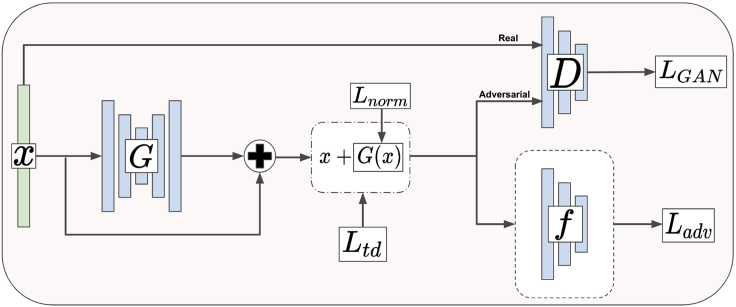
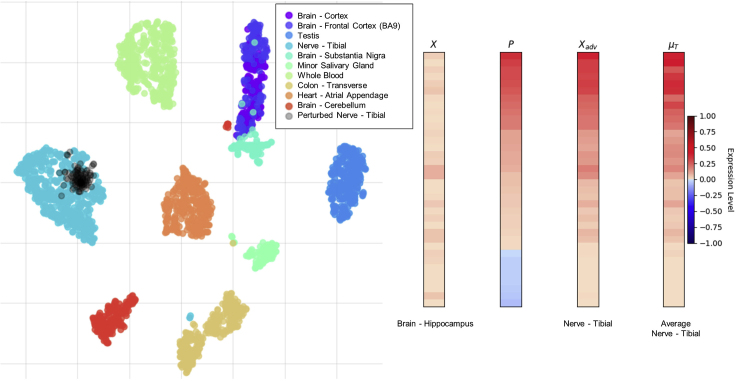
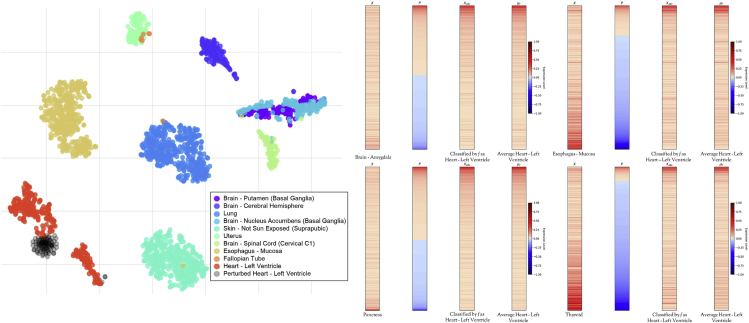
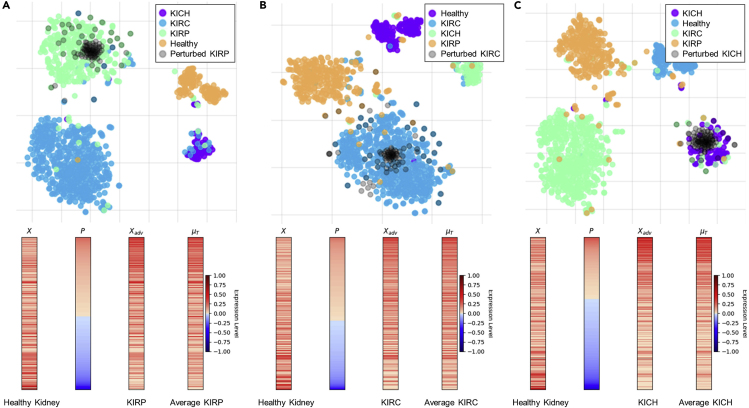
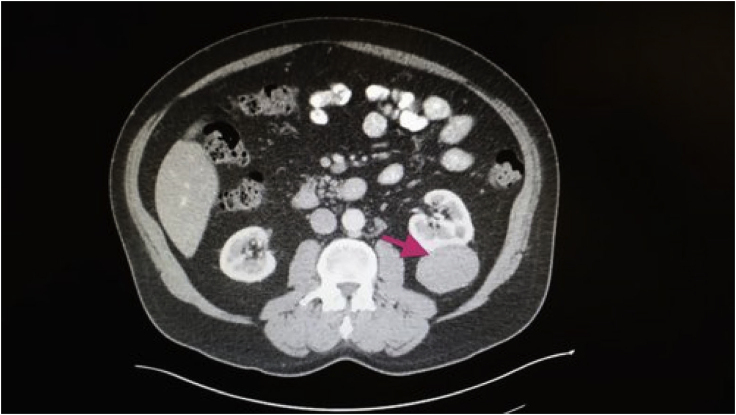
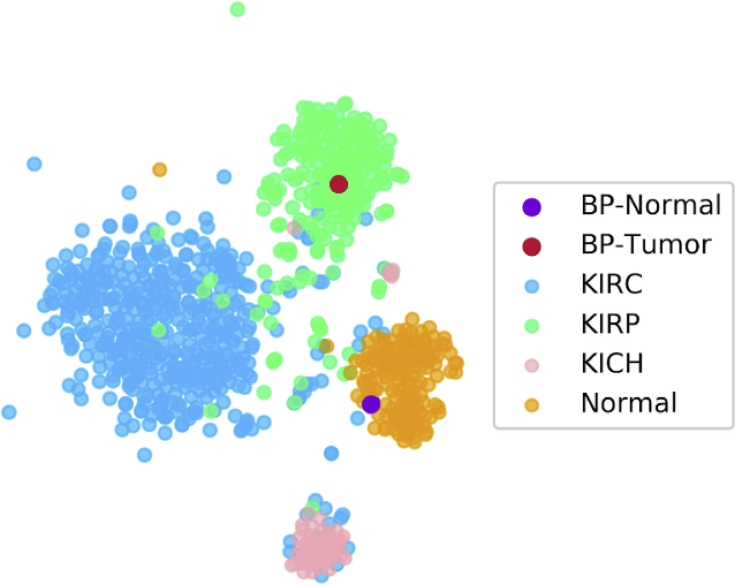
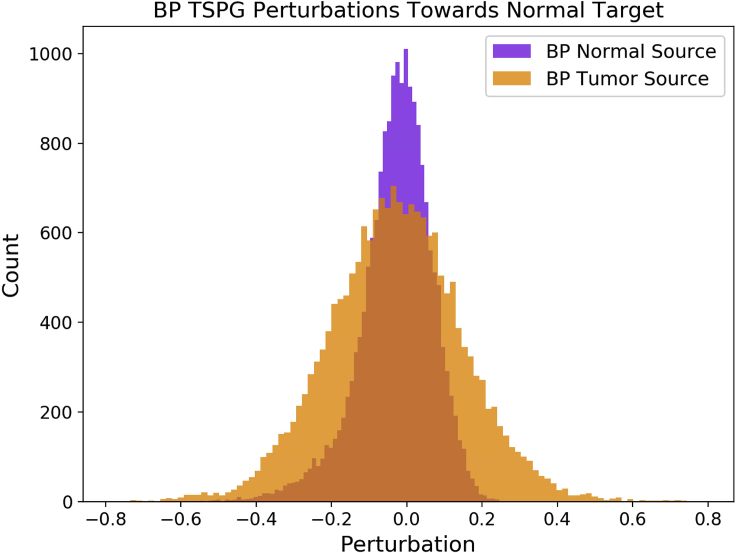
We introduce the Transcriptome State Perturbation Generator (TSPG) as a novel deep-learning method to identify changes in genomic expression that occur between tissue states using generative adversarial networks. TSPG learns the transcriptome perturbations from RNA-sequencing data required to shift from a source to a target class. We apply TSPG as an effective method of detecting biologically relevant alternate expression patterns between normal and tumor human tissue samples. We demonstrate that the application of TSPG to expression data obtained from a biopsy sample of a patient's kidney cancer can identify patient-specific differentially expressed genes between their individual tumor sample and a target class of healthy kidney gene expression. By utilizing TSPG in a precision medicine application in which the patient sample is not replicated (i.e., ), we present a novel technique of determining significant transcriptional aberrations that can be used to help identify potential targeted therapies.
我们引入转录组状态扰动生成器(TSPG),这是一种新颖的深度学习方法,用于使用生成对抗网络识别组织状态之间发生的基因组表达变化。TSPG从从源类别转变为目标类别所需的RNA测序数据中学习转录组扰动。我们将TSPG用作检测正常和肿瘤人类组织样本之间生物学相关的交替表达模式的有效方法。我们证明,将TSPG应用于从患者肾癌活检样本获得的表达数据,可以识别出其个体肿瘤样本与健康肾脏基因表达目标类别之间患者特异性的差异表达基因。通过在患者样本不可复制的精准医学应用中利用TSPG(即 ),我们提出了一种确定显著转录畸变的新技术,该技术可用于帮助识别潜在的靶向治疗方法。