Jiang Ze-Bo, Huang Ju-Min, Xie Ya-Jia, Zhang Yi- Zhong, Chang Chan, Lai Huan-Ling, Wang Wenjun, Yao Xiao-Jun, Fan Xing-Xing, Wu Qi-Biao, Xie Chun, Wang Mei-Fang, Leung Elaine Lai-Han
State Key Laboratory of Quality Research in Chinese Medicine, Macau University of Science and Technology, Avenida Wai Long, Macao, Taipa Macau (SAR), China.
Department of Respiratory and Critical Care Medicine, Taihe Hospital, Hubei University of Medicine, Shiyan, 442000, China.
J Exp Clin Cancer Res. 2020 Nov 19;39(1):249. doi: 10.1186/s13046-020-01741-5.
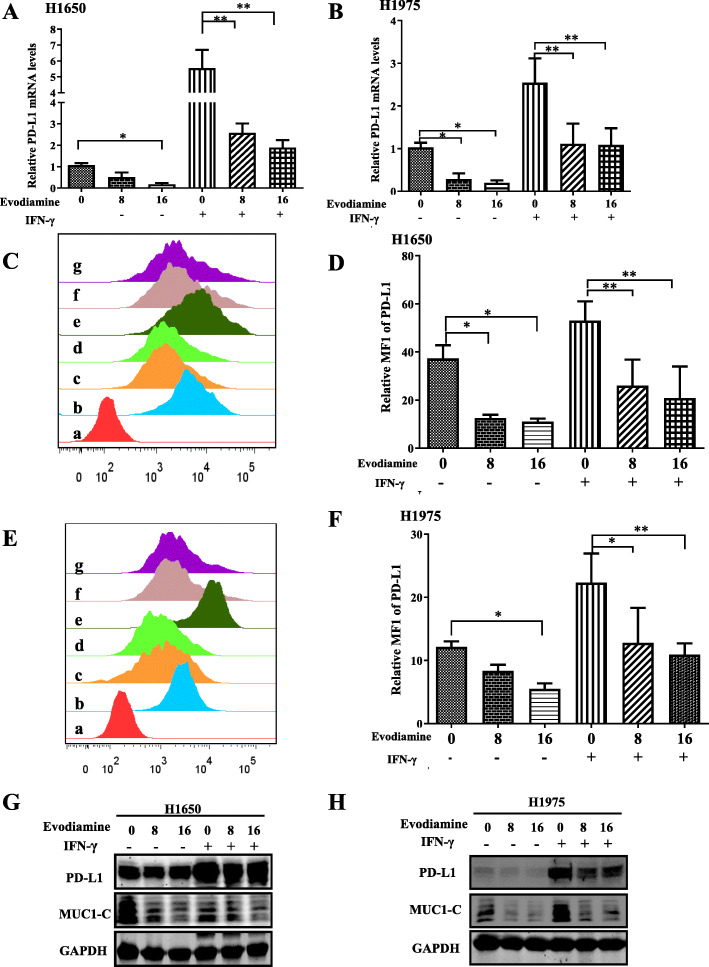
Accumulating evidence showed that regulating tumor microenvironment plays a vital role in improving antitumor efficiency. Programmed Death Ligand 1 (PD-L1) is expressed in many cancer cell types, while its binding partner Programmed Death 1 (PD1) is expressed in activated T cells and antigen-presenting cells. Whereas, its dysregulation in the microenvironment is poorly understood. In the present study, we confirmed that evodiamine downregulates MUC1-C, resulting in modulating PD-L1 expression in non-small cell lung cancer (NSCLC).
Cell viability was measured by MTT assays. Apoptosis, cell cycle and surface PD-L1 expression on NSCLC cells were analyzed by flow cytometry. The expression of MUC1-C and PD-L1 mRNA was measured by real time RT-PCR methods. Protein expression was examined in evodiamine-treated NSCLC cells using immunoblotting or immunofluorescence assays. The effects of evodiamine treatment on NSCLC sensitivity towards T cells were investigated using human peripheral blood mononuclear cells and Jurkat, apoptosis and IL-2 secretion assays. Female H1975 xenograft nude mice were used to assess the effect of evodiamine on tumorigenesis in vivo. Lewis lung carcinoma model was used to investigate the therapeutic effects of combination evodiamine and anti-PD-1 treatment.
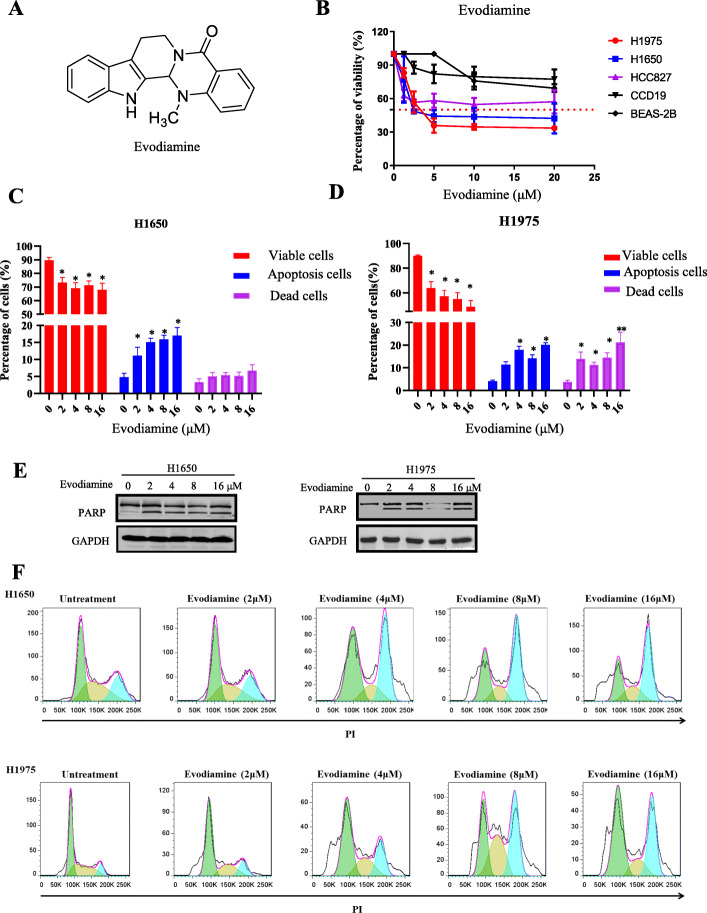
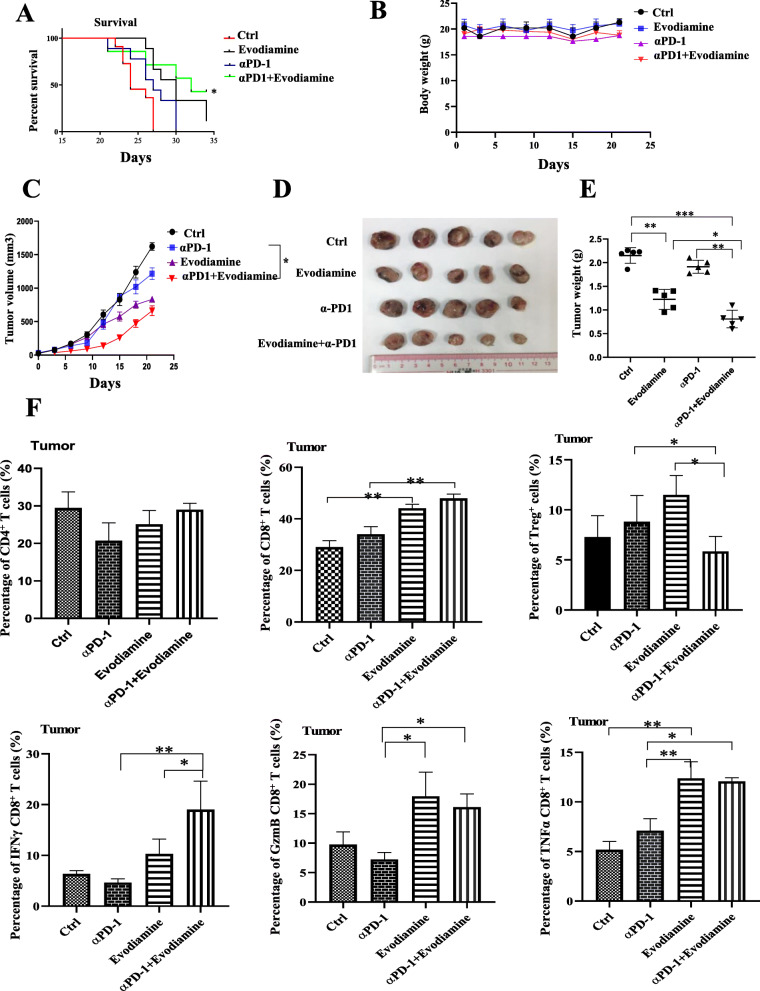
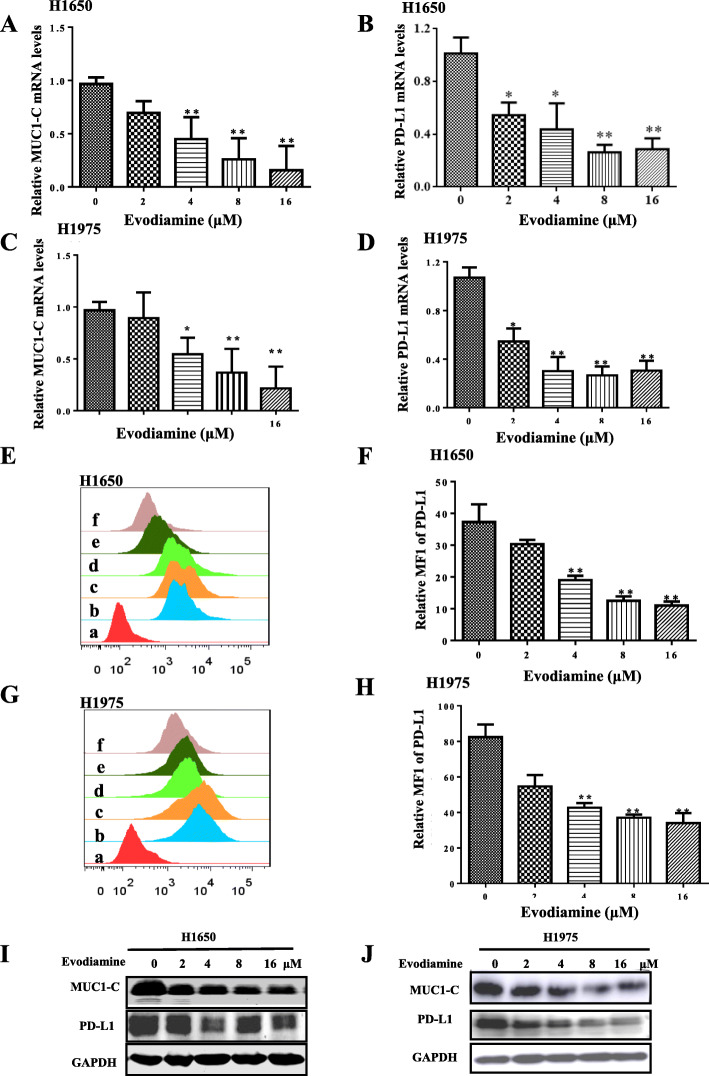
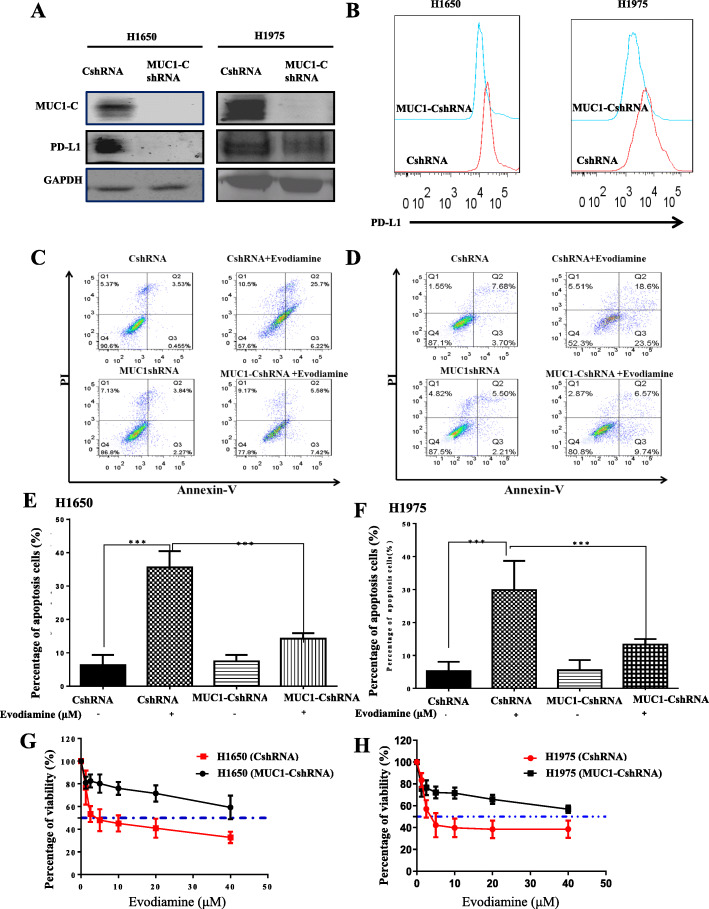
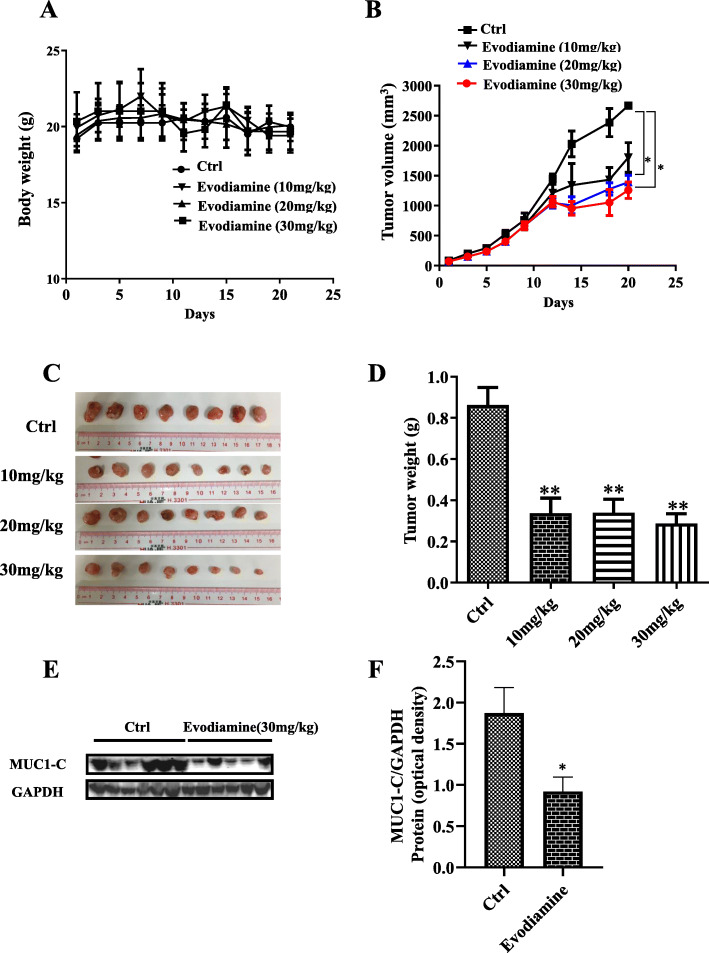
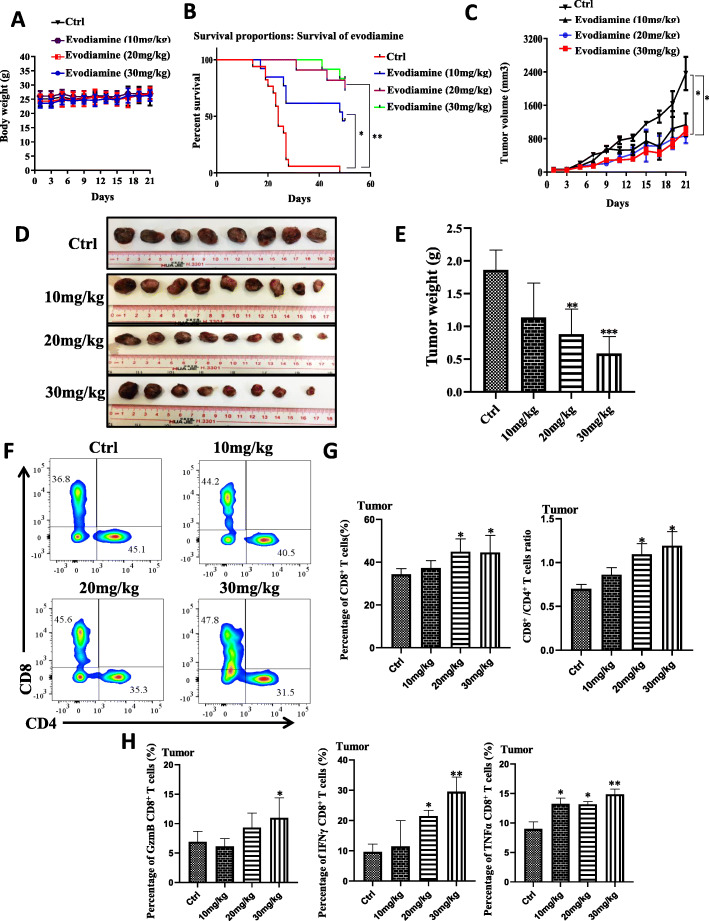
We showed that evodiamine significantly inhibited growth, induced apoptosis and cell cycle arrest at G2 phase of NSCLC cells. Evodiamine suppressed IFN-γ-induced PD-L1 expression in H1975 and H1650. MUC1-C mRNA and protein expression were decreased by evodiamine in NSCLC cells as well. Evodiamine could downregulate the PD-L1 expression and diminish the apoptosis of T cells. It inhibited MUC1-C expression and potentiated CD8 T cell effector function. Meanwhile, evodiamine showed good anti-tumor activity in H1975 tumor xenograft, which reduced tumor size. Evodiamine exhibited anti-tumor activity by elevation of CD8 T cells in vivo in Lewis lung carcinoma model. Combination evodiamine and anti-PD-1 mAb treatment enhanced tumor growth control and survival of mice.
Evodiamine can suppress NSCLC by elevating of CD8 T cells and downregulating of the MUC1-C/PD-L1 axis. Our findings uncover a novel mechanism of action of evodiamine and indicate that evodiamine represents a potential targeted agent suitable to be combined with immunotherapeutic approaches to treat NSCLC cancer patients. MUC1-C overexpression is common in female, non-smoker, patients with advanced-stage adenocarcinoma.
越来越多的证据表明,调节肿瘤微环境在提高抗肿瘤效率方面起着至关重要的作用。程序性死亡配体1(PD-L1)在多种癌细胞类型中表达,而其结合伴侣程序性死亡1(PD1)在活化的T细胞和抗原呈递细胞中表达。然而,其在微环境中的失调情况尚不清楚。在本研究中,我们证实吴茱萸碱下调MUC1-C,从而调节非小细胞肺癌(NSCLC)中PD-L1的表达。
通过MTT法检测细胞活力。采用流式细胞术分析NSCLC细胞的凋亡、细胞周期及表面PD-L1表达。通过实时RT-PCR法检测MUC1-C和PD-L1 mRNA的表达。使用免疫印迹或免疫荧光测定法检测吴茱萸碱处理的NSCLC细胞中的蛋白表达。利用人外周血单个核细胞和Jurkat细胞、凋亡及IL-2分泌测定法研究吴茱萸碱处理对NSCLC对T细胞敏感性的影响。使用雌性H1975异种移植裸鼠评估吴茱萸碱对体内肿瘤发生的影响。采用Lewis肺癌模型研究吴茱萸碱与抗PD-1联合治疗的疗效。
我们发现吴茱萸碱显著抑制NSCLC细胞的生长,诱导其凋亡并使细胞周期停滞于G2期。吴茱萸碱抑制IFN-γ诱导的H1975和H1650细胞中PD-L1的表达。吴茱萸碱还降低了NSCLC细胞中MUC1-C mRNA和蛋白的表达。吴茱萸碱可下调PD-L1表达并减少T细胞凋亡。它抑制MUC1-C表达并增强CD8 T细胞效应功能。同时,吴茱萸碱在H1975肿瘤异种移植中显示出良好的抗肿瘤活性,可缩小肿瘤大小。在Lewis肺癌模型中,吴茱萸碱通过提高体内CD8 T细胞表现出抗肿瘤活性。吴茱萸碱与抗PD-1单克隆抗体联合治疗可增强对肿瘤生长的控制并延长小鼠生存期。
吴茱萸碱可通过提高CD8 T细胞水平和下调MUC1-C/PD-L1轴来抑制NSCLC。我们的研究结果揭示了吴茱萸碱的一种新作用机制,并表明吴茱萸碱是一种潜在的靶向药物,适合与免疫治疗方法联合用于治疗NSCLC患者。MUC1-C过表达在女性、非吸烟、晚期腺癌患者中较为常见。