Department of Clinical Epidemiology, Aarhus University Hospital, Aarhus, Denmark
Department of Clinical Epidemiology, Aarhus University Hospital, Aarhus, Denmark.
BMJ Open. 2020 Nov 17;10(11):e037564. doi: 10.1136/bmjopen-2020-037564.
To examine the occurrence of brain disorders (ie, neurological and mental disorders) in Denmark and mortality and cost of illness among affected persons.
Matched cohort study.
We obtained routinely collected registry data on all Danish residents during 1995-2015.
We identified all persons alive on 1 January 2015 with a diagnosis of 25 specific brain disorders (prevalent cohort) and all persons with an incident diagnosis during 2011-2015 (incident cohort). Each person was matched on age and sex with 10 persons from the general population without the brain disorder of interest.
Prevalence and incidence of hospital-diagnosed brain disorders, 1-year absolute and relative mortality, and attributable direct and indirect costs of illness compared with the corresponding matched cohorts.
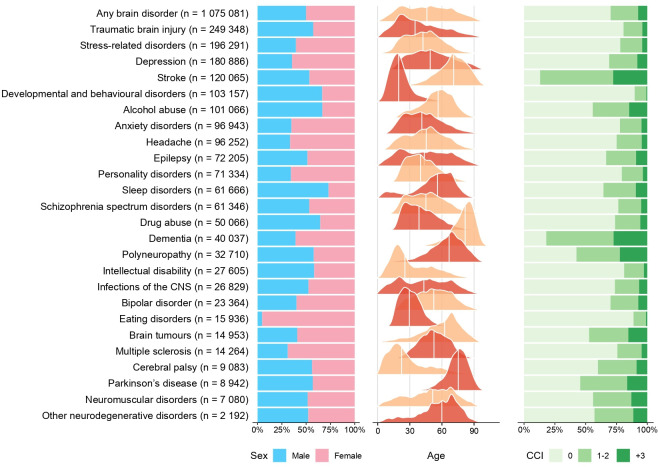
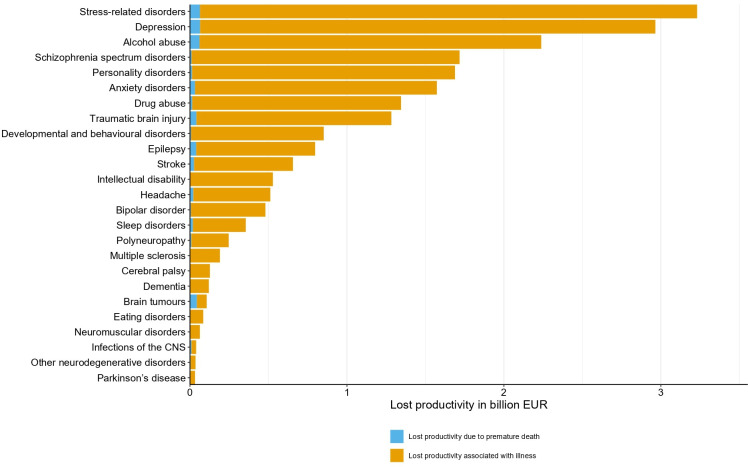
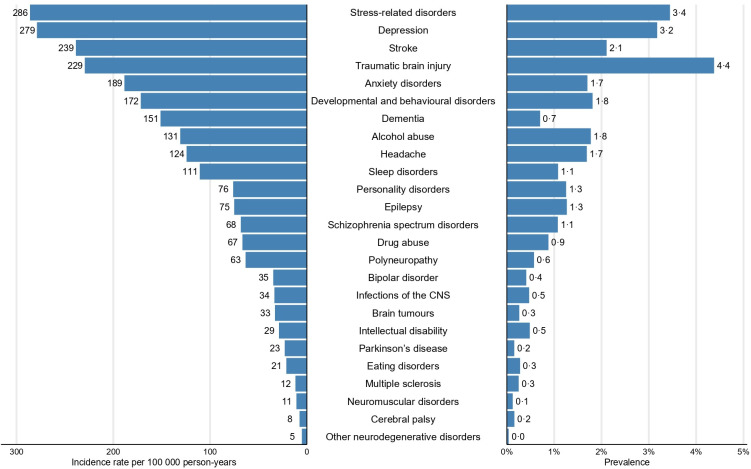
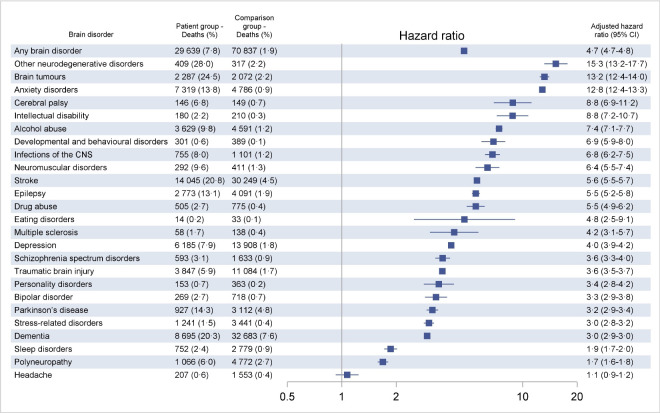
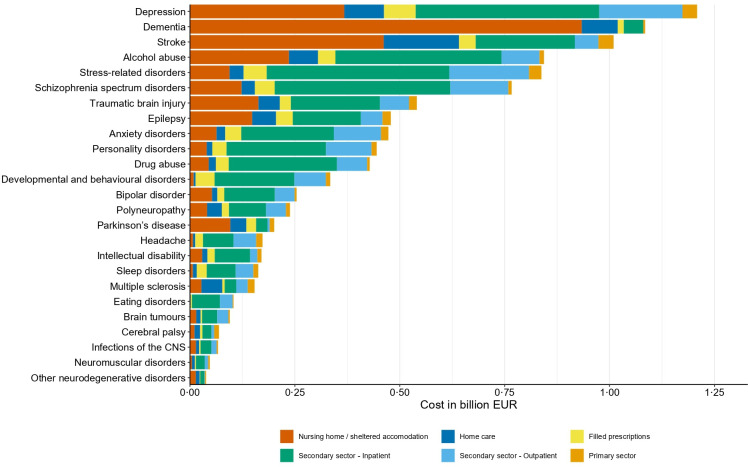
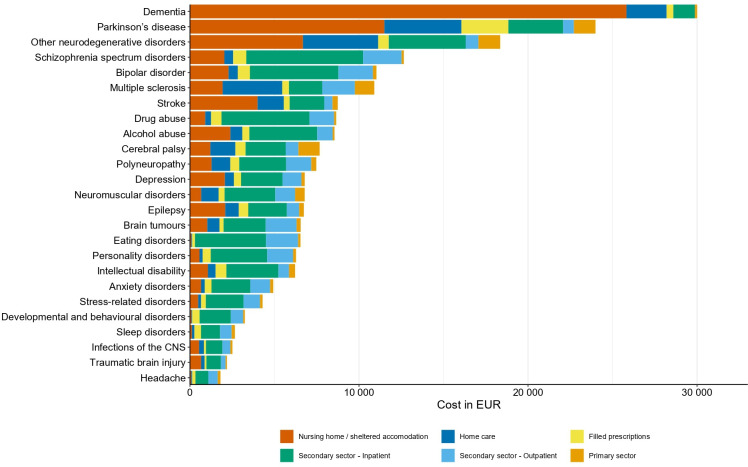
We identified 1 075 081 persons with at least one prevalent brain disorder (any brain disorder) on 1 January 2015, corresponding to 18.9% of the Danish population. The incidence rate of any brain disorder during 2011-2015 was 1349 per 100 000 person-years (95% CI 1345 to 1353). One-year mortality after diagnosis was increased in persons with any brain disorder (HR 4.7, 95% CI 4.7 to 4.8) and in persons in every group of specific brain disorders compared with the matched cohort from the general population. The total attributable direct costs of brain disorders in 2015 were €5.2 billion and total attributable indirect costs were €11.2 billion. Traumatic brain injury, stress-related disorders, depression and stroke were the most common brain disorders. Attributable costs were highest for depression, dementia, stress-related disorders and stroke.
One in five Danish residents alive on 1 January 2015 had been diagnosed with at least one brain disorder, and mortality was five times higher in persons with any diagnosed brain disorder than in the general population. We found high attributable direct and indirect costs of brain disorders.
研究丹麦脑疾病(即神经和精神障碍)的发生情况,以及脑疾病患者的死亡率和疾病负担。
配对队列研究。
我们获取了丹麦在 1995 年至 2015 年期间所有居民的常规登记数据。
我们在 2015 年 1 月 1 日识别出所有存活的患有 25 种特定脑疾病的人(现患队列),以及在 2011 年至 2015 年期间诊断出患有脑疾病的所有人(发病队列)。每个患者均与未患有感兴趣的脑疾病的 10 名一般人群中的人按年龄和性别相匹配。
医院诊断的脑疾病的现患率和发病率,1 年绝对和相对死亡率,以及与相应的配对队列相比,疾病的直接和间接归因负担。
我们在 2015 年 1 月 1 日识别出 1075081 名至少患有一种现患脑疾病(任何脑疾病)的患者,占丹麦总人口的 18.9%。2011 年至 2015 年期间任何脑疾病的发病率为 1349 例/100000 人年(95%CI 1345 至 1353)。与一般人群中的配对队列相比,任何脑疾病患者的 1 年诊断后死亡率增加(HR 4.7,95%CI 4.7 至 4.8),并且在每个特定脑疾病组别的患者中,死亡率也增加。2015 年脑疾病的总直接归因费用为 52 亿欧元,总间接归因费用为 112 亿欧元。创伤性脑损伤、与压力相关的障碍、抑郁症和中风是最常见的脑疾病。归因费用在抑郁症、痴呆症、与压力相关的障碍和中风中最高。
2015 年 1 月 1 日,五分之一的丹麦存活居民至少被诊断出患有一种脑疾病,与一般人群相比,任何被诊断患有脑疾病的患者的死亡率高 5 倍。我们发现脑疾病的直接和间接归因负担很高。