Fu Changhao, Xiao Xu, Xu Hao, Lu Weifei, Wang Yi
Department of Regenerative Medicine, School of Pharmaceutical Sciences, Jilin University, Changchun, Jilin 130021, P.R. China.
Department of Endocrinology, Stanford University Medical School, VA Palo Alto Health Care System, Palo Alto, CA 94304, USA.
Exp Ther Med. 2020 Dec;20(6):286. doi: 10.3892/etm.2020.9416. Epub 2020 Oct 29.
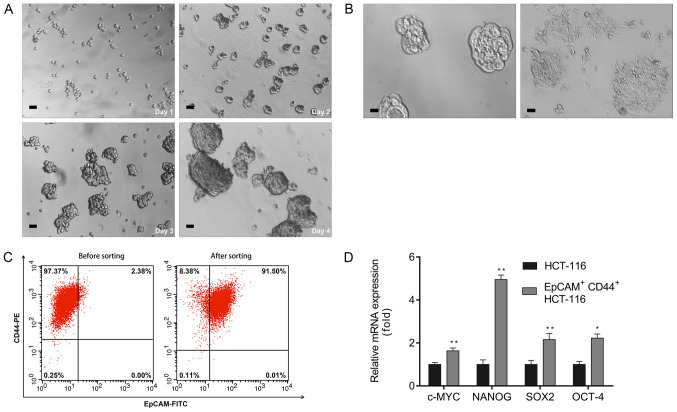
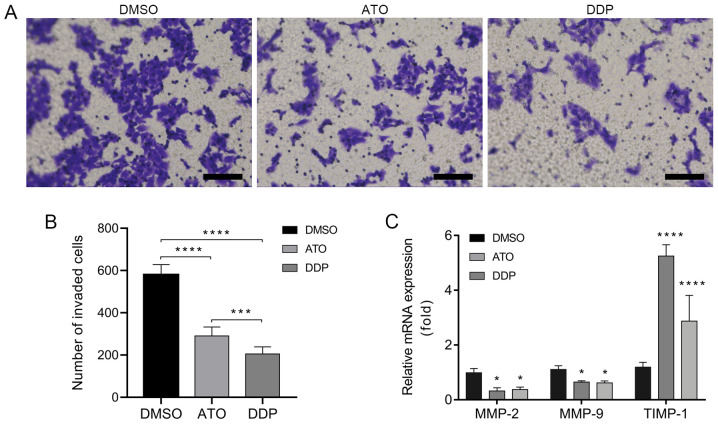
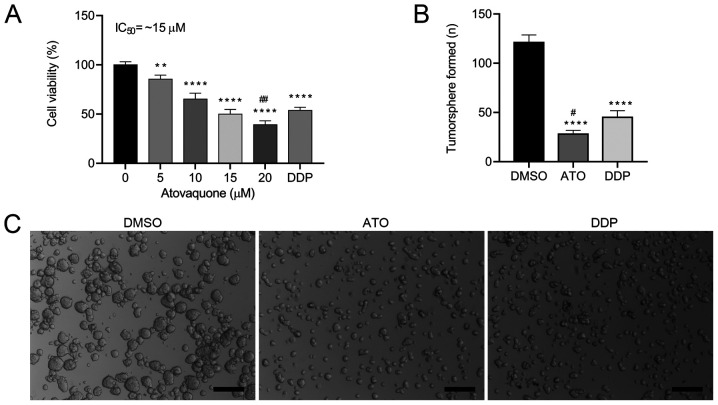
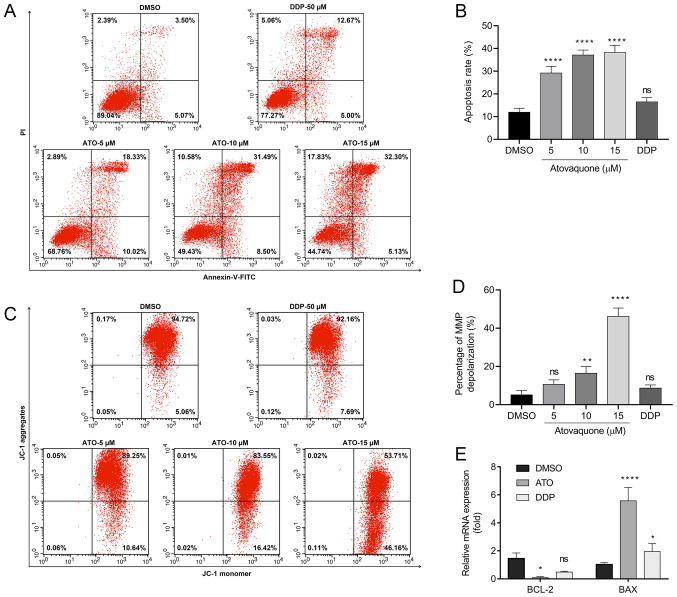
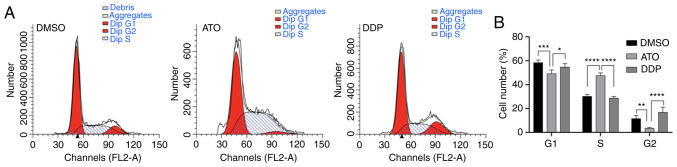
Tumor hypoxia contributes to the development of resistance to chemotherapeutic drugs in several human cancer cell lines. Atovaquone, an anti-malaria drug approved by the US Food and Drug Administration, has recently demonstrated anti-cancer effects and in several cancer models. To assess the potential of atovaquone as an anti-cancer agent under hypoxia in colorectal carcinoma, EpCAMCD44 colon cancer stem cells were isolated from HCT-116 human colon cancer cells through magnetic-activated cell sorting. The efficacy of atovaquone on cytotoxicity, tumorsphere formation, apoptosis, invasion and cell-cycle progression under hypoxic conditions were evaluated. MTS assays indicated that atovaquone inhibited the proliferation of EpCAMCD44 HCT-116 cells with a half-maximal inhibitory concentration of 15 µM. Atovaquone inhibited tumorsphere formation and cell proliferation by causing cell-cycle arrest in S-phase, which induced apoptosis of EpCAMCD44 HCT-116 cells, as detected by Annexin V-FITC/PI double staining assays, and caused mitochondrial membrane potential depolarization, as determined by a JC-1 staining assay. Reverse transcription-quantitative PCR demonstrated increased expression of Bax and downregulation of Bcl-2. Transwell invasion assays indicated that atovaquone inhibited the invasiveness of EpCAMCD44 HCT-116 cells under hypoxia, which was associated with upregulation of MMP-2 and -9 and increased expression of tissue inhibitor of MMPs (TIMP)-1. Taken together, atovaquone reduced the tumorsphere formation and invasion ability of EpCAMCD44 HCT-116 cells, at least in part by increasing the expression of TIMP-1 and downregulating the expression of MMP-2 and -9, as well as the cells' viability by inducing cell-cycle arrest in S-phase and induction of apoptosis via the Bcl-2/Bax pathway under hypoxic conditions. Further studies are warranted to explore the mechanisms of action of atovaquone as a promising anticancer agent in the treatment of colorectal carcinoma.
肿瘤缺氧促进了几种人类癌细胞系对化疗药物耐药性的发展。阿托伐醌是一种经美国食品药品监督管理局批准的抗疟疾药物,最近在几种癌症模型中显示出抗癌作用。为了评估阿托伐醌在结直肠癌缺氧条件下作为抗癌剂的潜力,通过磁激活细胞分选从HCT-116人结肠癌细胞中分离出EpCAM⁺CD44⁺结肠癌干细胞。评估了阿托伐醌在缺氧条件下对细胞毒性、肿瘤球形成、凋亡、侵袭和细胞周期进程的疗效。MTS分析表明,阿托伐醌抑制EpCAM⁺CD44⁺HCT-116细胞的增殖,半数最大抑制浓度为15μM。阿托伐醌通过使细胞周期停滞在S期来抑制肿瘤球形成和细胞增殖,Annexin V-FITC/PI双染分析检测到这诱导了EpCAM⁺CD44⁺HCT-116细胞的凋亡,JC-1染色分析确定其导致线粒体膜电位去极化。逆转录定量PCR显示Bax表达增加,Bcl-2表达下调。Transwell侵袭分析表明,阿托伐醌在缺氧条件下抑制EpCAM⁺CD44⁺HCT-116细胞的侵袭性,这与MMP-2和-9的上调以及基质金属蛋白酶组织抑制剂(TIMP)-1表达增加有关。综上所述,阿托伐醌降低了EpCAM⁺CD44⁺HCT-116细胞的肿瘤球形成和侵袭能力,至少部分是通过增加TIMP-1的表达和下调MMP-2和-9的表达,以及在缺氧条件下通过Bcl-2/Bax途径诱导细胞周期停滞在S期并诱导凋亡来降低细胞活力。有必要进一步研究以探索阿托伐醌作为一种有前景的抗癌剂在治疗结直肠癌中的作用机制。