Sotgiu Stefano, Manca Salvatorica, Gagliano Antonella, Minutolo Alessandra, Melis Maria Clotilde, Pisuttu Giulia, Scoppola Chiara, Bolognesi Elisabetta, Clerici Mario, Guerini Franca Rosa, Carta Alessandra
Unit of Child Neuropsychiatry Department of Medical Surgical and Experimental Sciences University of Sassari Sassari Italy.
Unità Operativa di Neuropsichiatria Infanzia e Adolescenza (UONPIA) ASSL Sassari Sassari Italy.
Clin Transl Immunology. 2020 Nov 13;9(11):e1211. doi: 10.1002/cti2.1211. eCollection 2020.
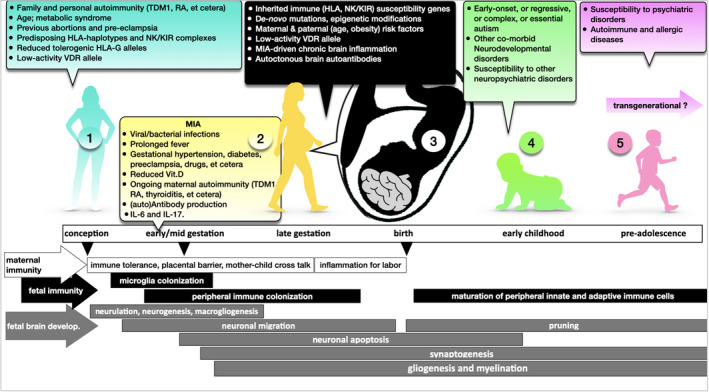
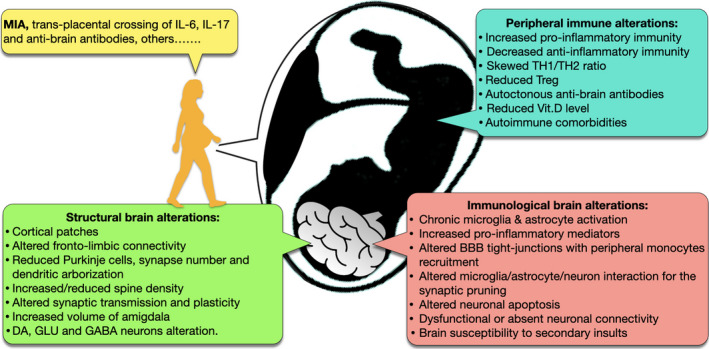
Autism spectrum disorder (ASD) is a neurodevelopmental disorder defined by deficits in social communication and stereotypical behaviours. ASD's aetiology remains mostly unclear, because of a complex interaction between genetic and environmental factors. Recently, a strong consensus has developed around ASD's immune-mediated pathophysiology, which is the subject of this review. For many years, neuroimmunological studies tried to understand ASD as a prototypical antibody- or cell-mediated disease. Other findings indicated the importance of autoimmune mechanisms such as familial and individual autoimmunity, adaptive immune abnormalities and the influence of infections during gestation. However, recent studies have challenged the idea that autism may be a classical autoimmune disease. Modern neurodevelopmental immunology shows the double-edged nature of many immune effectors, which can be either beneficial or detrimental depending on tissue homeostasis, stressors, neurodevelopmental stage, inherited and gene mutations and other variables. Nowadays, mother-child interactions in the prenatal environment appear to be crucial for the occurrence of ASD. Studies of animal maternal-foetal immune interaction are being fruitfully carried out using different combinations of type and timing of infection, of maternal immune response and foetal vulnerability and of resilience factors to hostile events. The derailed neuroimmune crosstalk through the placenta initiates and maintains a chronic foetal neuroglial activation, eventually causing the alteration of neurogenesis, migration, synapse formation and pruning. The importance of pregnancy can also allow early immune interventions, which can significantly reduce the increasing risk of ASD and its heavy social burden.
自闭症谱系障碍(ASD)是一种神经发育障碍,其特征为社交沟通缺陷和刻板行为。由于遗传和环境因素之间的复杂相互作用,ASD的病因仍大多不明。最近,围绕ASD的免疫介导病理生理学已形成了强烈共识,这也是本综述的主题。多年来,神经免疫学研究试图将ASD理解为典型的抗体或细胞介导疾病。其他研究结果表明自身免疫机制的重要性,如家族性和个体自身免疫、适应性免疫异常以及孕期感染的影响。然而,最近的研究对自闭症可能是一种经典自身免疫性疾病的观点提出了挑战。现代神经发育免疫学显示了许多免疫效应器的双刃剑性质,其根据组织内稳态、应激源、神经发育阶段、遗传和基因突变以及其他变量,可能有益或有害。如今,产前环境中的母婴互动似乎对ASD的发生至关重要。正在使用感染类型和时间、母体免疫反应和胎儿易感性以及对敌对事件的复原力因素的不同组合,卓有成效地开展动物母胎免疫相互作用的研究。通过胎盘发生的神经免疫串扰失调会引发并维持胎儿神经胶质细胞的慢性激活,最终导致神经发生、迁移、突触形成和修剪的改变。孕期的重要性还使得早期免疫干预成为可能,这可以显著降低ASD不断上升的风险及其沉重的社会负担。