Proserpio Cristina, Bresciani Andrea, Marti Alessandra, Pagliarini Ella
Department of Food, Environmental and Nutritional Sciences (DeFENS), Università degli Studi di Milano, 20133 Milan, Italy.
Foods. 2020 Nov 17;9(11):1680. doi: 10.3390/foods9111680.
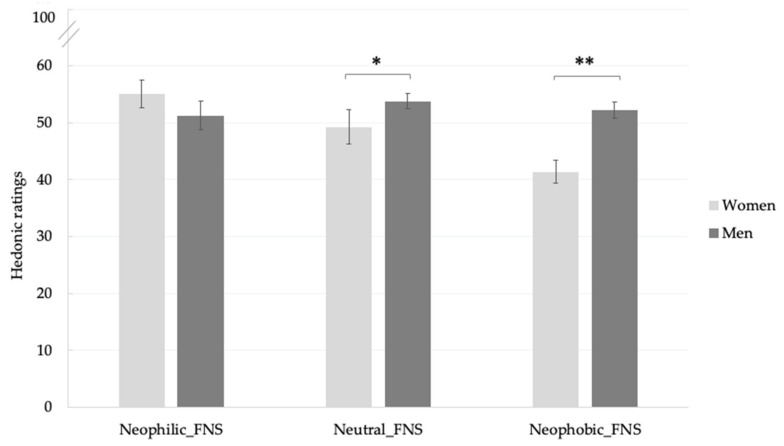
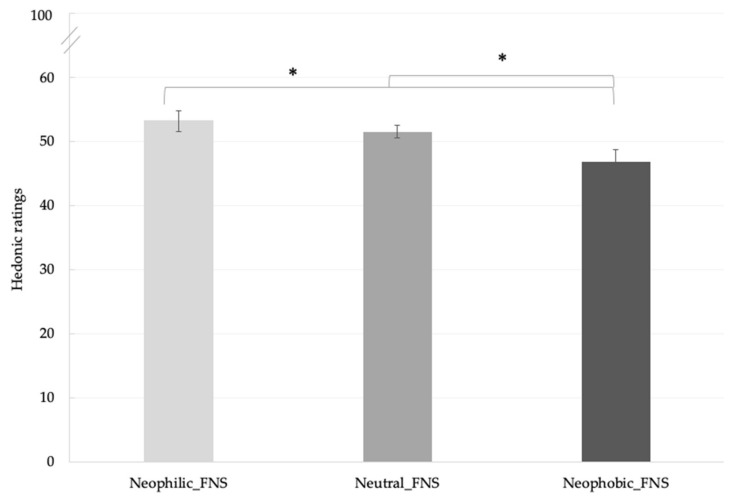
The impact of using legume flour and bran on both sensory and texture properties in extruded, sustainable snack formulations was investigated. Sensory attributes determining consumer preference or rejection of legume-based snacks, as well as food neophobia and food technology neophobia were also explored. Seven samples of extruded snacks (R = 100% rice flour; C = 100% chickpea flour; P = 100% green pea flour; C30 = 30% chickpea bran and 70% rice flour; C15 = 15% chickpea bran and 85% rice flour; P30 = 30% green pea bran and 70% rice flour; P15 = 15% green pea bran and 85% rice flour) were subjected to the three-point bend method using a TA.XT plus texture analyzer. Seventy-two subjects (42 women; aged = 29.6 ± 9.3 years) evaluated the samples for liking and sensory properties by means of the check-all-that-apply (CATA) method. The sample made with 100% rice flour obtained the lowest liking scores, and it was not considered acceptable by the consumers. Samples P, C, C15, and P15 were the preferred ones. Crumbliness and mild flavor attributes positively influenced hedonic scores, whereas stickiness, dryness, hardness, and to a lesser extent, visual aspect affected them negatively. Neophilic and neutral subjects preferred the snacks compared with the neophobic ones, while no differences in liking scores were found regarding food technology neophobia. Extruded snacks with legume flour and bran were moderately accepted by consumers involved in the present study, albeit to a lesser extent for neophobic subjects, and could represent an interesting sustainable source of fiber and high-value proteins, as well as a valuable alternative to gluten-free foods present on the market.
研究了在挤压型可持续零食配方中使用豆类面粉和麸皮对感官和质地特性的影响。还探讨了决定消费者对豆类零食喜好或排斥的感官属性,以及食物新恐惧症和食品技术新恐惧症。七个挤压型零食样品(R = 100%米粉;C = 100%鹰嘴豆粉;P = 100%绿豌豆粉;C30 = 30%鹰嘴豆麸皮和70%米粉;C15 = 15%鹰嘴豆麸皮和85%米粉;P30 = 30%绿豌豆麸皮和70%米粉;P15 = 15%绿豌豆麸皮和85%米粉)使用TA.XT plus质地分析仪进行三点弯曲法测试。72名受试者(42名女性;年龄 = 29.6 ± 9.3岁)通过全选法(CATA)评估样品的喜好程度和感官特性。用100%米粉制作的样品获得了最低的喜好分数,消费者认为它不可接受。样品P、C、C15和P15是首选。易碎性和温和风味属性对享乐分数有积极影响,而粘性、干燥度、硬度以及在较小程度上的视觉外观对其有负面影响。与新恐惧症患者相比,嗜新和中性受试者更喜欢这些零食,而在食品技术新恐惧症方面,喜好分数没有差异。参与本研究的消费者对含有豆类面粉和麸皮的挤压型零食接受程度适中,尽管新恐惧症患者的接受程度较低,并且这些零食可以成为有趣的可持续纤维和高价值蛋白质来源,以及市场上无麸质食品的有价值替代品。