Section of Histology and Medical Embryology, Department of Anatomy, Histology, Forensic-Medicine and Orthopedics, "Sapienza" University of Rome, 00161 Rome, Italy.
Department of Surgery "Pietro Valdoni", "Sapienza" University of Rome, 00161 Rome, Italy.
Int J Mol Sci. 2020 Nov 17;21(22):8669. doi: 10.3390/ijms21228669.
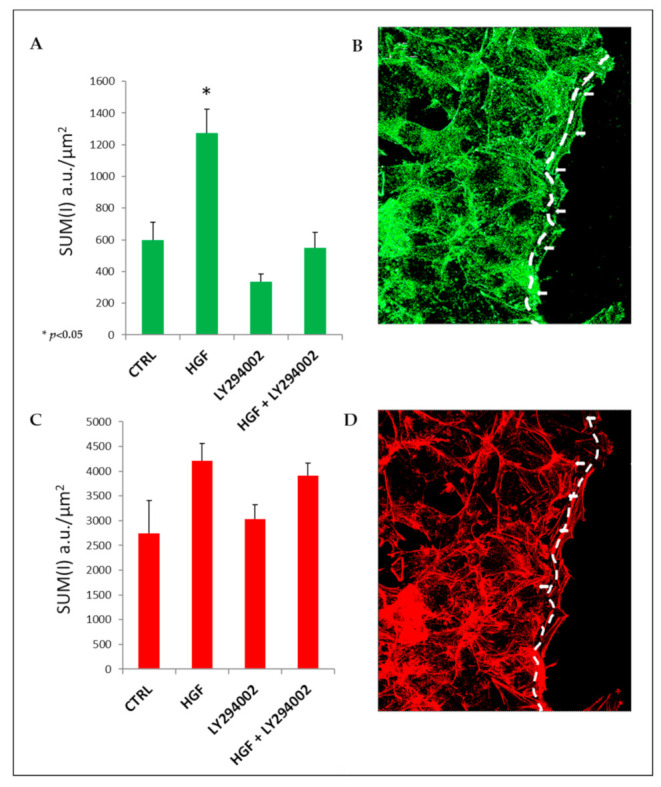
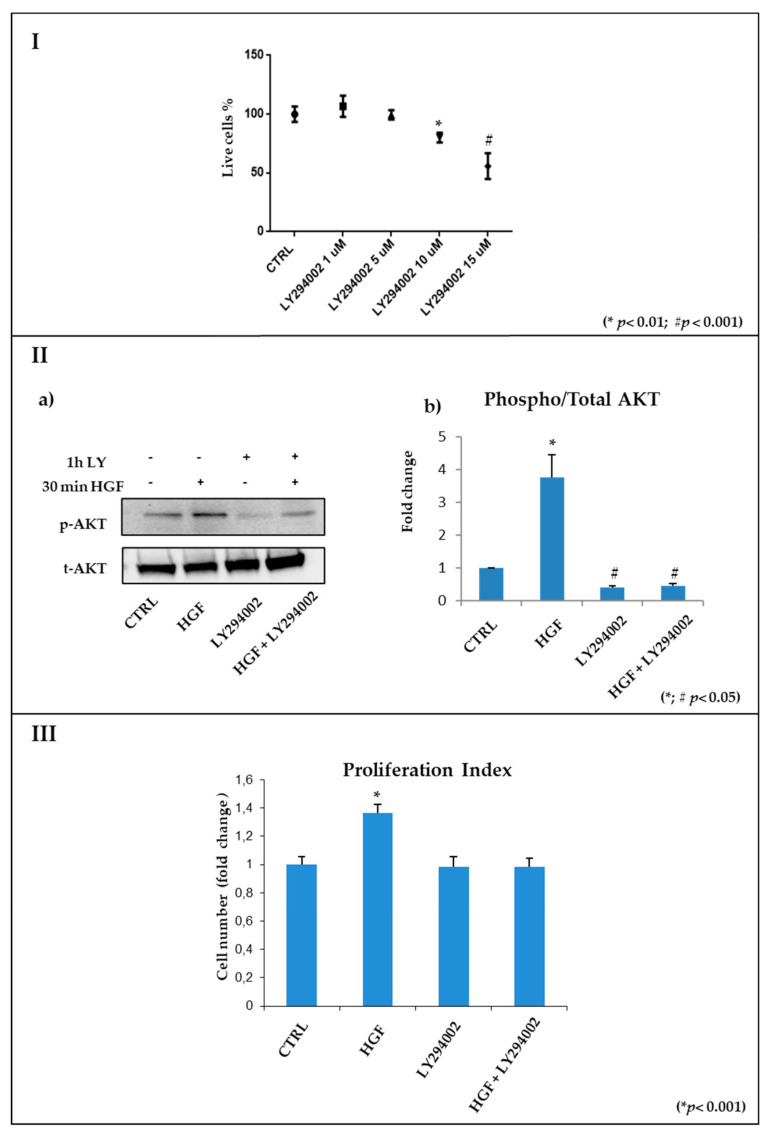
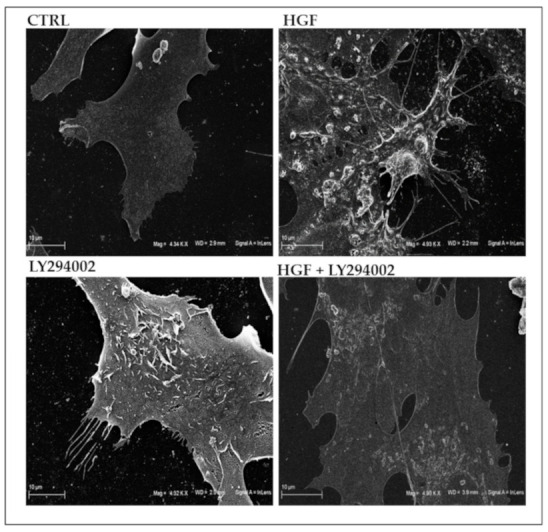
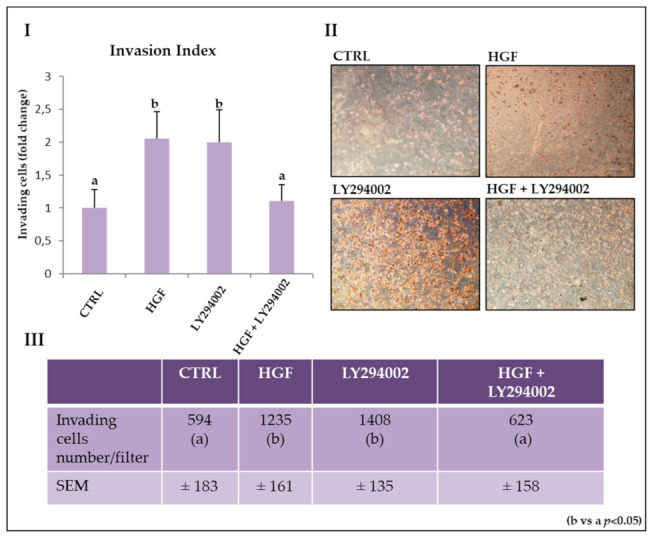
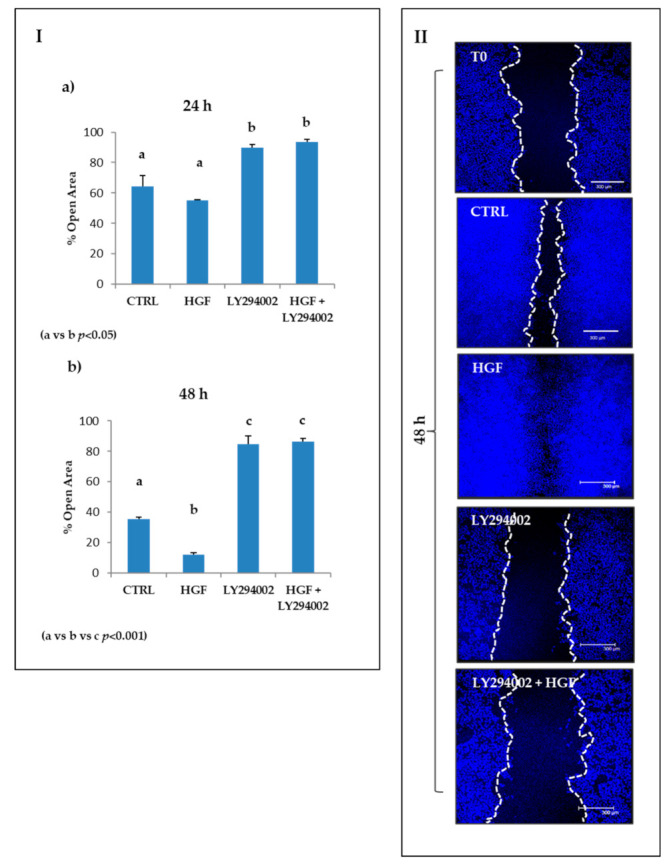
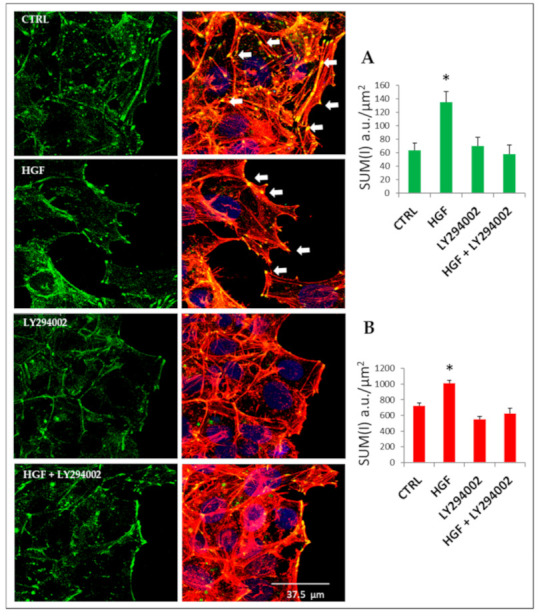
Overactivation of the c-MET/HGF system is a feature of many cancers. We previously reported that type II testicular germ cell tumor (TGCT) cells express the c-MET receptor, forming non-seminomatous lesions that are more positive compared with seminomatous ones. Notably, we also demonstrated that NT2D1 non-seminomatous cells (derived from an embryonal carcinoma lesion) increase their proliferation, migration, and invasion in response to HGF. Herein, we report that HGF immunoreactivity is more evident in the microenvironment of embryonal carcinoma biopsies with respect to seminomatous ones, indicating a tumor-dependent modulation of the testicular niche. PI3K/AKT is one of the signaling pathways triggered by HGF through the c-MET activation cascade. Herein, we demonstrated that phospho-AKT increases in NT2D1 cells after HGF stimulation. Moreover, we found that this pathway is involved in HGF-dependent NT2D1 cell proliferation, migration, and invasion, since the co-administration of the PI3K inhibitor LY294002 together with HGF abrogates these responses. Notably, the inhibition of endogenous PI3K affects collective cell migration but does not influence proliferation or chemotactic activity. Surprisingly, LY294002 administered without the co-administration of HGF increases cell invasion at levels comparable to the HGF-administered samples. This paradoxical result highlights the role of the testicular microenvironment in the modulation of cellular responses and stimulates the study of the testicular secretome in cancer lesions.
c-MET/HGF 系统的过度激活是许多癌症的一个特征。我们之前报道过,Ⅱ型睾丸生殖细胞肿瘤(TGCT)细胞表达 c-MET 受体,形成非精原细胞瘤性病变,与精原细胞瘤性病变相比更为阳性。值得注意的是,我们还证明 NT2D1 非精原细胞瘤细胞(源自胚胎癌病变)在 HGF 的刺激下增加其增殖、迁移和侵袭。在此,我们报告 HGF 免疫反应性在胚胎癌活检的微环境中比精原细胞瘤更明显,表明肿瘤依赖性调节睾丸小生境。PI3K/AKT 是 HGF 通过 c-MET 激活级联触发的信号通路之一。在此,我们证明 NT2D1 细胞在 HGF 刺激后磷酸化 AKT 增加。此外,我们发现该途径参与 HGF 依赖性 NT2D1 细胞增殖、迁移和侵袭,因为共同给予 PI3K 抑制剂 LY294002 和 HGF 可消除这些反应。值得注意的是,内源性 PI3K 的抑制作用会影响细胞的集体迁移,但不会影响增殖或趋化活性。令人惊讶的是,没有与 HGF 共同给药而给予 LY294002 会增加细胞侵袭,达到与给予 HGF 的样本相当的水平。这一矛盾的结果突出了睾丸微环境在调节细胞反应中的作用,并刺激了对癌症病变中睾丸分泌组的研究。