Department of Endocrinology, Guangdong Geriatrics Institute, Guangdong Provincial People's Hospital, Guangdong Academy of Medical Sciences, Guangzhou, Guangdong 510080, P.R. China.
Department of Surgery, The Third Affiliated Hospital of Guangzhou Medical University, Guangzhou, Guangdong 510150, P.R. China.
Mol Med Rep. 2021 Jan;23(1). doi: 10.3892/mmr.2020.11706. Epub 2020 Nov 20.
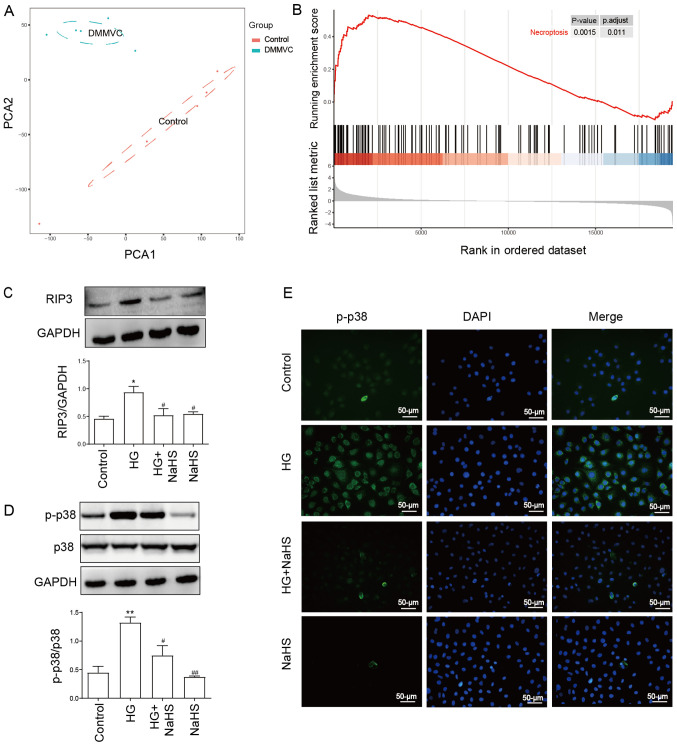
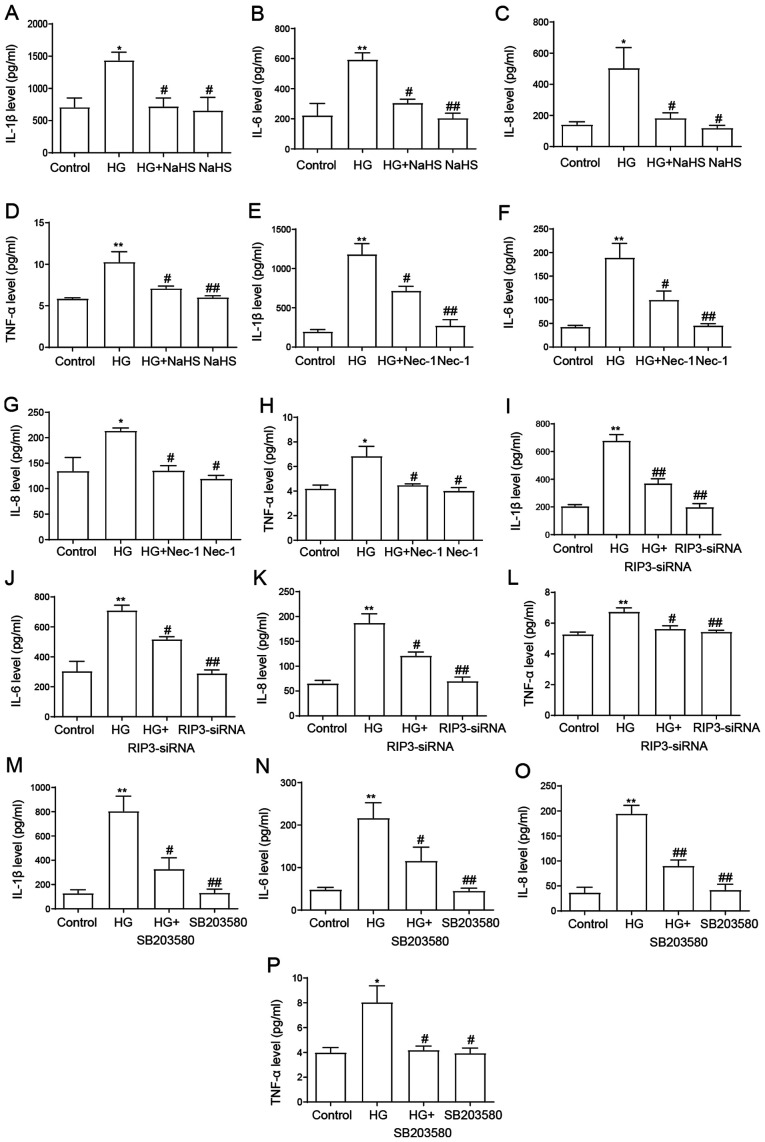
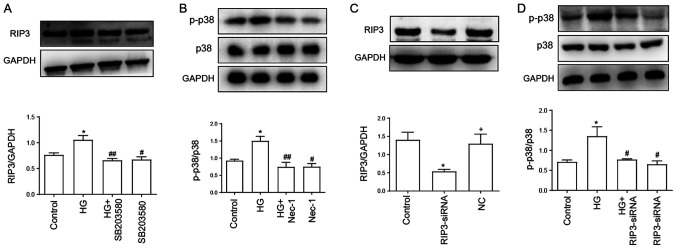
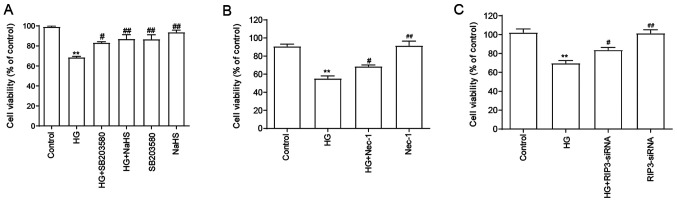
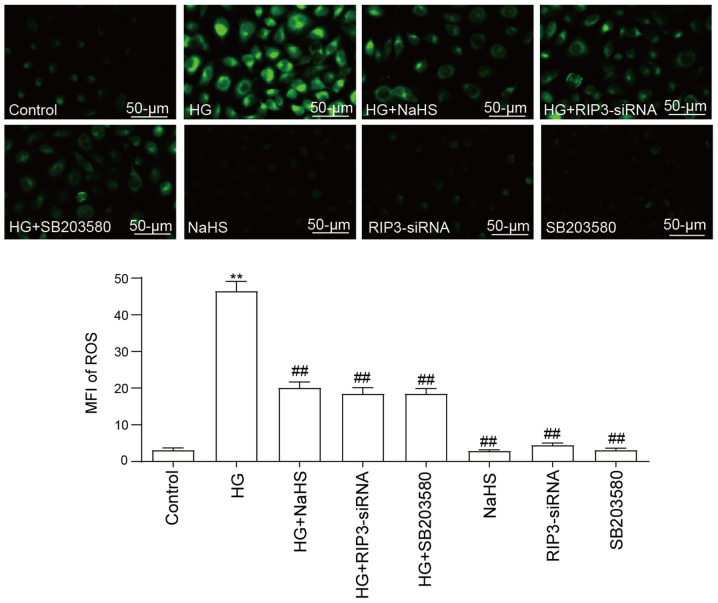
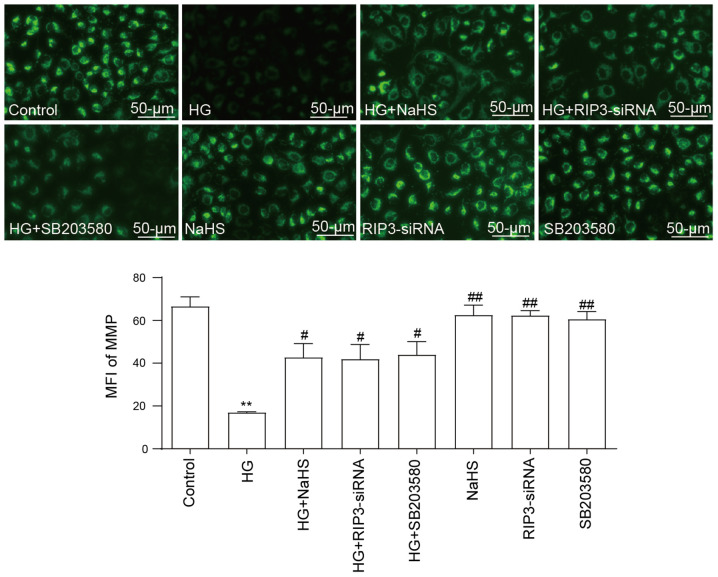
In recent years hydrogen sulfide (HS) has demonstrated vasculoprotective effects against cell death, which suggests its promising therapeutic potential for numerous types of disease. Additionally, a protective effect of exogenous HS in HG‑induced injuries in HUVECs was demonstrated, suggesting a potential protective effect for diabetic vascular complications. The present study aimed to investigate the mechanism accounting for the cytoprotective role of exogenous H2S against high glucose [HG (40 mM glucose)]‑induced injury and inflammation in human umbilical vein endothelial cells (HUVECs). HUVECs were exposed to HG for 24 h to establish an model of HG‑induced cytotoxicity. The cells were pretreated with sodium hydrosulfide (NaHS), a donor of HS, or inhibitors of necroptosis and p38 MAPK prior to the exposure to HG. Cell viability, intracellular reactive oxygen species (ROS), mitochondrial membrane potential (MMP), IL‑1β, IL‑6, IL‑8, TNF‑α, phosphorylated‑(p)38 and receptor‑interacting protein 3 (RIP3) expression levels were detected using the indicated methods, including Cell Counting Kit 8, fluorescence detection, western blotting, immunofluorescence assay and ELISAs. The results demonstrated that necroptosis and the p38 MAPK signaling pathway mediated HG‑induced injury and inflammation. Notably, NaHS was discovered to significantly ameliorate p38 MAPK/necroptosis‑mediated injury and inflammation in response to HG, as evidenced by an increase in cell viability, a decrease in ROS generation and loss of MMP, as well as the reduction in the secretion of proinflammatory cytokines. In addition, the upregulated expression of RIP3 induced by HG was repressed by treatment with SB203580, while the HG‑induced upregulation of p‑p38 expression levels were significantly downregulated following the treatment of Nec‑1 and RIP3‑siRNA. In conclusion, the findings of the present study indicated that NaHS may protect HUVECs against HG‑induced injury and inflammation by inhibiting necroptosis via the p38 MAPK signaling pathway, which may represent a promising drug for the therapy of diabetic vascular complications.
近年来,硫化氢 (HS) 已被证明具有抗细胞死亡的血管保护作用,这表明其在多种疾病的治疗中有很大的潜力。此外,还证明了外源性 HS 对 HG 诱导的 HUVEC 损伤具有保护作用,这表明其对糖尿病血管并发症具有潜在的保护作用。本研究旨在探讨外源性 H2S 对高葡萄糖 [HG(40mM 葡萄糖)] 诱导的人脐静脉内皮细胞 (HUVEC) 损伤和炎症的细胞保护作用机制。将 HUVEC 暴露于 HG 中 24h 以建立 HG 诱导的细胞毒性模型。将细胞用硫氢化钠(NaHS),HS 的供体,或坏死和 p38MAPK 的抑制剂预处理,然后再暴露于 HG 中。采用细胞计数试剂盒 8、荧光检测、western blot、免疫荧光法和 ELISA 检测细胞活力、细胞内活性氧(ROS)、线粒体膜电位(MMP)、IL-1β、IL-6、IL-8、TNF-α、磷酸化(p)38 和受体相互作用蛋白 3(RIP3)的表达水平。结果表明,坏死和 p38MAPK 信号通路介导 HG 诱导的损伤和炎症。值得注意的是,NaHS 显著改善了 HG 诱导的 p38MAPK/坏死介导的损伤和炎症,表现为细胞活力增加,ROS 生成减少和 MMP 丧失,以及促炎细胞因子的分泌减少。此外,HG 诱导的 RIP3 表达上调被 SB203580 抑制,而 Nec-1 和 RIP3-siRNA 处理后,HG 诱导的 p-p38 表达水平显著下调。总之,本研究结果表明,NaHS 通过抑制 p38MAPK 信号通路的坏死作用可能保护 HUVEC 免受 HG 诱导的损伤和炎症,这可能代表一种治疗糖尿病血管并发症的有前途的药物。