Aristizabal Paula, Burns Luke P, Kumar Nikhil V, Perdomo Bianca P, Rivera-Gomez Rebeca, Ornelas Mario A, Gonda David, Malicki Denise, Thornburg Courtney D, Roberts William, Levy Michael L, Crawford John R
Peckham Center for Cancer and Blood Disorders, Rady Children's Hospital San Diego, San Diego, CA.
Division of Pediatric Hematology/Oncology, Department of Pediatrics, University of California, San Diego, La Jolla, CA.
JCO Glob Oncol. 2020 Nov;6:1791-1802. doi: 10.1200/GO.20.00377.
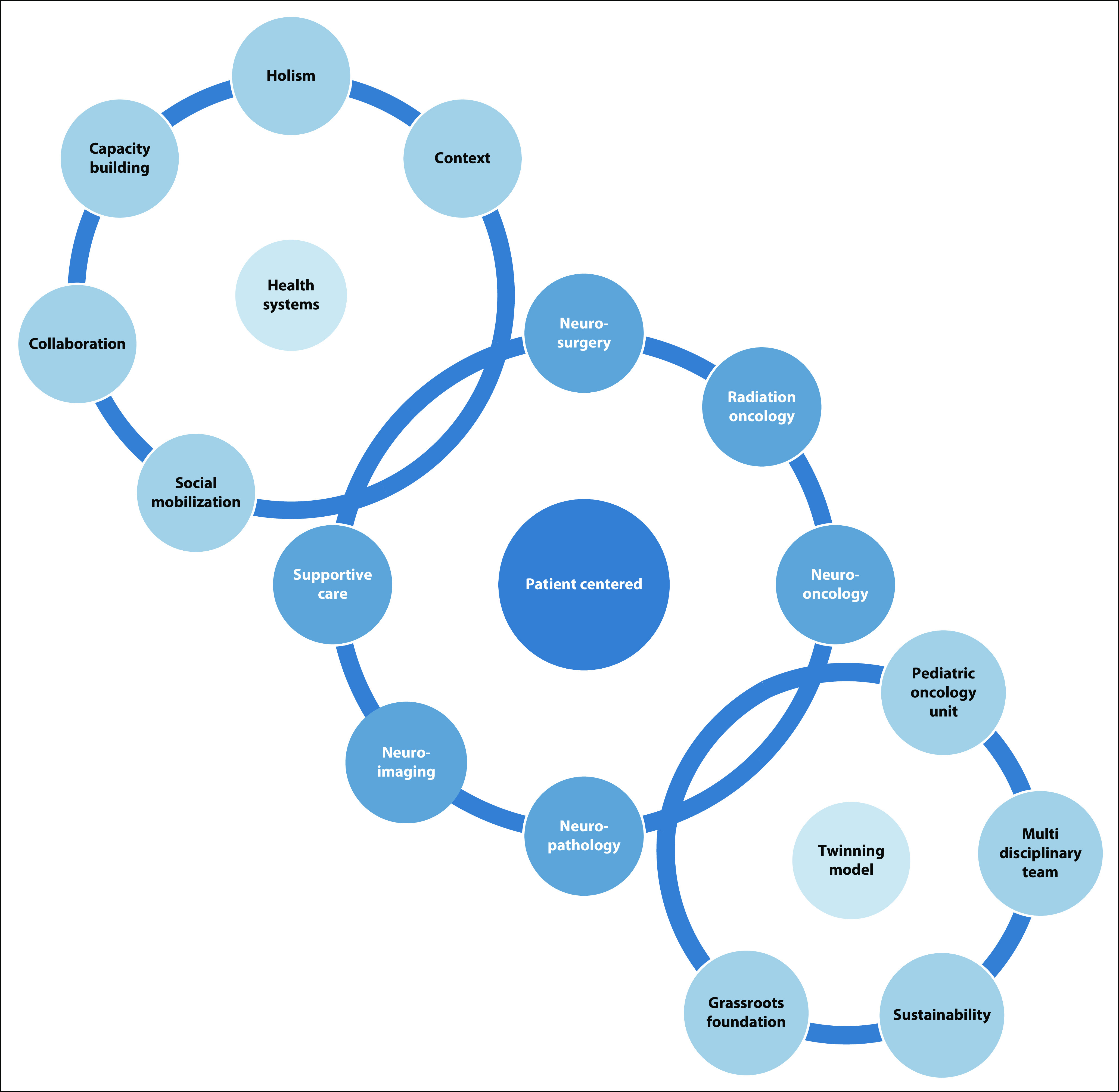
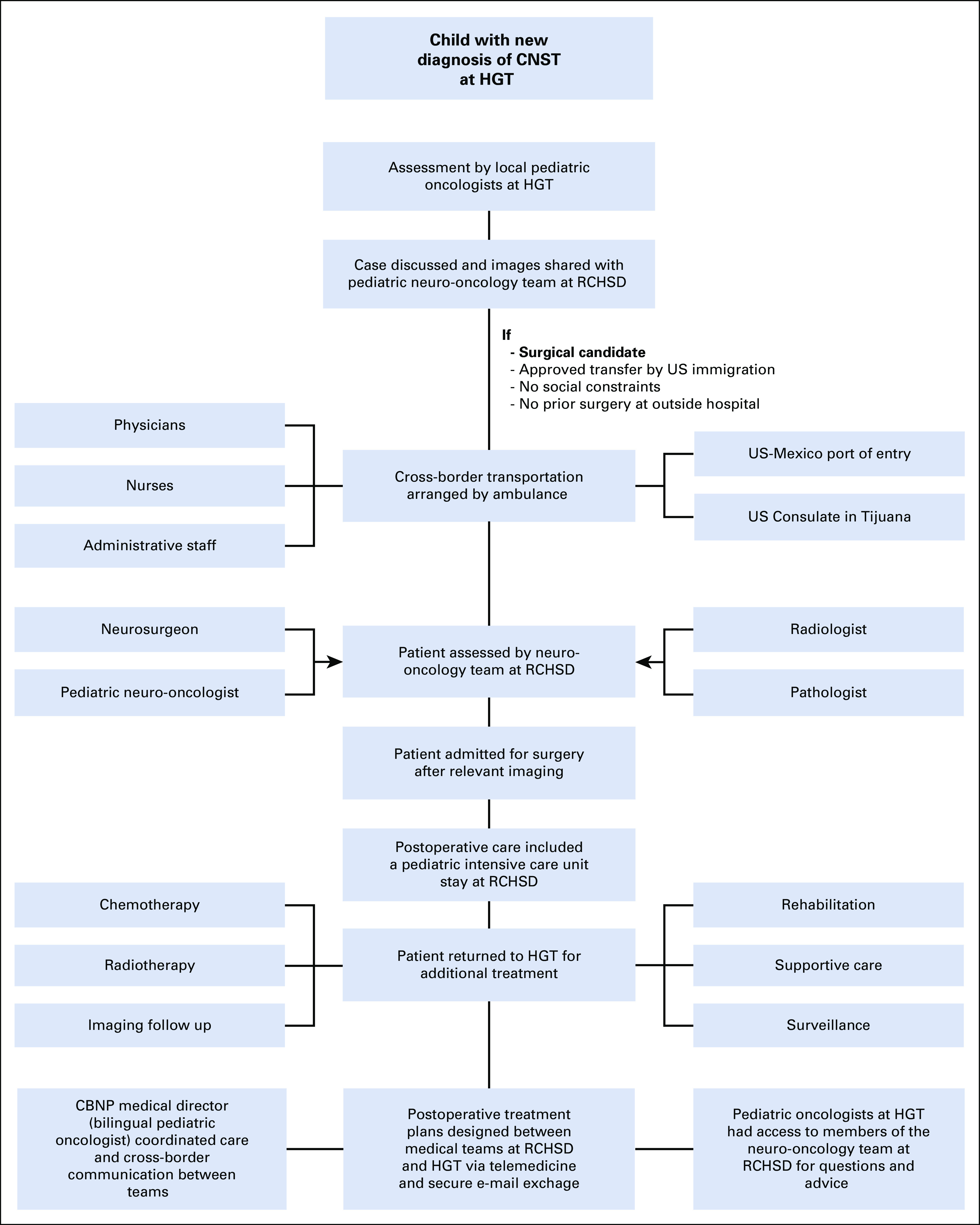
Treatment of children with CNS tumors (CNSTs) demands a complex, interdisciplinary approach that is rarely available in low- and middle-income countries. We established the Cross-Border Neuro-Oncology Program (CBNP) between Rady Children's Hospital, San Diego (RCHSD), and Hospital General, Tijuana (HGT), Mexico, to provide access to neuro-oncology care, including neurosurgic services, for children with CNSTs diagnosed at HGT. Our purpose was to assess the feasibility of the CBNP across the United States-Mexico border and improve survival for children with CNSTs at HGT by implementing the CBNP.
We prospectively assessed clinicopathologic profiles, the extent of resection, progression-free survival, and overall survival (OS) in children with CNSTs at HGT from 2010 to 2017.
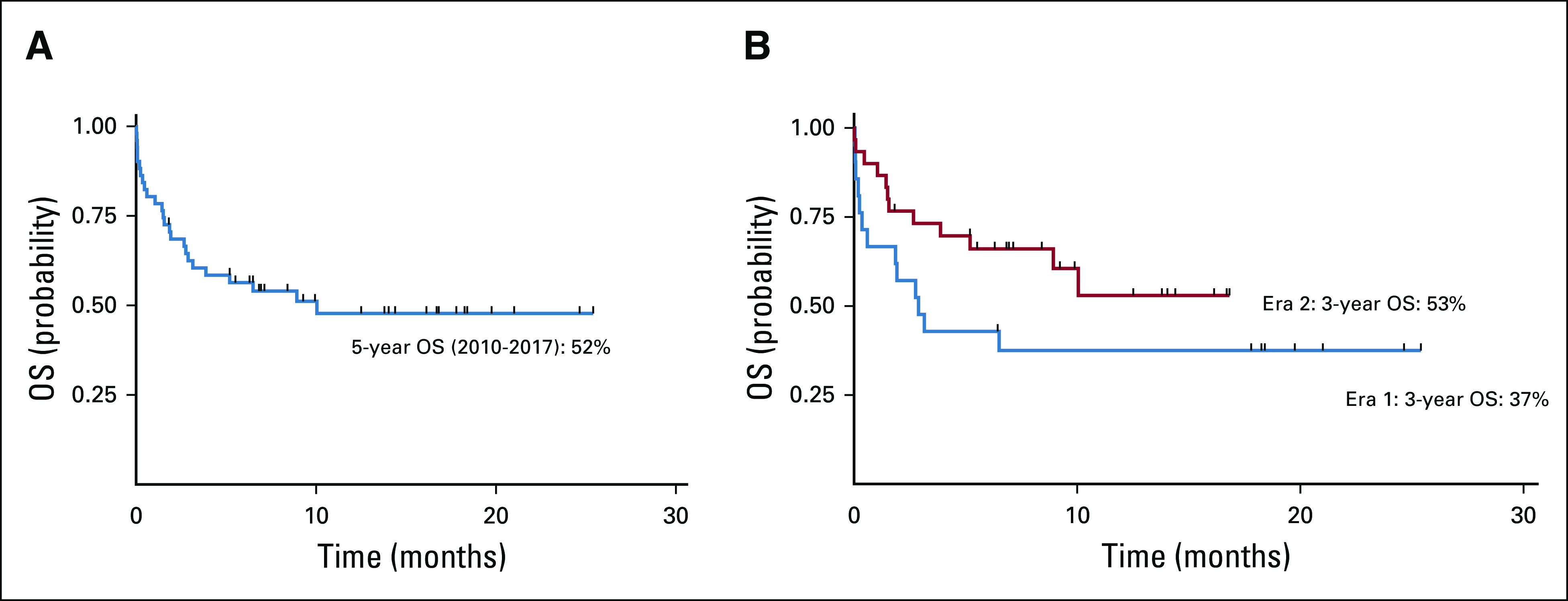
Sixty patients with CNSTs participated in the CBNP during the study period. The most common diagnoses were low-grade glioma (24.5%) and medulloblastoma (22.4%). Of patients who were eligible for surgery, 49 underwent resection at RCHSD and returned to HGT for collaborative management. Gross total resection was achieved in 78% of cases at RCHSD compared with 0% at HGT ( < .001) and was a predictor of 5-year OS (hazard ratio, 0.250; 95% CI, 0.067 to 0.934; = .024). Five-year OS improved from 0% before 2010 to 52% in 2017.
The CBNP facilitated access to complex neuro-oncology care for underserved children in Mexico through binational exchanges of resources and expertise. Survival for patients in the CBNP dramatically improved. Gross total resection at RCHSD was associated with higher OS, highlighting the critical role of experienced neurosurgeons in the treatment of CNSTs. The CBNP model offers an attractive alternative for children with CNSTs in low- and middle-income countries who require complex neuro-oncology care, particularly those in close proximity to institutions in high-income countries with extensive neuro-oncology expertise.
治疗中枢神经系统肿瘤(CNSTs)患儿需要一种复杂的多学科方法,而低收入和中等收入国家很少能提供这种方法。我们在圣地亚哥拉迪儿童医院(RCHSD)和墨西哥蒂华纳综合医院(HGT)之间建立了跨境神经肿瘤项目(CBNP),为在HGT诊断出患有CNSTs的患儿提供神经肿瘤护理,包括神经外科服务。我们的目的是评估CBNP跨越美墨边境的可行性,并通过实施CBNP提高HGT患有CNSTs患儿的生存率。
我们前瞻性地评估了2010年至2017年HGT患有CNSTs患儿的临床病理特征、切除范围、无进展生存期和总生存期(OS)。
在研究期间,60例患有CNSTs的患者参与了CBNP。最常见的诊断是低级别胶质瘤(24.5%)和髓母细胞瘤(22.4%)。 eligible for surgery(符合手术条件)的患者中,49例在RCHSD接受了切除手术,然后返回HGT进行联合管理。RCHSD有78%的病例实现了全切除,而HGT为0%(P<0.001),并且全切除是5年总生存期的一个预测因素(风险比,0.250;95%置信区间,0.067至0.934;P = 0.024)。5年总生存期从2010年前的0%提高到2017年的52%。
CBNP通过双边资源和专业知识交流,为墨西哥未得到充分服务的儿童提供了获得复杂神经肿瘤护理的机会。CBNP患者的生存率显著提高。RCHSD的全切除与更高的总生存期相关,突出了经验丰富的神经外科医生在CNSTs治疗中的关键作用。CBNP模式为低收入和中等收入国家需要复杂神经肿瘤护理的CNSTs患儿,特别是那些靠近拥有广泛神经肿瘤专业知识的高收入国家机构的患儿,提供了一个有吸引力的选择。