Kaur Gunjeet, Lakshmi P V M, Rastogi Ashu, Bhansali Anil, Jain Sanjay, Teerawattananon Yot, Bano Henna, Prinja Shankar
Department of Community Medicine and School of Public Health, Post Graduate Institute of Medical Education and Research, Chandigarh, India.
Department of Endocrinology, Post Graduate Institute of Medical Education and Research, Chandigarh, India.
PLoS One. 2020 Nov 20;15(11):e0242415. doi: 10.1371/journal.pone.0242415. eCollection 2020.
This systematic review aimed to ascertain the diagnostic accuracy (sensitivity and specificity) of screening tests for early detection of type 2 diabetes and prediabetes in previously undiagnosed adults.
This systematic review included published studies that included one or more index tests (random and fasting tests, HbA1c) for glucose detection, with 75-gram Oral Glucose Tolerance Test (or 2-hour post load glucose) as a reference standard (PROSPERO ID CRD42018102477). Seven databases were searched electronically (from their inception up to March 9, 2020) accompanied with bibliographic and website searches. Records were manually screened and full text were selected based on inclusion and exclusion criteria. Subsequently, data extraction was done using standardized form and quality assessment of studies using QUADAS-2 tool. Meta-analysis was done using bivariate model using Stata 14.0. Optimal cut offs in terms of sensitivity and specificity for the tests were analysed using R software.
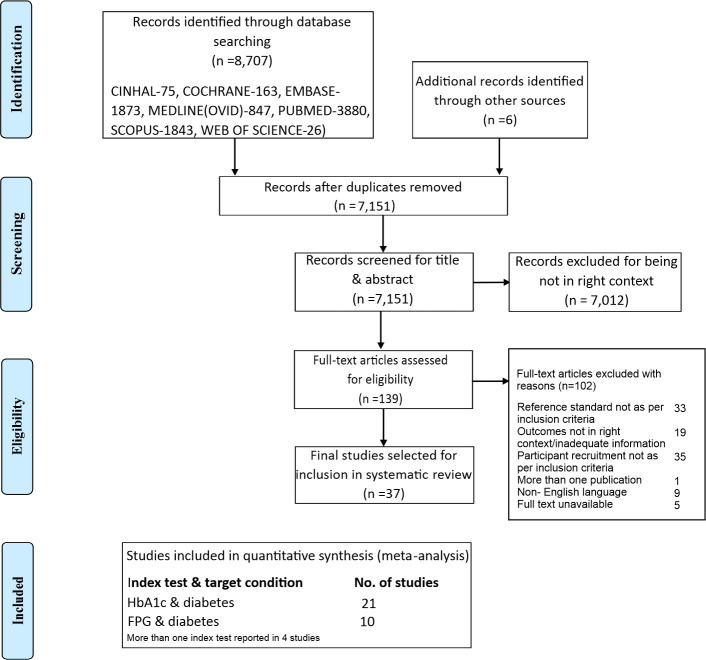
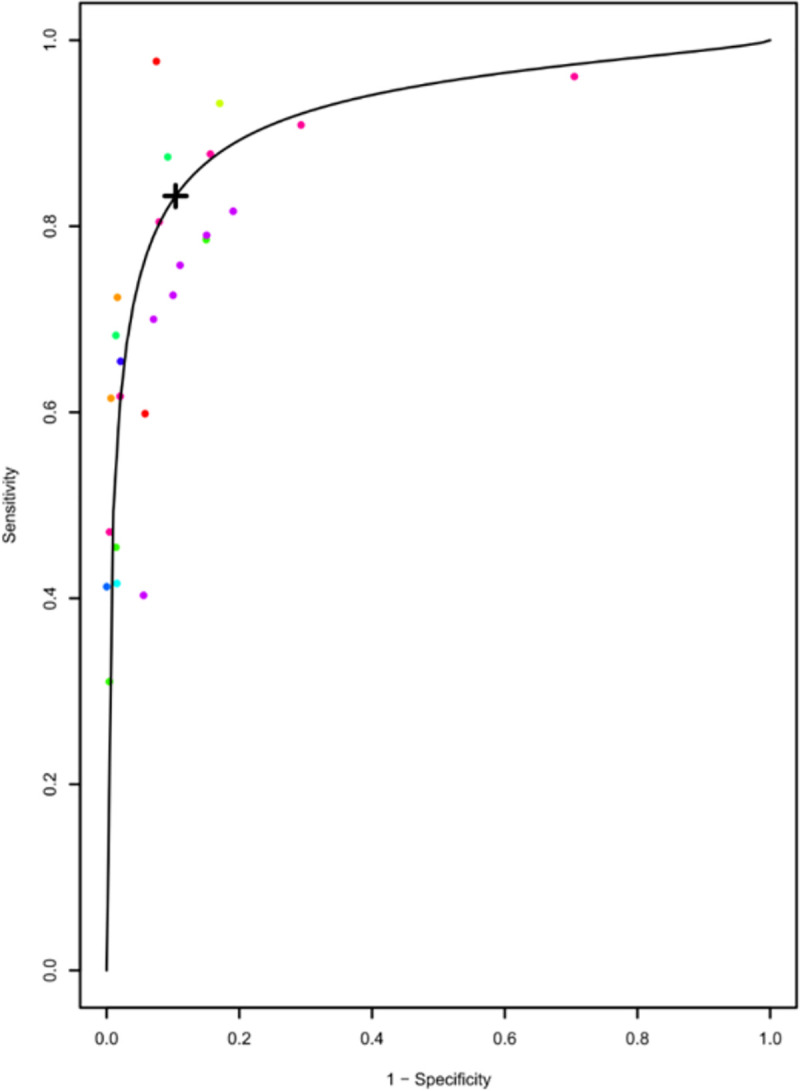
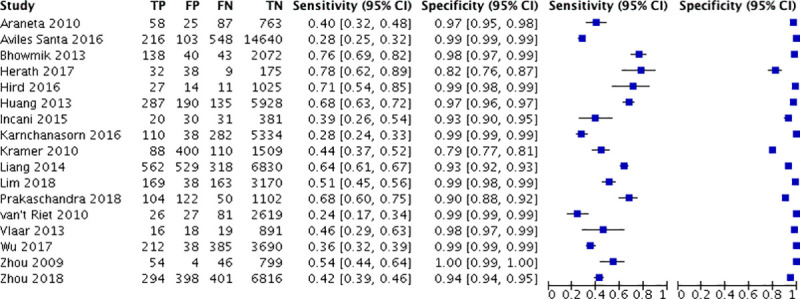
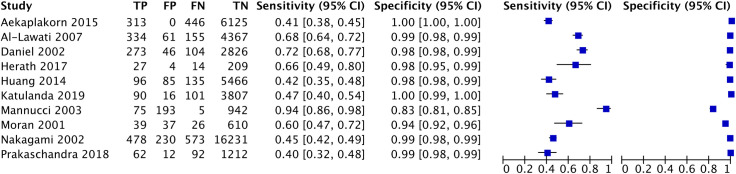
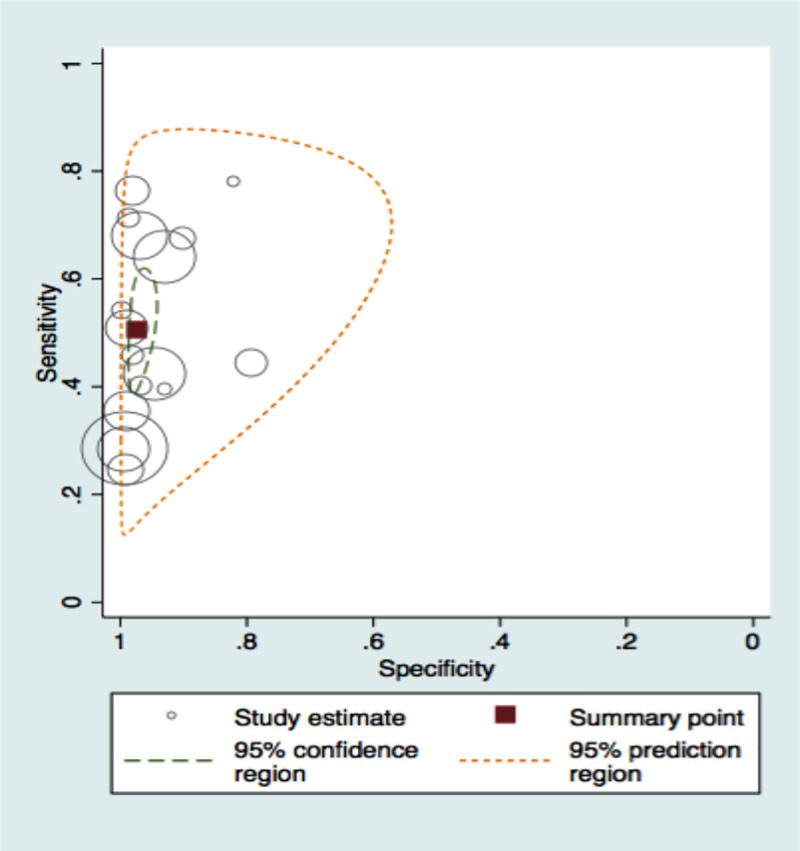
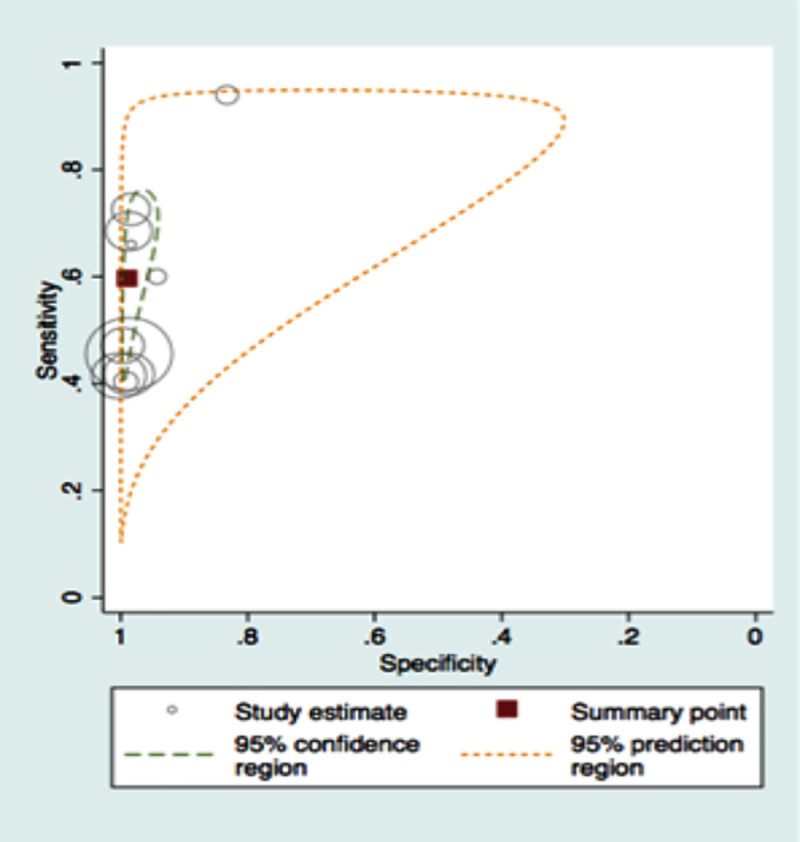
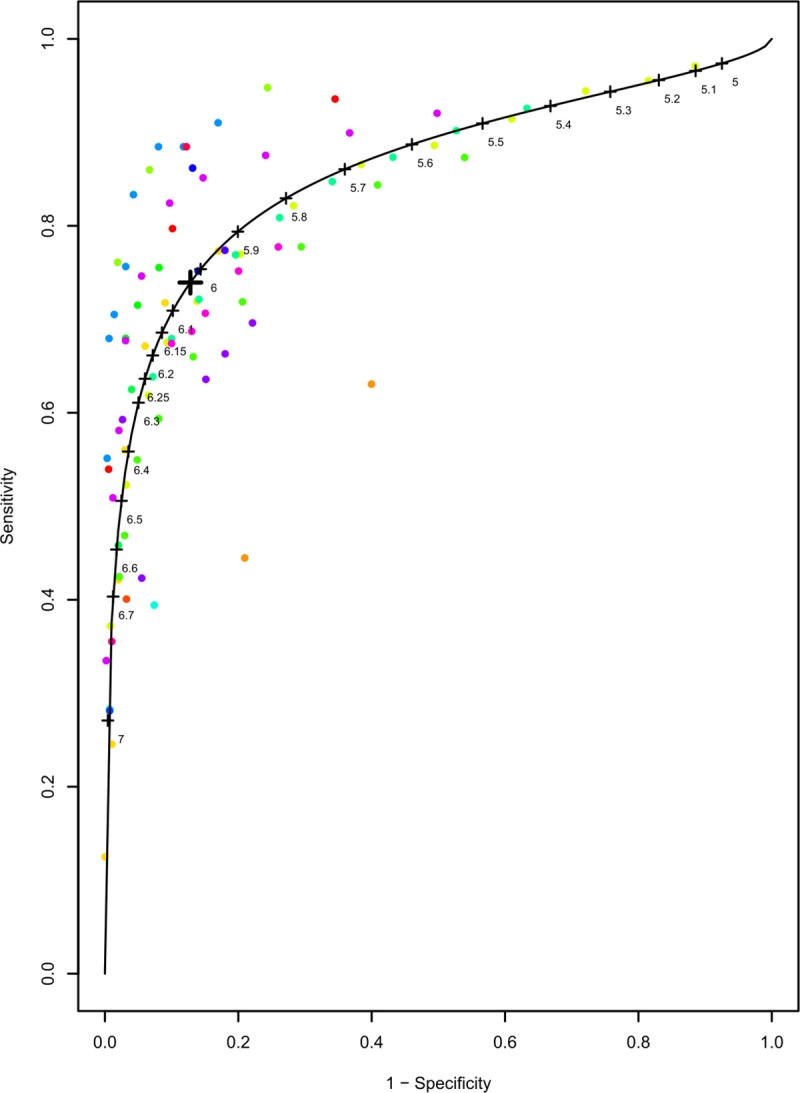
Of 7,151 records assessed by title and abstract, a total of 37 peer reviewed articles were included in this systematic review. The pooled sensitivity, specificity, positive (LR+) and negative likelihood ratio (LR-) for diagnosing diabetes with HbA1c (6.5%; venous sample; n = 17 studies) were 50% (95% CI: 42-59%), 97.3% (95% CI: 95.3-98.4), 18.32 (95% CI: 11.06-30.53) and 0.51 (95% CI: 0.43-0.60), respectively. However, the optimal cut-off for diagnosing diabetes in previously undiagnosed adults with HbA1c was estimated as 6.03% with pooled sensitivity of 73.9% (95% CI: 68-79.1%) and specificity of 87.2% (95% CI: 82-91%). The optimal cut-off for Fasting Plasma Glucose (FPG) was estimated as 104 milligram/dL (mg/dL) with a sensitivity of 82.3% (95% CI: 74.6-88.1%) and specificity of 89.4% (95% CI: 85.2-92.5%).
Our findings suggest that at present recommended threshold of 6.5%, HbA1c is more specific and less sensitive in diagnosing the newly detected diabetes in undiagnosed population from community settings. Lowering of thresholds for HbA1c and FPG to 6.03% and 104 mg/dL for early detection in previously undiagnosed persons for screening purposes may be considered.
本系统评价旨在确定筛查试验在未诊断的成年人中早期检测2型糖尿病和糖尿病前期的诊断准确性(敏感性和特异性)。
本系统评价纳入已发表的研究,这些研究包括一项或多项用于检测葡萄糖的指标试验(随机和空腹试验、糖化血红蛋白),以75克口服葡萄糖耐量试验(或负荷后2小时血糖)作为参考标准(国际前瞻性系统评价注册库编号CRD42018102477)。通过电子方式检索了七个数据库(从建库至2020年3月9日),并进行了文献和网站检索。人工筛选记录,并根据纳入和排除标准选择全文。随后,使用标准化表格进行数据提取,并使用QUADAS-2工具对研究进行质量评估。使用Stata 14.0软件的双变量模型进行荟萃分析。使用R软件分析试验在敏感性和特异性方面的最佳临界值。
通过标题和摘要评估的7151条记录中,本系统评价共纳入了37篇经同行评审的文章。使用糖化血红蛋白(6.5%;静脉血样本;n = 17项研究)诊断糖尿病的合并敏感性、特异性、阳性似然比(LR+)和阴性似然比(LR-)分别为50%(95%置信区间:42-59%)、97.3%(95%置信区间:95.3-98.4)、18.32(95%置信区间:11.06-30.53)和0.51(95%置信区间:0.43-0.60)。然而,在未诊断的成年人中,糖化血红蛋白诊断糖尿病的最佳临界值估计为6.03%,合并敏感性为73.9%(95%置信区间:68-79.1%),特异性为87.2%(95%置信区间:82-91%)。空腹血糖(FPG)的最佳临界值估计为104毫克/分升(mg/dL),敏感性为82.3%(95%置信区间:74.6-88.1%),特异性为89.4%(95%置信区间:85.2-92.5%)。
我们的研究结果表明目前推荐的6.5%临界值下,糖化血红蛋白在诊断社区环境中未诊断人群新发现的糖尿病时特异性更高但敏感性较低。为了筛查目的,对于未诊断的人群进行早期检测时,可考虑将糖化血红蛋白和空腹血糖的临界值分别降低至6.03%和104毫克/分升。