Department of Cardiology, Nanjing Drum Tower Hospital, Clinical College of Nanjing Medical University, Nanjing, 210008, Jiangsu, People's Republic of China.
Department of Cardiology, Affiliated Drum Tower Hospital, Medical School of Nanjing University, Nanjing, 210008, Jiangsu, People's Republic of China.
J Nanobiotechnology. 2020 Nov 20;18(1):171. doi: 10.1186/s12951-020-00733-z.
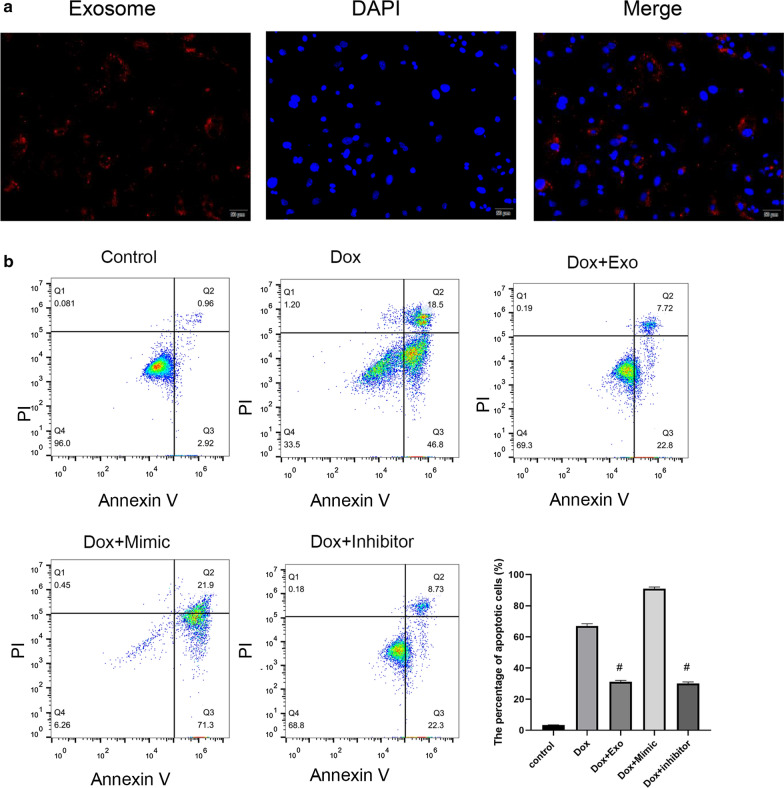
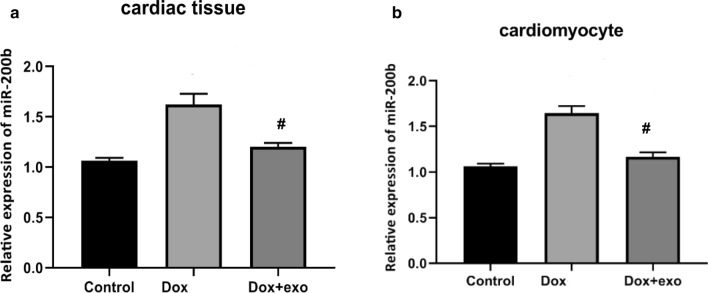
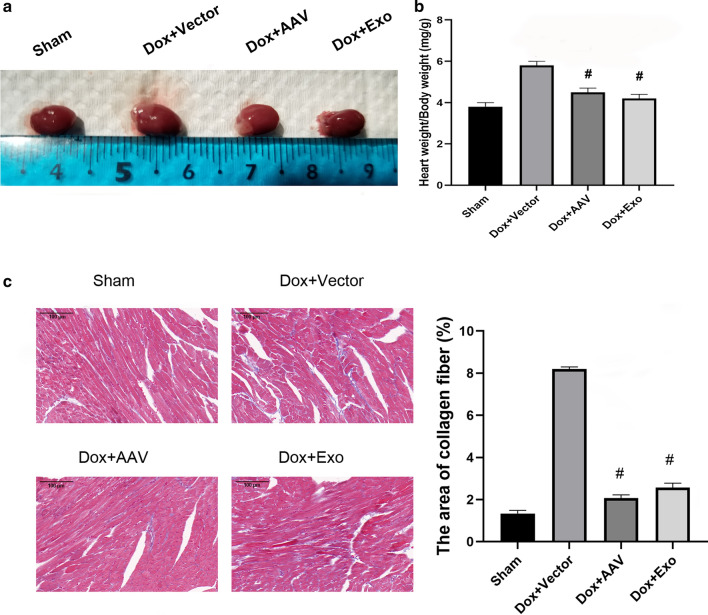
Human trophoblast stem cells (TSCs) have been confirmed to play a cardioprotective role in heart failure. However, whether trophoblast stem cell-derived exosomes (TSC-Exos) can protect cardiomyocytes from doxorubicin (Dox)-induced injury remains unclear. In the present study, TSC-Exos were isolated from the supernatants of human trophoblasts using the ultracentrifugation method and characterized by transmission electron microscopy and western blotting. In vitro, primary cardiomyocytes were subjected to Dox and treated with TSC-Exos, miR-200b mimic or miR-200b inhibitor. Cellular apoptosis was observed by flow cytometry and immunoblotting. In vivo, mice were intraperitoneally injected into Dox to establish a heart failure model. Then, different groups of mice were administered either PBS, adeno-associated virus (AAV)-vector, AAV-miR-200b-inhibitor or TSC-Exos via tail vein injection. Then, the cardiac function, cardiac fibrosis and cardiomyocyte apoptosis in each group were evaluated, and the downstream molecular mechanism was explored. TSC-Exos and miR-200b inhibitor both decreased primary cardiomyocyte apoptosis. Similarly, mice receiving TSC-Exos and AAV-miR-200b inhibitor exhibited improved cardiac function, accompanied by reduced apoptosis and inflammation. The bioinformatic prediction and luciferase reporter results confirmed that Zeb1 was a downstream target of miR-200b and had an antiapoptotic effect. TSC-Exos attenuated doxorubicin-induced cardiac injury by playing antiapoptotic and anti-inflammatory roles. The underlying mechanism could be an increase in Zeb1 expression by the inhibition of miR-200b expression. In summary, this study sheds new light on the application of TSC-Exos as a potential therapeutic tool for heart failure.
人类滋养层干细胞(TSC)已被证实在心衰中发挥心脏保护作用。然而,滋养层干细胞衍生的外泌体(TSC-Exos)是否能保护心肌细胞免受阿霉素(Dox)诱导的损伤尚不清楚。在本研究中,采用超速离心法从人滋养层细胞上清液中分离 TSC-Exos,并通过透射电子显微镜和 Western blot 进行鉴定。在体外,将原代心肌细胞用 Dox 处理,并与 TSC-Exos、miR-200b 模拟物或 miR-200b 抑制剂一起处理。通过流式细胞术和免疫印迹观察细胞凋亡。在体内,用腹腔注射 Dox 建立心衰模型。然后,通过尾静脉注射不同组别的小鼠给予 PBS、腺相关病毒(AAV)-载体、AAV-miR-200b 抑制剂或 TSC-Exos。然后,评估各组小鼠的心脏功能、心脏纤维化和心肌细胞凋亡,并探讨下游分子机制。TSC-Exos 和 miR-200b 抑制剂均可减少原代心肌细胞凋亡。同样,接受 TSC-Exos 和 AAV-miR-200b 抑制剂治疗的小鼠表现出改善的心脏功能,伴有凋亡和炎症减少。生物信息学预测和荧光素酶报告基因结果证实 Zeb1 是 miR-200b 的下游靶标,具有抗凋亡作用。TSC-Exos 通过发挥抗凋亡和抗炎作用减轻阿霉素诱导的心脏损伤。其潜在机制可能是通过抑制 miR-200b 的表达增加 Zeb1 的表达。综上所述,本研究为 TSC-Exos 作为心衰潜在治疗工具的应用提供了新的思路。