Arrhythmia and Electrophysiology Department, IRCCS Policlinico San Donato, Piazza E. Malan 1, 20097 San Donato Milanese, Milano, Italy.
Stem Cells for Tissue Engineering Laboratory, IRCCS Policlinico San Donato, piazza Malan 2, 20097 San Donato Milanese, Milan, Italy.
Eur Heart J. 2021 Mar 14;42(11):1082-1090. doi: 10.1093/eurheartj/ehaa942.
Brugada syndrome (BrS) is associated with an increased risk of sudden cardiac death due to ventricular tachycardia/fibrillation (VT/VF) in young, otherwise healthy individuals. Despite SCN5A being the most commonly known mutated gene to date, the genotype-phenotype relationship is poorly understood and remains uncertain. This study aimed to elucidate the genotype-phenotype correlation in BrS.
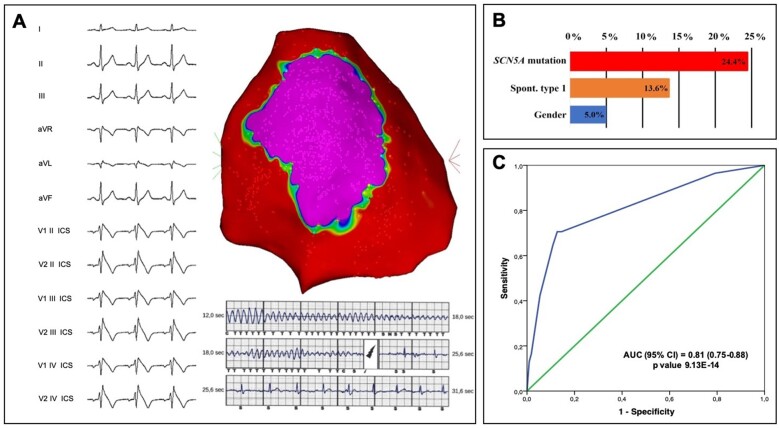
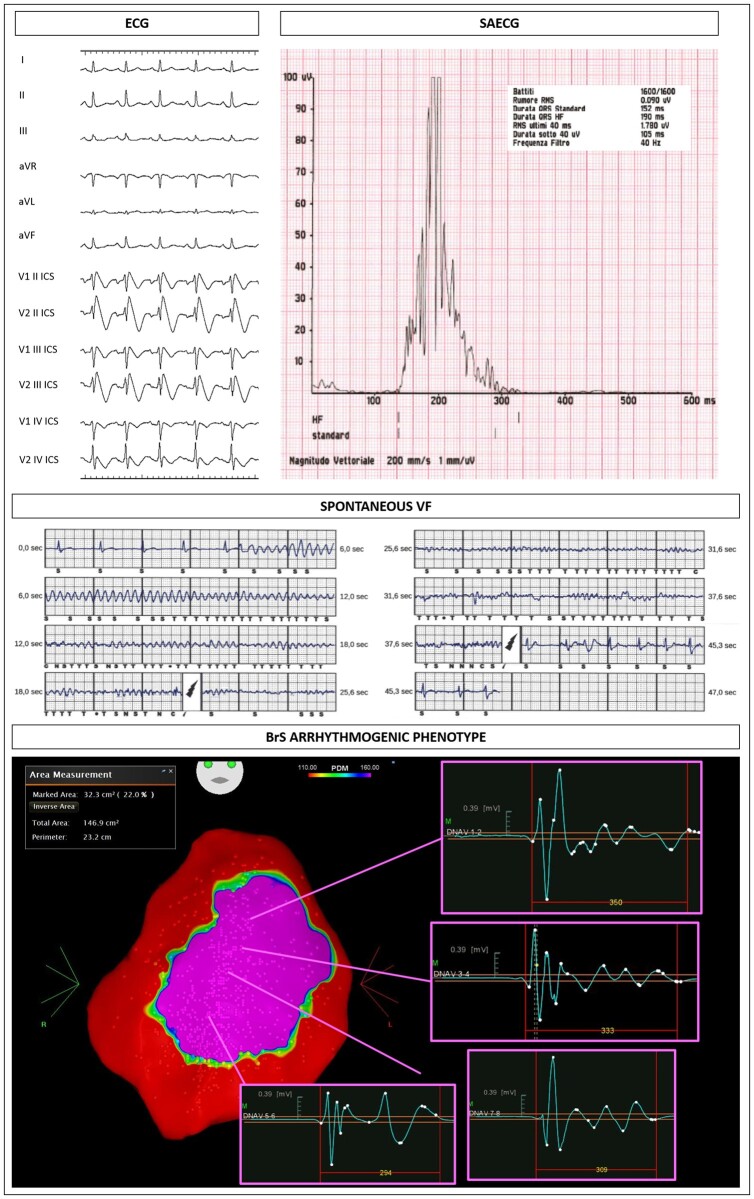
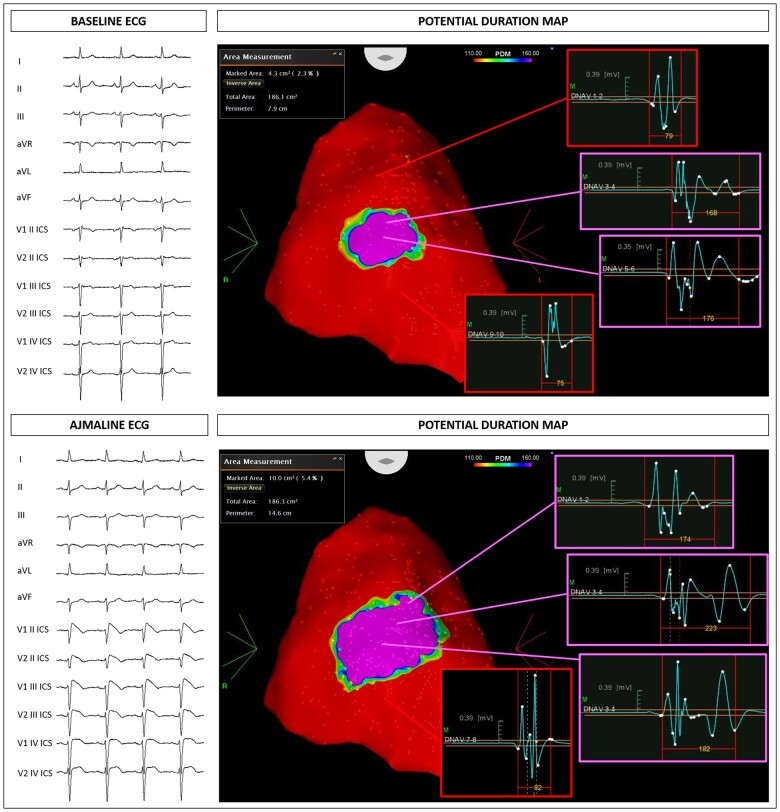
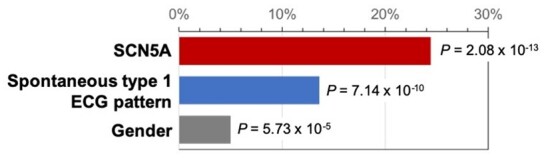
Brugada syndrome probands deemed at high risk of future arrhythmic events underwent genetic testing and phenotype characterization by the means of epicardial arrhythmogenic substrate (AS) mapping, and were divided into two groups according to the presence or absence of SCN5A mutation. Two-hundred probands (160 males, 80%; mean age 42.6 ± 12.2 years) were included in this study. Patients harbouring SCN5A mutations exhibited a spontaneous type 1 pattern and experienced aborted cardiac arrest or spontaneous VT/VF more frequently than the other subjects. SCN5A-positive patients exhibited a larger epicardial AS area, more prolonged electrograms and more frequently observed non-invasive late potentials. The presence of an SCN5A mutation explained >26% of the variation in the epicardial AS area and was the strongest predictor of a large epicardial area.
In BrS, the genetic background is the main determinant for the extent of the electrophysiological abnormalities. SCN5A mutation carriers exhibit more pronounced epicardial electrical abnormalities and a more aggressive clinical presentation. These results contribute to the understanding of the genetic determinants of the BrS phenotypic expression and provide possible explanations for the varying degrees of disease expression.
Brugada 综合征(BrS)与年轻、健康个体的室性心动过速/颤动(VT/VF)相关,其发生心源性猝死的风险增加。尽管 SCN5A 是迄今为止最常见的已知突变基因,但基因型-表型关系知之甚少,仍不确定。本研究旨在阐明 BrS 的基因型-表型相关性。
有未来心律失常事件高风险的 Brugada 综合征先证者接受基因检测,并通过心外膜心律失常基质(AS)标测进行表型特征分析,根据是否存在 SCN5A 突变将其分为两组。本研究共纳入 200 例先证者(男性 160 例,80%;平均年龄 42.6±12.2 岁)。携带 SCN5A 突变的患者表现为自发性 1 型心电图改变,更易发生心脏骤停或自发性 VT/VF。SCN5A 阳性患者的心外膜 AS 面积更大,心电图更长,更常观察到非侵入性晚电位。SCN5A 突变的存在可解释心外膜 AS 面积变化的>26%,是心外膜面积大的最强预测因子。
在 BrS 中,遗传背景是电生理异常程度的主要决定因素。SCN5A 突变携带者表现出更明显的心外膜电异常和更具侵袭性的临床表现。这些结果有助于理解 BrS 表型表达的遗传决定因素,并为疾病表型的不同程度提供可能的解释。