Parkinson Joel T, Foley Éimear M, Jadon Deepak R, Khandaker Golam M
Department of Psychiatry, School of Clinical Medicine, University of Cambridge, Herchel Smith Building for Brain and Mind Sciences, Cambridge Biomedical Campus, Robinson Way, Cambridge, Cambridgeshire CB2 0SZ, UK.
Department of Psychiatry, School of Clinical Medicine, University of Cambridge, Cambridge, UK.
Ther Adv Musculoskelet Dis. 2020 Nov 2;12:1759720X20970028. doi: 10.1177/1759720X20970028. eCollection 2020.
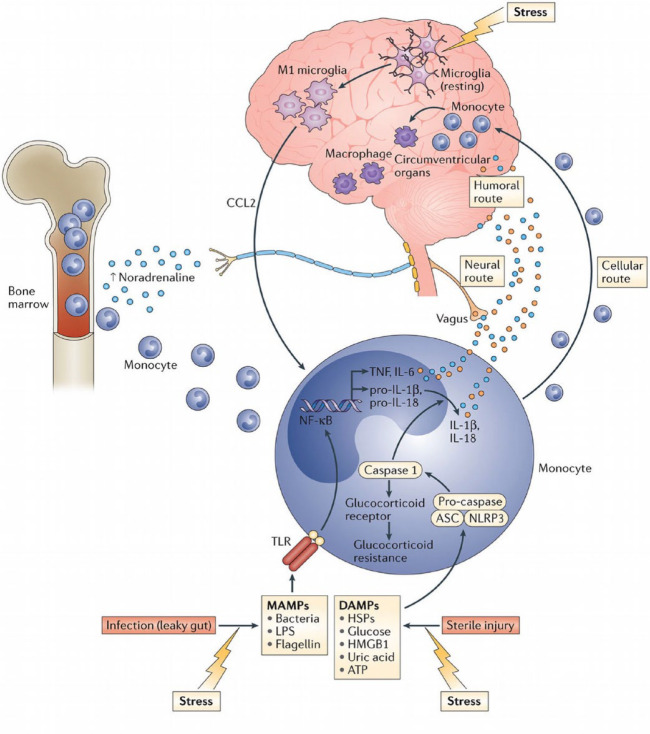
Depression is a major neuropsychiatric disorder common in patients with rheumatological conditions including spondyloarthritis (SpA). It is associated with higher disease activity, functional impairment, poor treatment response and quality of life in patients with musculoskeletal disorders. Using ankylosing spondylitis (AS) and psoriatic arthritis (PsA) as examples, we have reviewed the evidence regarding the burden, risk factors, potential mechanisms and clinical management of depression in spondyloarthritis. The prevalence of depression is higher in patients with AS and PsA compared with the general population, with evidence of moderate/severe depression in about 15% of patients with AS or PsA. Mild depression is even more common and estimated to be present in about 40% of patients with AS. In addition to conventional risk factors such as stressful life events and socioeconomic deprivation, increased risk of depression in SpA may be associated with disease-related factors, such as disease activity, poor quality of life, fatigue, and sleep disturbances. Emerging evidence implicates inflammation in the aetiology of depression, which could also be a shared mechanism for depression and chronic inflammatory conditions such as AS and PsA. It is imperative for clinicians to actively assess and treat depression in SpA, as this could improve treatment adherence, quality of life, and overall long-term clinical and occupational outcomes. The use of validated tools can aid recognition and management of depression in rheumatology clinics. Management of depression in SpA, especially when to refer to specialist mental health services, are discussed.
抑郁症是一种主要的神经精神障碍,在包括脊柱关节炎(SpA)在内的风湿性疾病患者中很常见。它与肌肉骨骼疾病患者的疾病活动度更高、功能障碍、治疗反应不佳及生活质量差有关。以强直性脊柱炎(AS)和银屑病关节炎(PsA)为例,我们回顾了有关脊柱关节炎中抑郁症的负担、危险因素、潜在机制及临床管理的证据。与普通人群相比,AS和PsA患者中抑郁症的患病率更高,约15%的AS或PsA患者有中度/重度抑郁症的证据。轻度抑郁症更为常见,估计约40%的AS患者存在轻度抑郁症。除了诸如生活应激事件和社会经济贫困等传统危险因素外,SpA患者抑郁症风险增加可能与疾病相关因素有关,如疾病活动度、生活质量差、疲劳和睡眠障碍。新出现的证据表明炎症在抑郁症病因中起作用,这也可能是抑郁症与AS和PsA等慢性炎症性疾病的共同机制。临床医生积极评估和治疗SpA患者的抑郁症至关重要,因为这可以提高治疗依从性、生活质量以及总体长期临床和职业结局。使用经过验证的工具有助于在风湿病诊所识别和管理抑郁症。本文讨论了SpA患者抑郁症的管理,尤其是何时转诊至专业心理健康服务机构。