Institute of Molecular and Organismic Evolution, Johannes Gutenberg University, Hanns-Dieter-Hüsch-Weg 15, 55128, Mainz, Germany.
Department for Applied Bioinformatics, Inst. of Cell Biology and Neuroscience, Goethe University, Frankfurt, Germany.
BMC Genomics. 2020 Nov 23;21(1):816. doi: 10.1186/s12864-020-07191-9.
The gut microbiome can influence life history traits associated with host fitness such as fecundity and longevity. In most organisms, these two life history traits are traded-off, while they are positively linked in social insects. In ants, highly fecund queens can live for decades, while their non-reproducing workers exhibit much shorter lifespans. Yet, when fertility is induced in workers by death or removal of the queen, worker lifespan can increase. It is unclear how this positive link between fecundity and longevity is achieved and what role the gut microbiome and the immune system play in this. To gain insights into the molecular regulation of lifespan in social insects, we investigated fat body gene expression and gut microbiome composition in workers of the ant Temnothorax rugatulus in response to an experimental induction of fertility and an immune challenge.
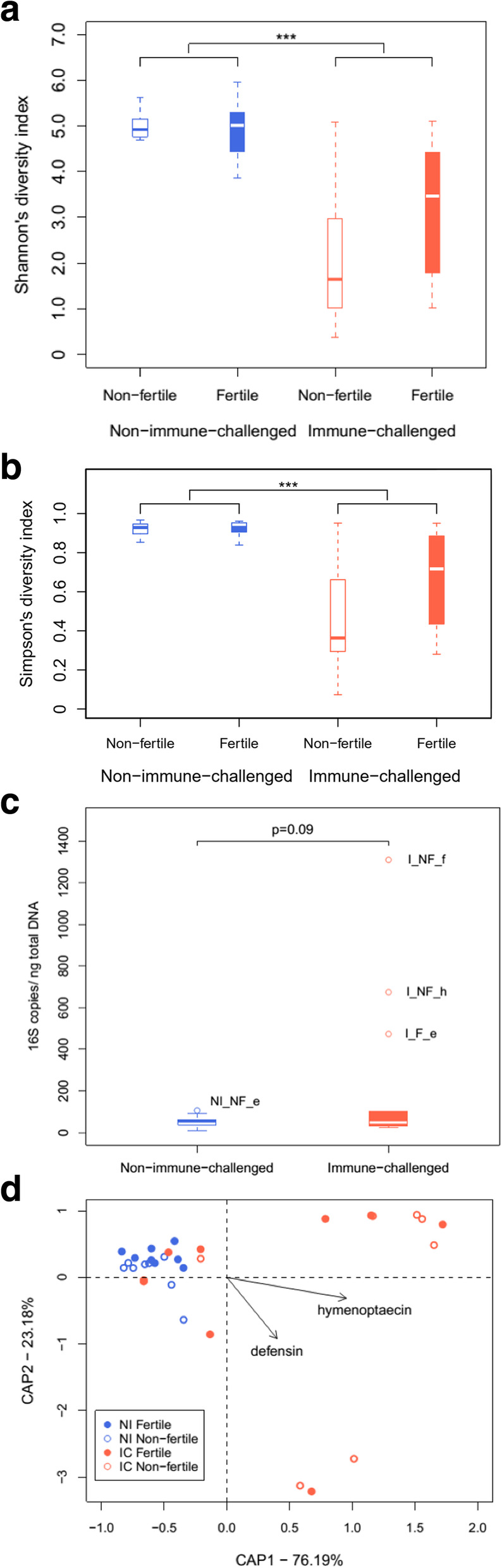
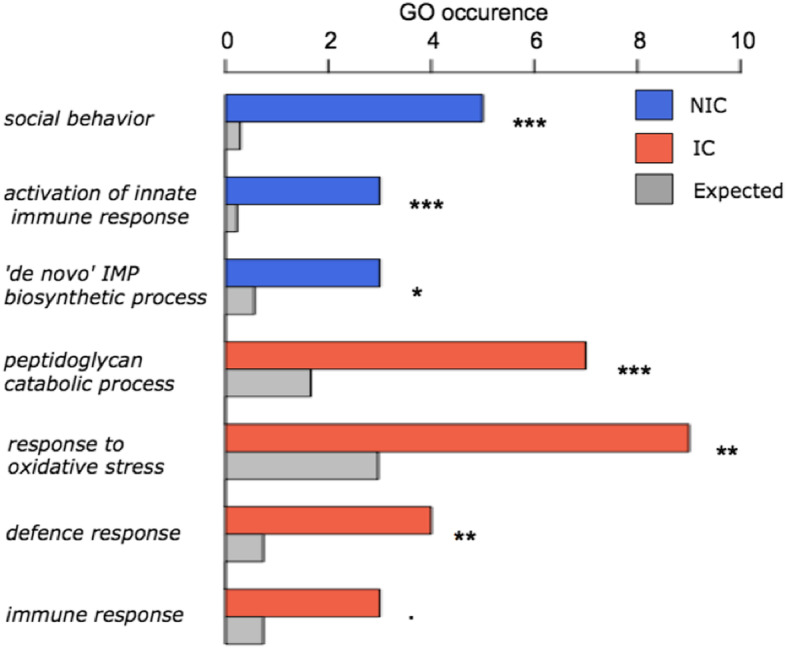
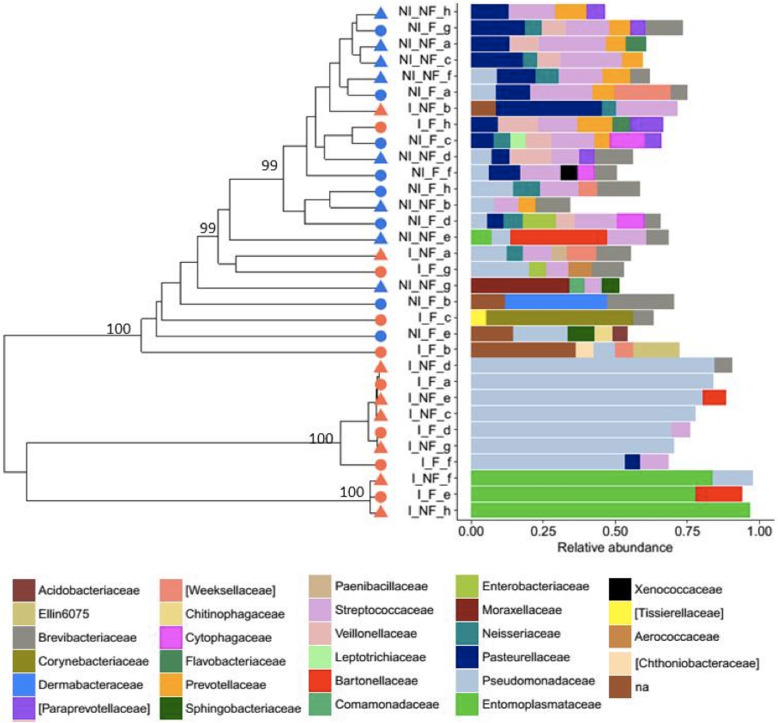
Fertile workers upregulated several molecular repair mechanisms, which could explain their extended lifespan. The immune challenge altered the expression of several thousand genes in the fat body, including many immune genes, and, interestingly, this transcriptomic response depended on worker fertility. For example, only fertile, immune-challenged workers upregulated genes involved in the synthesis of alpha-ketoglutarate, an immune system regulator, which extends the lifespan in Caenorhabditis elegans by down-regulating the TOR pathway and reducing oxidant production. Additionally, we observed a dramatic loss in bacterial diversity in the guts of the ants within a day of the immune challenge. Yet, bacterial density did not change, so that the gut microbiomes of many immune challenged workers consisted of only a single or a few bacterial strains. Moreover, the expression of immune genes was linked to the gut microbiome composition, suggesting that the ant host can regulate the microbiome in its gut.
Immune system flare-ups can have negative consequence on gut microbiome diversity, pointing to a previously underrated cost of immunity. Moreover, our results provide important insights into shifts in the molecular regulation of fertility and longevity associated with insect sociality.
肠道微生物组可以影响与宿主适应性相关的生活史特征,例如繁殖力和寿命。在大多数生物体中,这两个生活史特征是相互权衡的,而在社会性昆虫中它们是正相关的。在蚂蚁中,高繁殖力的蚁后可以活几十年,而它们不繁殖的工蚁寿命则短得多。然而,当通过蚁后死亡或移除来诱导工蚁的生殖力时,工蚁的寿命可以增加。目前尚不清楚这种繁殖力和寿命之间的正相关是如何实现的,以及肠道微生物组和免疫系统在其中扮演什么角色。为了深入了解社会性昆虫寿命的分子调控机制,我们研究了 Temnothorax rugatulus 蚂蚁工蚁的脂肪体基因表达和肠道微生物组组成,以响应生殖力的实验诱导和免疫挑战。
有生育能力的工蚁上调了几个分子修复机制,这可以解释它们延长的寿命。免疫挑战改变了脂肪体中数千个基因的表达,包括许多免疫基因,有趣的是,这种转录组反应取决于工蚁的生育能力。例如,只有有生育能力、受到免疫挑战的工蚁上调了参与合成α-酮戊二酸的基因,α-酮戊二酸是一种免疫系统调节剂,通过下调 TOR 途径和减少氧化应激产物的产生,延长秀丽隐杆线虫的寿命。此外,我们观察到在免疫挑战后的一天内,蚂蚁肠道中的细菌多样性急剧丧失。然而,细菌密度没有变化,因此许多受到免疫挑战的工蚁的肠道微生物组只由一种或几种细菌菌株组成。此外,免疫基因的表达与肠道微生物组组成有关,这表明蚂蚁宿主可以调节其肠道中的微生物组。
免疫系统的爆发可能对肠道微生物组的多样性产生负面影响,这表明免疫的代价被低估了。此外,我们的研究结果为与昆虫社会性相关的生殖力和寿命的分子调控变化提供了重要的见解。