Department of Human Biology, Institute of Biology, Faculty of Biological and Veterinary Sciences, Nicolaus Copernicus University, 87-100 Toruń, Poland.
Department of Dermatology, University of Alabama at Birmingham, Birmingham, AL 35294, USA.
Nutrients. 2020 Nov 19;12(11):3541. doi: 10.3390/nu12113541.
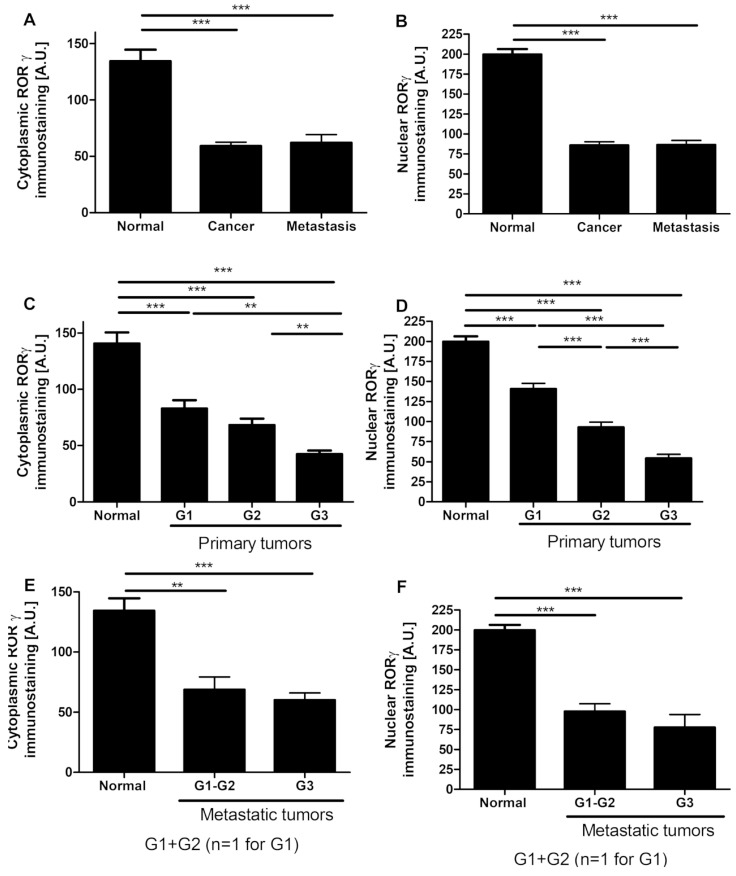
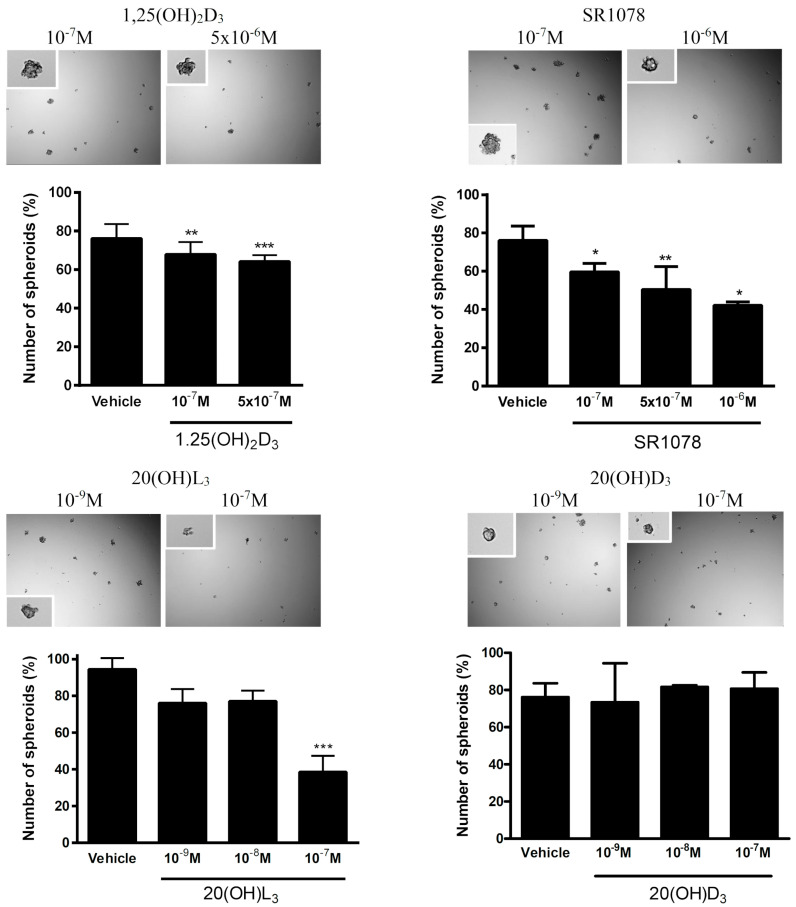
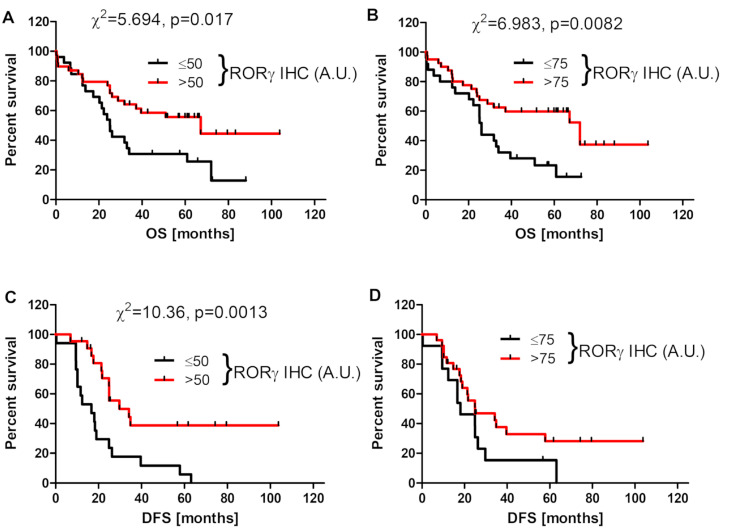
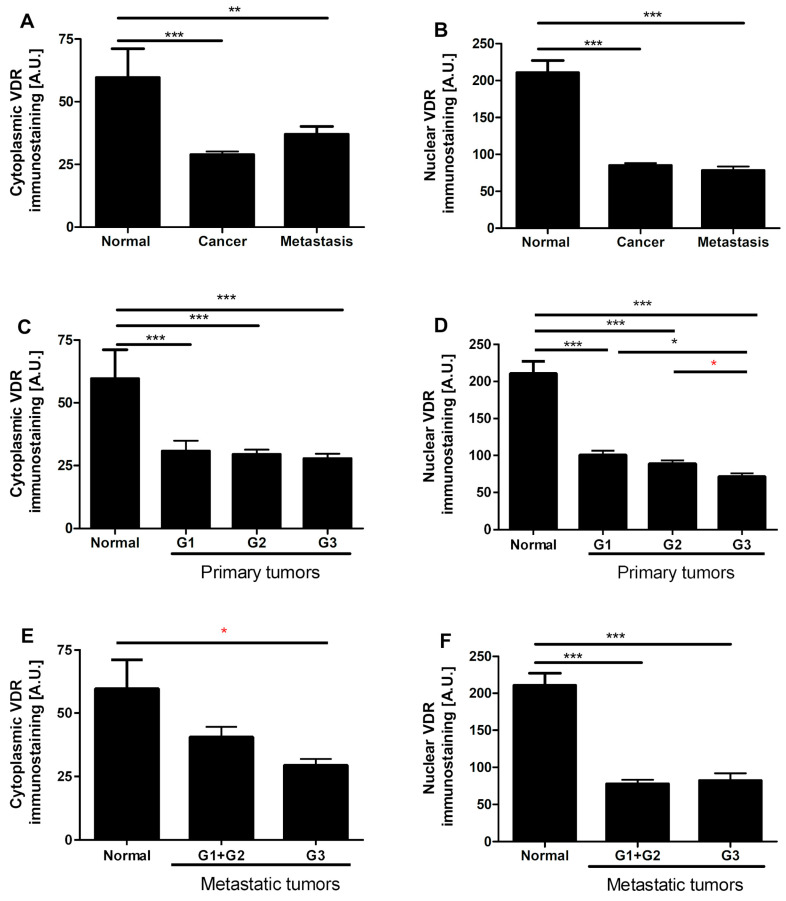
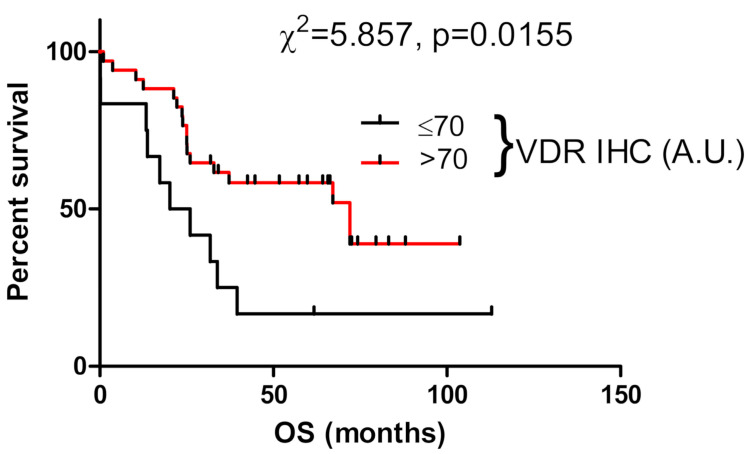
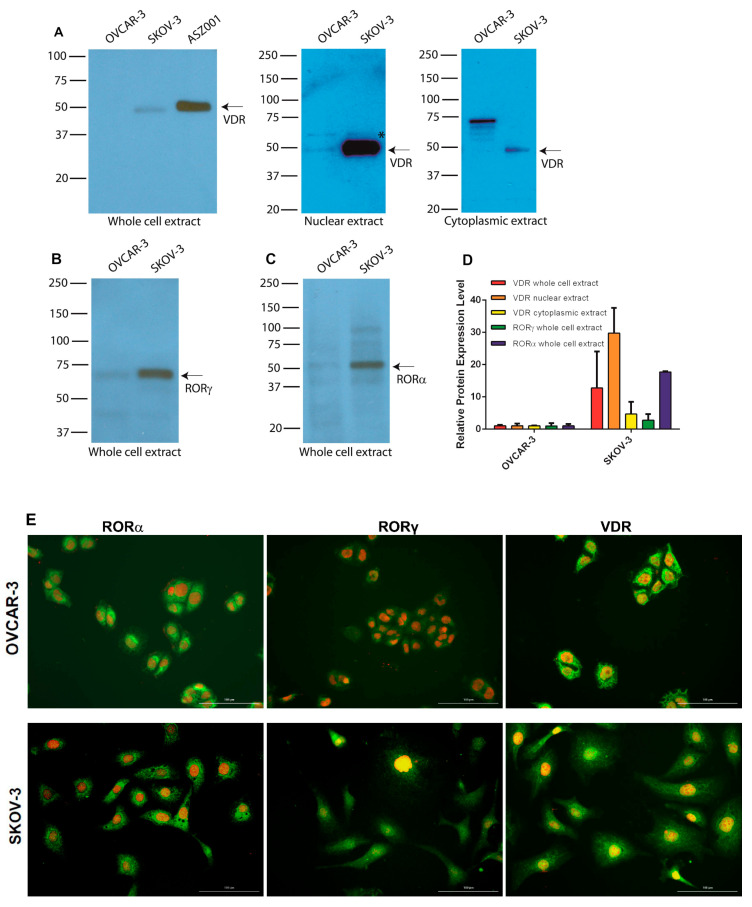
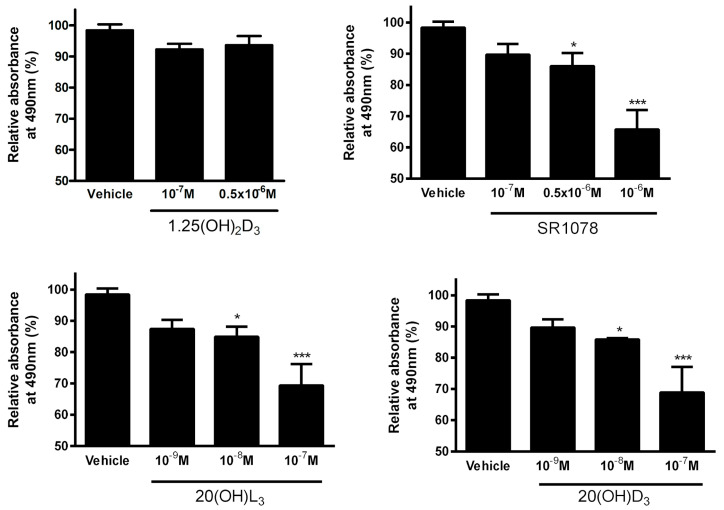
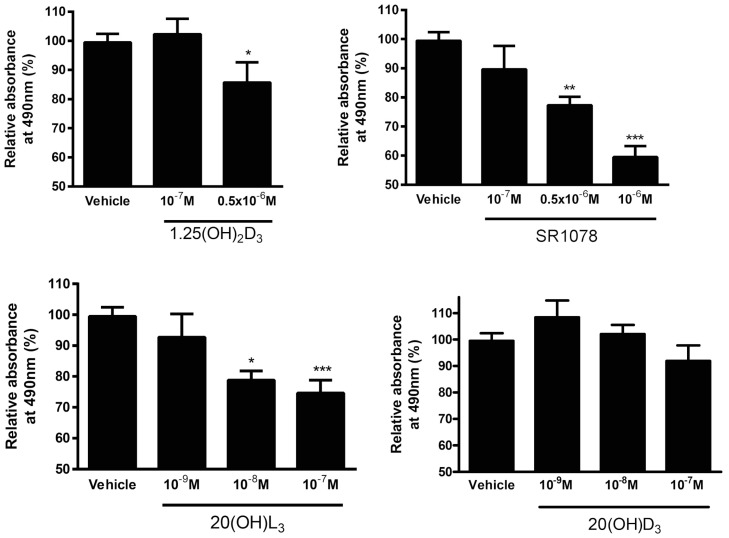
Vitamin D and its derivatives, acting via the vitamin D receptor (VDR) and retinoic acid-related orphan receptors γ and α (RORγ and RORα), show anticancer properties. Since pathological conditions are characterized by disturbances in the expression of these receptors, in this study, we investigated their expression in ovarian cancers (OCs), as well as explored the phenotypic effects of vitamin D hydroxyderivatives and RORγ/α agonists on OC cells. The VDR and RORγ showed both a nuclear and a cytoplasmic location, and their expression levels were found to be reduced in the primary and metastatic OCs in comparison to normal ovarian epithelium, as well as correlated to the tumor grade. This reduction in VDR and RORγ expression correlated with a shorter overall disease-free survival. VDR, RORγ, and RORα were also detected in SKOV-3 and OVCAR-3 cell lines with increased expression in the latter line. 20-Hydroxy-lumisterol3 (20(OH)L) and synthetic RORα/RORγ agonist SR1078 inhibited proliferation only in the OVCAR-3 line, while 20-hydroxyvitamin-D (20(OH)D) only inhibited SKOV-3 cell proliferation. 1,25(OH)D, 20(OH)L, and SR1078, but not 20(OH)D, inhibited spheroid formation in SKOV-3 cells. In summary, decreases in VDR, RORγ, and RORα expression correlated with an unfavorable outcome for OC, and compounds targeting these receptors had a context-dependent anti-tumor activity in vitro. We conclude that VDR and RORγ expression can be used in the diagnosis and prognosis of OC and suggest their ligands as potential candidates for OC therapy.
维生素 D 及其衍生物通过维生素 D 受体 (VDR) 和维甲酸相关孤儿受体 γ 和 α (RORγ 和 RORα) 发挥抗癌作用。由于病理状况的特征是这些受体表达失调,因此在本研究中,我们研究了它们在卵巢癌 (OC) 中的表达,并探讨了维生素 D 羟基衍生物和 RORγ/α 激动剂对 OC 细胞的表型影响。VDR 和 RORγ 均具有核内和细胞质定位,并且与正常卵巢上皮相比,其在原发性和转移性 OC 中的表达水平降低,并且与肿瘤分级相关。VDR 和 RORγ 表达的这种减少与总无病生存期缩短相关。VDR、RORγ 和 RORα 也在 SKOV-3 和 OVCAR-3 细胞系中检测到,后者的表达增加。20-羟-lumisterol3 (20(OH)L) 和合成 RORα/RORγ 激动剂 SR1078 仅在 OVCAR-3 系中抑制增殖,而 20-羟基维生素 D (20(OH)D) 仅抑制 SKOV-3 细胞增殖。1,25(OH)D、20(OH)L 和 SR1078,但不是 20(OH)D,抑制 SKOV-3 细胞球体形成。总之,VDR、RORγ 和 RORα 表达的减少与 OC 的不良预后相关,并且靶向这些受体的化合物在体外具有与背景相关的抗肿瘤活性。我们得出结论,VDR 和 RORγ 的表达可用于 OC 的诊断和预后,并提出它们的配体作为 OC 治疗的潜在候选物。