Koumpis Epameinondas, Florentin Matilda, Hatzimichael Eleftheria, Liamis George
Department of Hematology, Faculty of Medicine, University of Ioannina, Stavros Niarchos Avenue, GR-45110 Ioannina, Greece.
Department of Internal Medicine, Faculty of Medicine, University of Ioannina, Ioannina, Stavros Niarchos Avenue, GR-45110 Ioannina, Greece.
J Clin Med. 2020 Nov 19;9(11):3721. doi: 10.3390/jcm9113721.
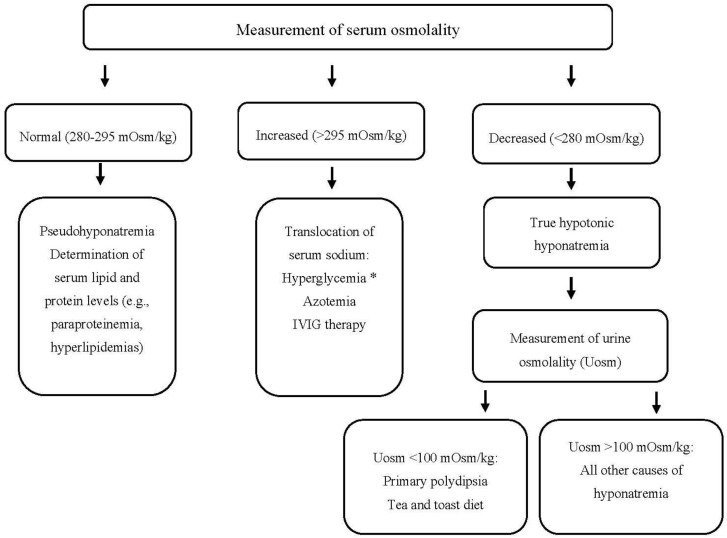
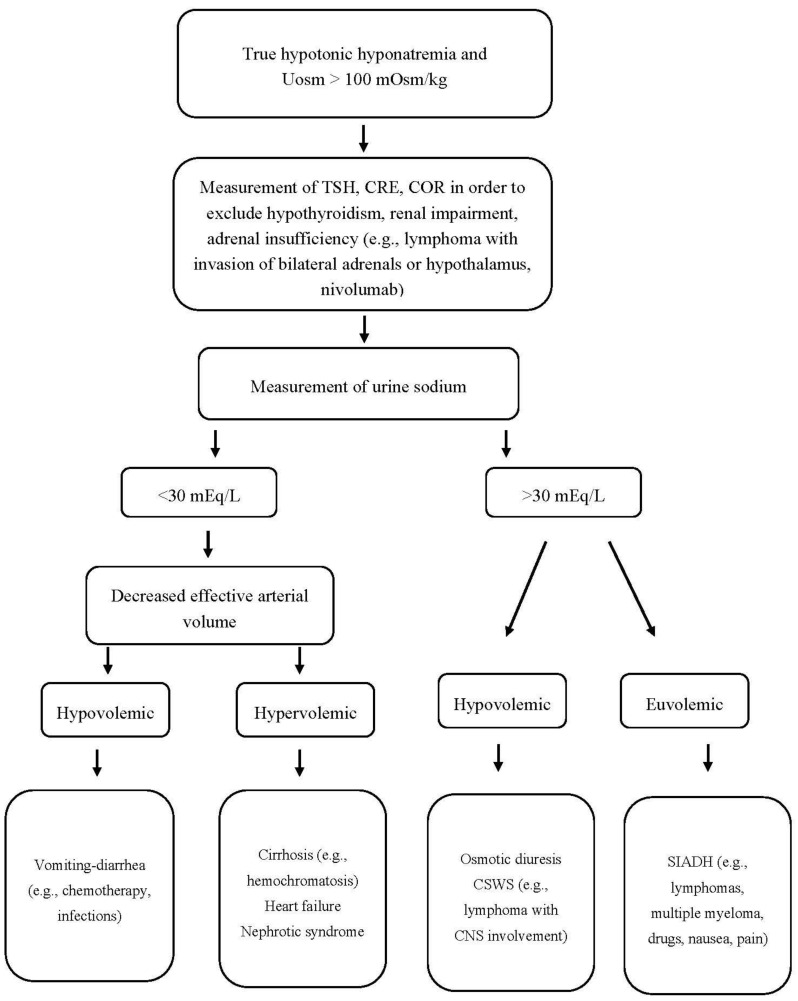
Hyponatremia is the most common electrolyte disorder in clinical practice and is associated with increased morbidity and mortality. It is frequently encountered in hematologic patients with either benign or malignant diseases. Several underlying mechanisms, such as hypovolemia, infections, toxins, renal, endocrine, cardiac, and liver disorders, as well as the use of certain drugs appear to be involved in the development or the persistence of hyponatremia. This review describes the pathophysiology of hyponatremia and discusses thoroughly the contributing factors and mechanisms that may be encountered specifically in patients with hematologic disorders. The involvement of the syndrome of inappropriate antidiuretic hormone (SIADH) secretion and renal salt wasting syndrome (RSWS) in the development of hyponatremia in such patients, as well as their differential diagnosis and management, are also presented. Furthermore, the distinction between true hyponatremia and pseudohyponatremia is explained. Finally, a practical algorithm for the evaluation of hyponatremia in hematologic patients, as well as the principles of hyponatremia management, are included in this review.
低钠血症是临床实践中最常见的电解质紊乱,与发病率和死亡率的增加相关。它在患有良性或恶性疾病的血液病患者中经常出现。几种潜在机制,如血容量不足、感染、毒素、肾脏、内分泌、心脏和肝脏疾病,以及某些药物的使用,似乎都与低钠血症的发生或持续存在有关。这篇综述描述了低钠血症的病理生理学,并深入讨论了血液病患者可能遇到的促成因素和机制。还介绍了抗利尿激素分泌不当综合征(SIADH)和肾性失盐综合征(RSWS)在这类患者低钠血症发生中的作用,以及它们的鉴别诊断和管理。此外,还解释了真性低钠血症和假性低钠血症之间的区别。最后,本综述包括了血液病患者低钠血症评估的实用算法以及低钠血症管理原则。