Department of Plant Medicals, College of Life Sciences, Andong National University, Andong, 36729, South Korea.
BMC Microbiol. 2020 Nov 23;20(1):359. doi: 10.1186/s12866-020-02042-9.
Xenorhabdus and Photorhabdus are entomopathogenic bacteria that cause septicemia and toxemia in insects. They produce secondary metabolites to induce host immunosuppression. Their metabolite compositions vary among bacterial species. Little is known about the relationship between metabolite compositions and the bacterial pathogenicity. The objective of this study was to compare pathogenicity and production of secondary metabolites of 14 bacterial isolates (species or strains) of Xenorhabdus and Photorhabdus.
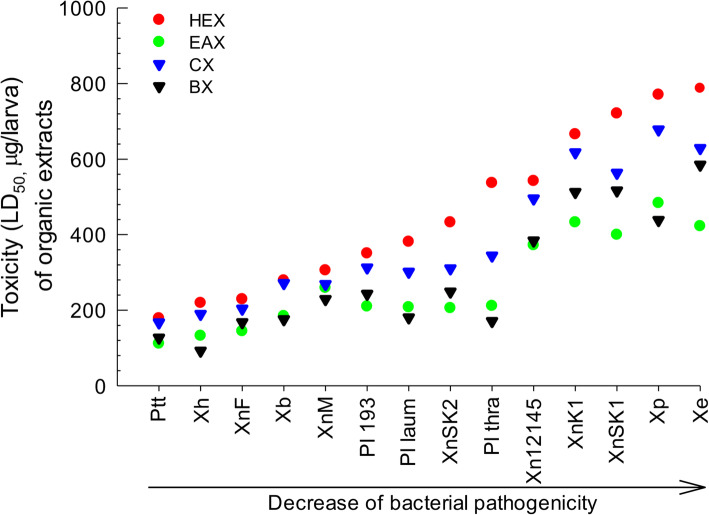
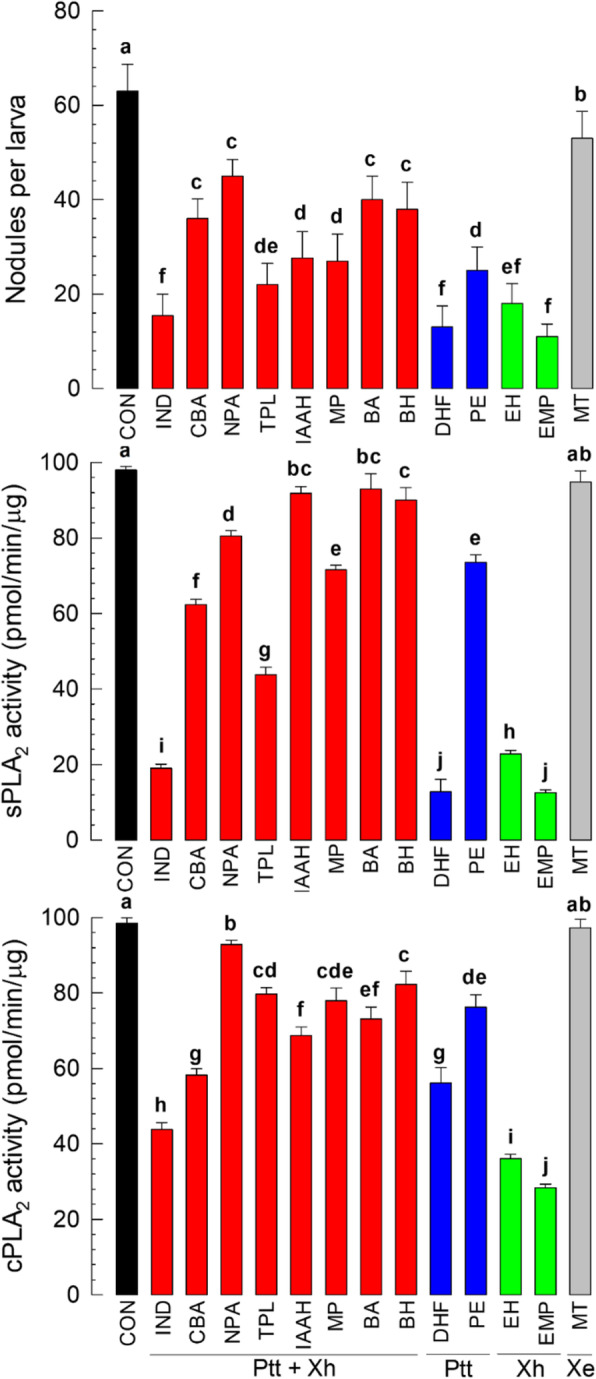
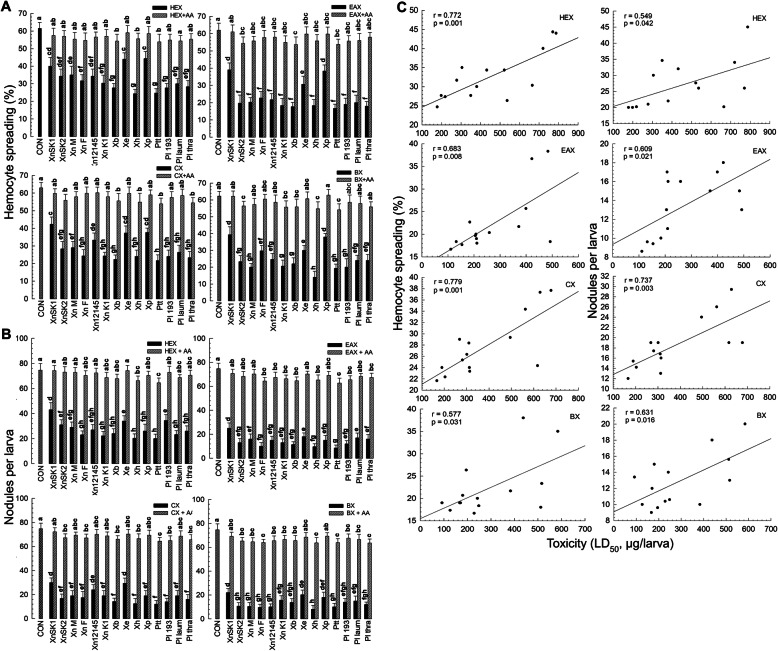
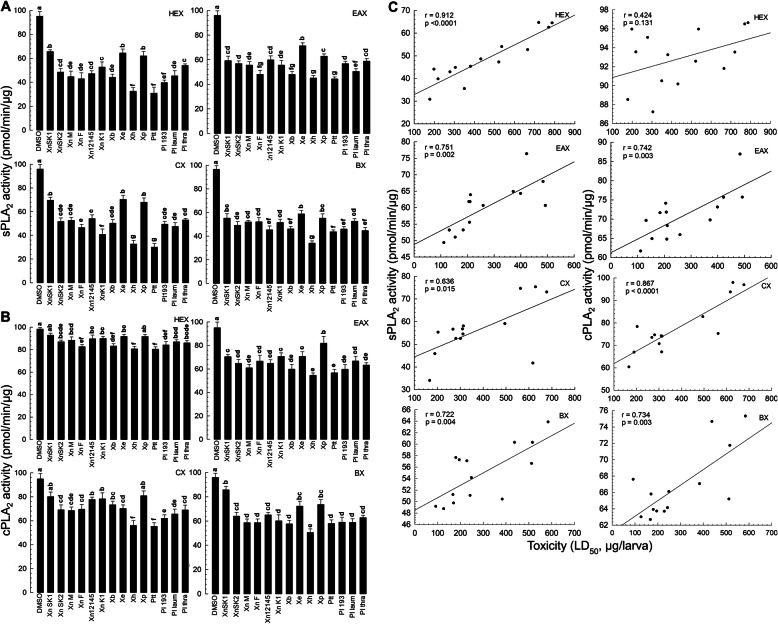
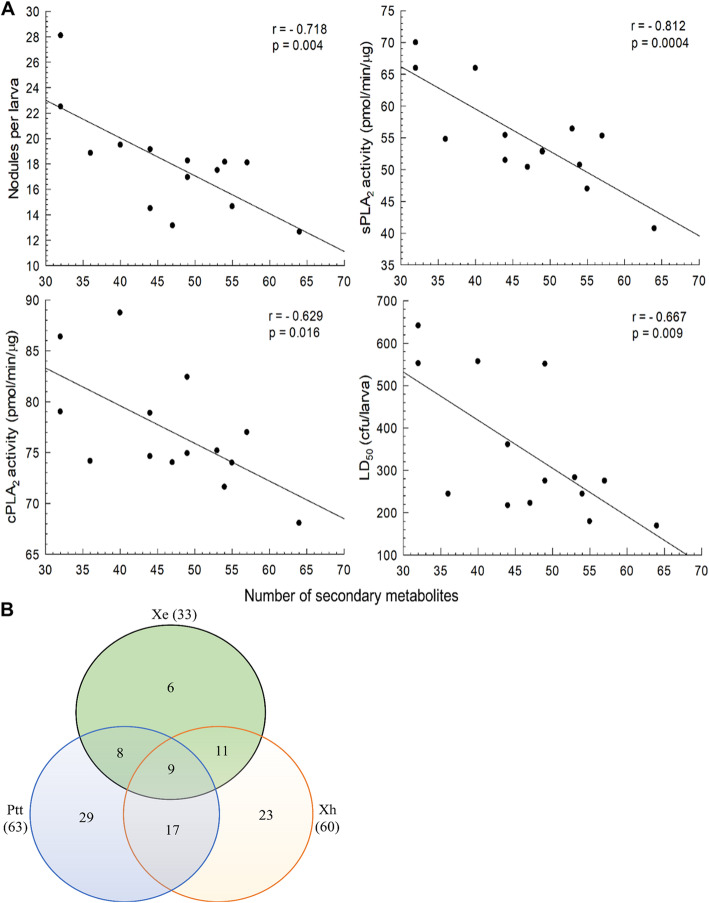
All bacterial isolates exhibited insecticidal activities after hemocoelic injection to Spodoptera exigua (a lepidopteran insect) larvae, with median lethal doses ranging from 168.8 to 641.3 CFU per larva. Bacterial infection also led to immunosuppression by inhibiting eicosanoid biosynthesis. Bacterial culture broth was fractionated into four different organic extracts. All four organic extracts of each bacterial species exhibited insecticidal activities and resulted in immunosuppression. These organic extracts were subjected to GC-MS analysis which predicted 182 compounds, showing differential compositions for 14 bacteria isolates. There were positive correlations between total number of secondary metabolites produced by each bacterial culture broth and its bacterial pathogenicity based on immunosuppression and insecticidal activity. From these correlation results, 70 virulent compounds were selected from secondary metabolites of high virulent bacterial isolates by deducting those of low virulent bacterial isolates. These selected virulent compounds exhibited significant immunosuppressive activities by inhibiting eicosanoid biosynthesis. They also exhibited relatively high insecticidal activities.
Virulence variation between Xenorhabdus and Photorhabdus is determined by their different compositions of secondary metabolites, of which PLA inhibitors play a crucial role.
Xenorhabdus 和 Photorhabdus 是昆虫病原细菌,可引起昆虫败血症和毒血症。它们产生次生代谢物来诱导宿主免疫抑制。它们的代谢物组成在细菌物种之间有所不同。对于代谢物组成与细菌致病性之间的关系知之甚少。本研究旨在比较 Xenorhabdus 和 Photorhabdus 的 14 个细菌分离株(种或株)的致病性和次生代谢产物的产生。
所有细菌分离株在向斜纹夜蛾(鳞翅目昆虫)幼虫的血腔注射后均表现出杀虫活性,半数致死剂量范围为每头幼虫 168.8 至 641.3 CFU。细菌感染也通过抑制类二十烷酸生物合成导致免疫抑制。细菌培养液被分成四个不同的有机提取物。每个细菌种的所有四种有机提取物均表现出杀虫活性并导致免疫抑制。对这些有机提取物进行 GC-MS 分析,预测出 182 种化合物,显示出 14 个细菌分离株的不同组成。每个细菌培养液产生的次生代谢物总数与其基于免疫抑制和杀虫活性的细菌致病性之间存在正相关。根据这些相关性结果,通过从低毒力细菌分离株的次生代谢物中减去高毒力细菌分离株的次生代谢物,从次生代谢物中选择了 70 种毒力化合物。这些选定的毒力化合物通过抑制类二十烷酸生物合成表现出显著的免疫抑制活性。它们还表现出相对较高的杀虫活性。
Xenorhabdus 和 Photorhabdus 的毒力差异取决于它们不同的次生代谢物组成,其中 PLA 抑制剂起着关键作用。