Department of Pharmacy, Xinhua Hospital, Affiliated to Shanghai Jiao Tong University, School of Medicine, Shanghai, 200092, China.
Department of Pharmacy, Shanghai First Maternity and Infant Hospital, Tongji University School of Medicine, Shanghai, 201204, China.
BMC Complement Med Ther. 2020 Nov 23;20(1):362. doi: 10.1186/s12906-020-03155-4.
Gandi capsule is a traditional Chinese herbal formula used to promote blood circulation and removing blood stasis in clinical. Our previous study has shown that it reduces proteinuria with routine treatment in diabetic nephrophy (DN), but its pharmacological action mechanism is still unknown.
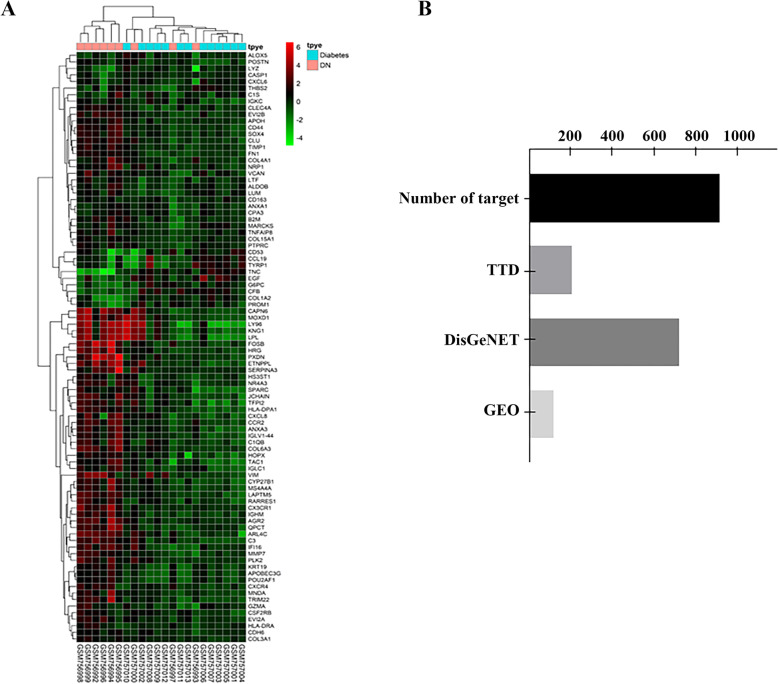
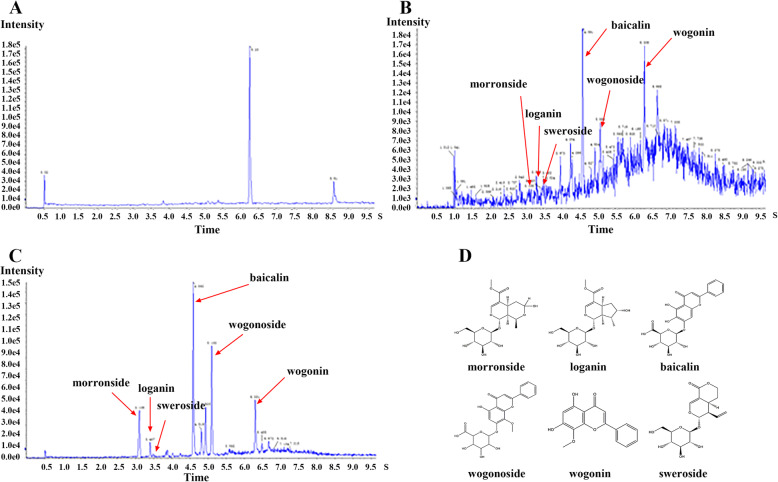
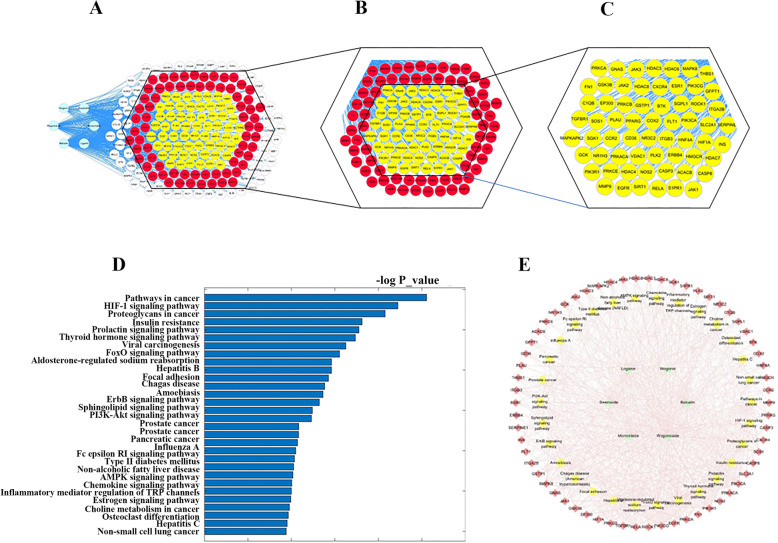
To facilitate the identification of components, a component database of Gandi capsule and target database of DN were established by ourselves. The components absorbed in blood circle were identified in rat plasma after oral administration of Gandi capsule by UHPLC-QQQ-MS/MS. The potential targets were screened by using Libdock tolls in Discovery studio 3.0. Then Pathway and Network analyses were used to enrich the screened targets. The possible targets were verified by using a surface plasmon resonance (SPR) test and the molecular mechanism focusing these targets for treating DN was clarified by western blot.
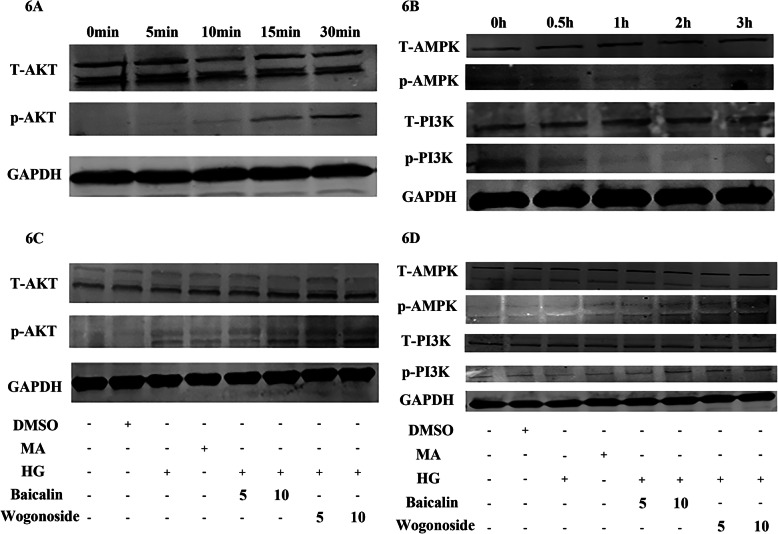
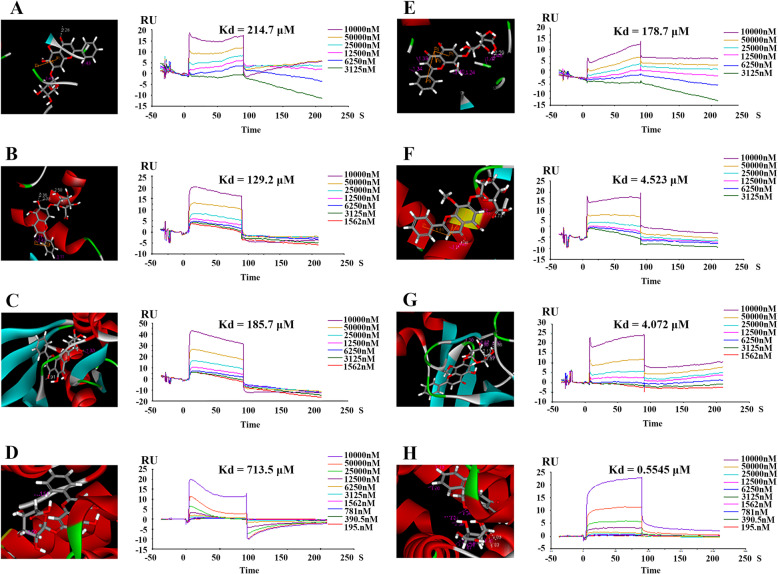
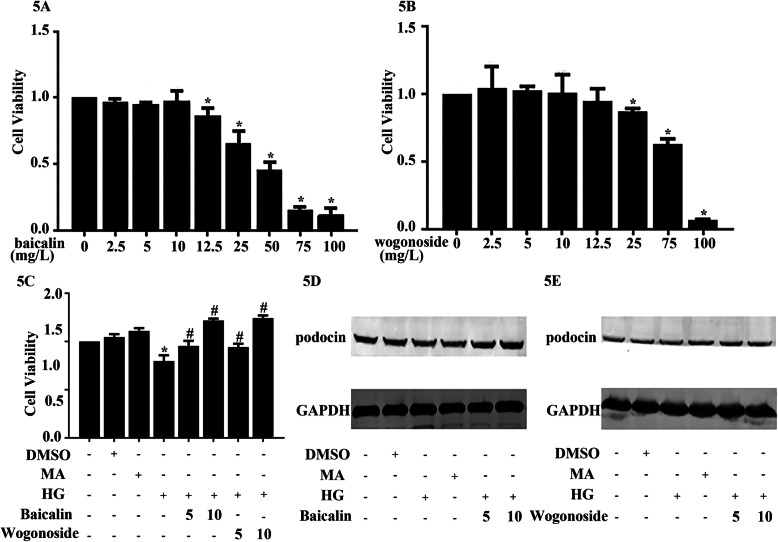
Six components in Gandi capsule were identified detected in rat plasma after oral administration by UHPLC-QQQ-MS/MS. After molecular docking analyses in KEGG and Discovery studio, four protein targets including HNF4A, HMGCR, JAK3, and SIRT1, were screened out, and proved as effective binding with baicalin, wogonoside by SPR. And the molecular mechanism was clarified that baicalin and wogonoside inhibit the effect of high glucose (HG)-induced decreased cell viability and podocin expression, and strengthen the activation p-AKT, p-PI3K, and p-AMPK.
Baicalin and wogonoside were screened out to be the active compounds in Gandi capsule and can ameliorate HG-induced podocyte damage by influencing the AMPK and PI3K-AKT signaling pathways by binding with HNF4A, HMGCR, JAK3, and SIRT1.
肝地胶囊是一种传统的中药方剂,用于在临床上促进血液循环和祛瘀。我们之前的研究表明,它可以在常规治疗糖尿病肾病(DN)的基础上减少蛋白尿,但它的药理作用机制仍不清楚。
为了便于鉴定成分,我们自行建立了肝地胶囊的成分数据库和 DN 的靶标数据库。通过 UHPLC-QQQ-MS/MS 鉴定大鼠血浆中口服肝地胶囊后吸收的成分。然后,使用 Discovery studio 3.0 中的 Libdock 工具筛选潜在靶点。然后,通过通路和网络分析对筛选出的靶点进行富集。通过表面等离子体共振(SPR)试验验证可能的靶点,并通过 Western blot 阐明这些靶点治疗 DN 的分子机制。
通过 UHPLC-QQQ-MS/MS 鉴定,在大鼠血浆中检测到肝地胶囊中的 6 种成分。经过 KEGG 和 Discovery studio 中的分子对接分析,筛选出包括 HNF4A、HMGCR、JAK3 和 SIRT1 在内的 4 个蛋白靶点,并用 SPR 证实了黄芩苷和木犀草苷与这些靶点的有效结合。阐明了分子机制,即黄芩苷和木犀草苷抑制高葡萄糖(HG)诱导的细胞活力和足细胞表达下降的作用,并通过与 HNF4A、HMGCR、JAK3 和 SIRT1 结合,增强 p-AKT、p-PI3K 和 p-AMPK 的激活。
筛选出黄芩苷和木犀草苷为肝地胶囊的活性化合物,可通过与 HNF4A、HMGCR、JAK3 和 SIRT1 结合,影响 AMPK 和 PI3K-AKT 信号通路,改善 HG 诱导的足细胞损伤。