
用于抑制前列腺癌和黑色素瘤肿瘤生长和转移的纳米颗粒复合抗微小RNA
Nanoparticle-complexed antimiRs for inhibiting tumor growth and metastasis in prostate carcinoma and melanoma.
作者信息
Kunz Manfred, Brandl Madeleine, Bhattacharya Animesh, Nobereit-Siegel Lars, Ewe Alexander, Weirauch Ulrike, Hering Doreen, Reinert Anja, Kalwa Hermann, Guzman Juan, Weigelt Katrin, Wach Sven, Taubert Helge, Aigner Achim
机构信息
Department of Dermatology, Venereology and Allergology, Leipzig University Medical Center, Leipzig, Germany.
Rudolf-Boehm-Institute for Pharmacology and Toxicology, Clinical Pharmacology, University of Leipzig, Haertelstrasse 16-18, 04107, Leipzig, Germany.
出版信息
J Nanobiotechnology. 2020 Nov 23;18(1):173. doi: 10.1186/s12951-020-00728-w.
BACKGROUND
MiRNAs act as negative regulators of gene expression through target mRNA degradation or inhibition of its translation. In cancer, several miRNAs are upregulated and play crucial roles in tumorigenesis, making the inhibition of these oncomiRs an interesting therapeutic approach. This can be achieved by directly complementary single-stranded anti-miRNA oligonucleotides (antimiRs). A major bottleneck in antimiR therapy, however, is their efficient delivery. The nanoparticle formation with polyethylenimine (PEI) may be particularly promising, based on the PEI's ability to electrostatically interact with oligonucleotides. This leads to their protection and supports delivery. In the present study, we explore for the first time PEI for antimiR formulation and delivery. We use the branched low molecular weight PEI F25-LMW for the complexation of different antimiRs, and analyse tumor- and metastasis-inhibitory effects of PEI/antimiR complexes in different tumor models.
RESULTS
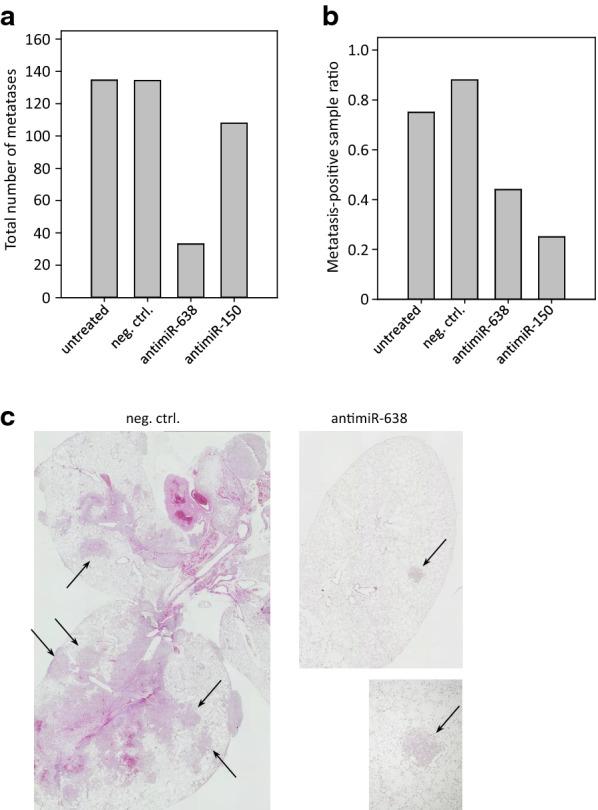
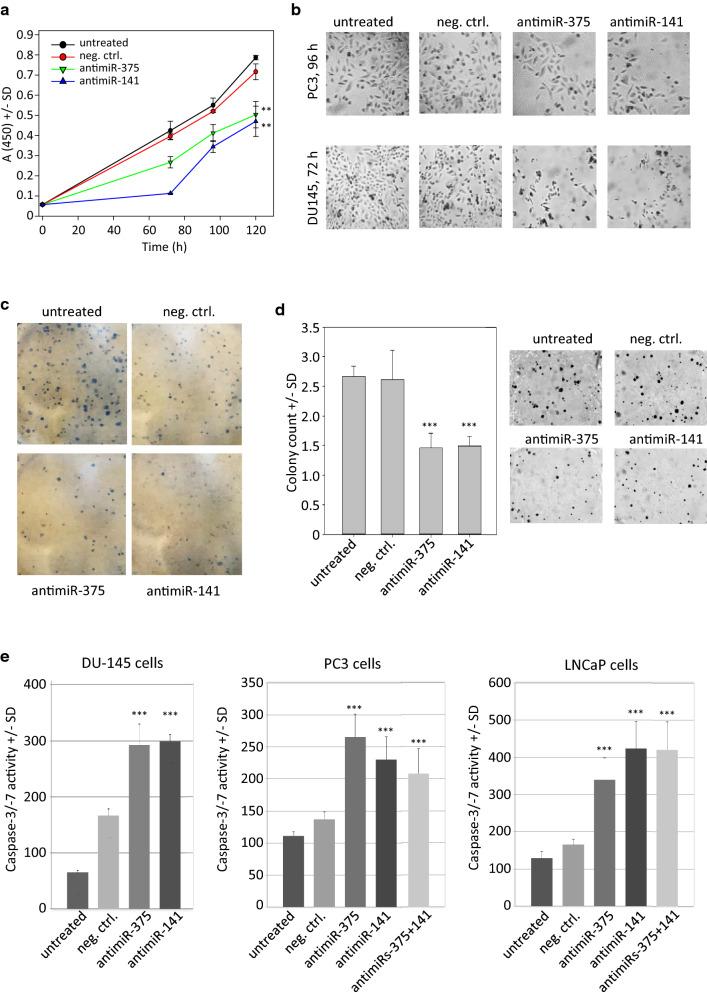
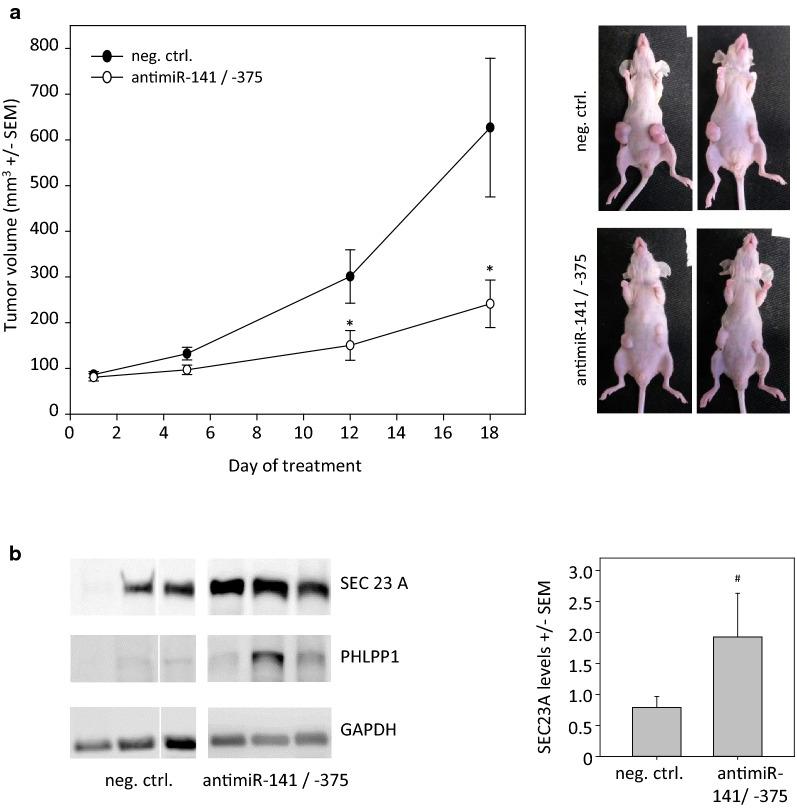
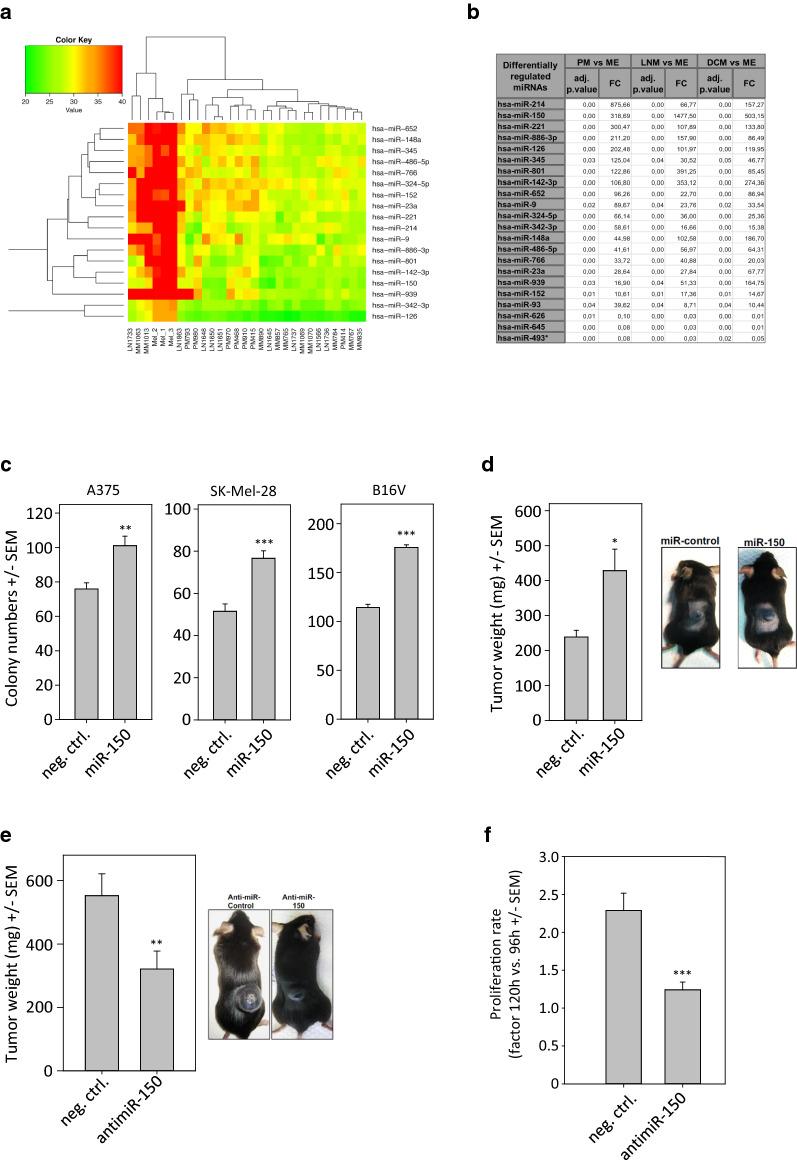
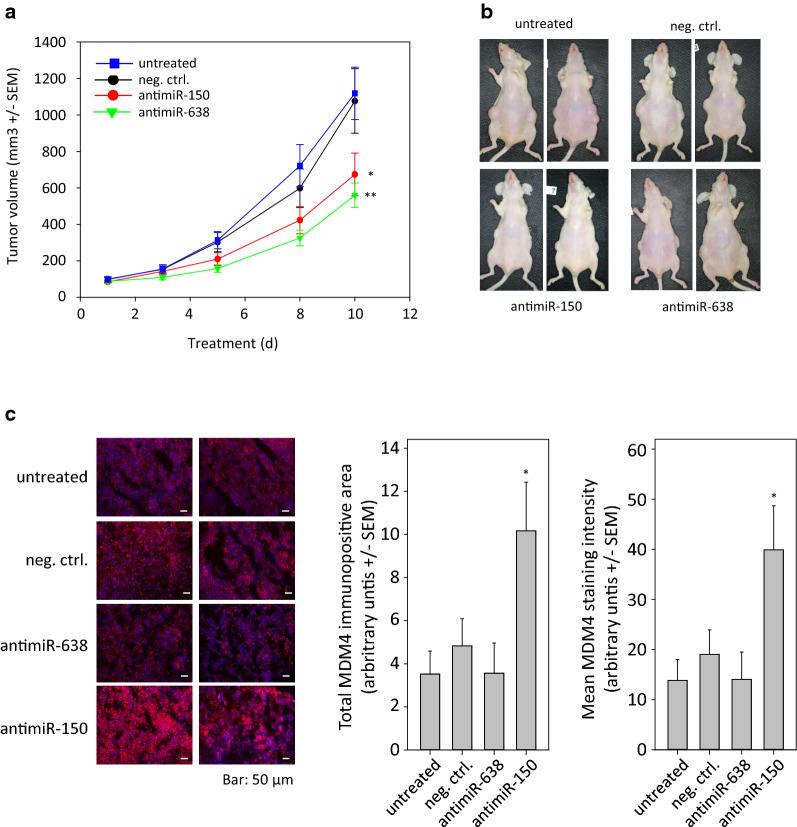
In prostate carcinoma, transfection of antimiRs against miR-375 and miR-141 leads to tumor cell inhibition in 2D- and 3D-models. More importantly, an in vivo tumor therapy study in prostate carcinoma xenografts reveals anti-tumor effects of the PEI/antimiR complexes. In advanced melanoma and metastasis, we identify by a microRNA screen miR-150 as a particularly relevant oncomiR candidate, and validate this result in vitro and in vivo. Again, the systemic application of PEI/antimiR complexes inhibiting this miRNA, or the previously described antimiR-638, leads to profound tumor growth inhibition. These effects are associated with the upregulation of direct miRNA target genes. In a melanoma metastasis mouse model, anti-metastatic effects of PEI/antimiR treatment are observed as well.
CONCLUSIONS
We thus describe PEI-based complexes as efficient platform for antimiR therapy, as determined in two different tumor entities using in vivo models of tumor growth or metastasis. Our study also highlights the therapeutic relevance of miR-375, miR-141, miR-150 and miR-638 as target miRNAs for antimiR-mediated inhibition.
背景
微小RNA(miRNA)通过降解靶mRNA或抑制其翻译来充当基因表达的负调控因子。在癌症中,多种miRNA上调并在肿瘤发生中起关键作用,因此抑制这些致癌miRNA成为一种有吸引力的治疗方法。这可以通过直接互补的单链抗miRNA寡核苷酸(抗miR)来实现。然而,抗miR治疗的一个主要瓶颈是其有效的递送。基于聚乙烯亚胺(PEI)与寡核苷酸静电相互作用的能力,用PEI形成纳米颗粒可能特别有前景。这导致对寡核苷酸的保护并支持递送。在本研究中,我们首次探索将PEI用于抗miR制剂和递送。我们使用支链低分子量PEI F25-LMW对不同的抗miR进行复合,并分析PEI/抗miR复合物在不同肿瘤模型中的肿瘤抑制和转移抑制作用。
结果
在前列腺癌中,针对miR-375和miR-141转染抗miR可在二维和三维模型中抑制肿瘤细胞。更重要的是,在前列腺癌异种移植瘤中的体内肿瘤治疗研究揭示了PEI/抗miR复合物的抗肿瘤作用。在晚期黑色素瘤和转移中,我们通过微小RNA筛选确定miR-150是一个特别相关的致癌miR候选物,并在体外和体内验证了这一结果。同样,全身应用抑制该miRNA的PEI/抗miR复合物或先前描述的抗miR-638,可导致肿瘤生长受到显著抑制。这些作用与直接miRNA靶基因的上调有关。在黑色素瘤转移小鼠模型中,也观察到了PEI/抗miR治疗的抗转移作用。
结论
因此,我们将基于PEI的复合物描述为抗miR治疗的有效平台,这是在使用肿瘤生长或转移的体内模型的两种不同肿瘤实体中确定的。我们的研究还强调了miR-375、miR-141、miR-150和miR-638作为抗miR介导抑制的靶miRNA的治疗相关性。

 Zotero 插件