Division of Cardiology, The Children's Hospital of Philadelphia and Department of Pediatrics, Perelman School of Medicine, University of Pennsylvania, Philadelphia, PA.
Healthcare Analytics Unit, The Children's Hospital of Philadelphia, Philadelphia, PA.
Am Heart J. 2021 Feb;232:39-46. doi: 10.1016/j.ahj.2020.10.058. Epub 2020 Oct 24.
Because atherosclerosis begins in childhood, universal lipid screening is recommended with special attention to conditions predisposing to early atherosclerosis. Data about real-world penetration of these guidelines is not available.
Retrospective cohort study using MarketScan® commercial and Medicaid insurance claims databases, a geographically representative sample of U.S. children. Subjects who passed through the 9- to 11-year window and had continuous insurance coverage between 1/1/2013 and 12/31/2016 were studied. Multivariable models were calculated, evaluating the association between other patient factors and the likelihood of screening. The primary hypothesis was that screening rates would be low, but that high-risk conditions would be associated with a higher likelihood of screening.
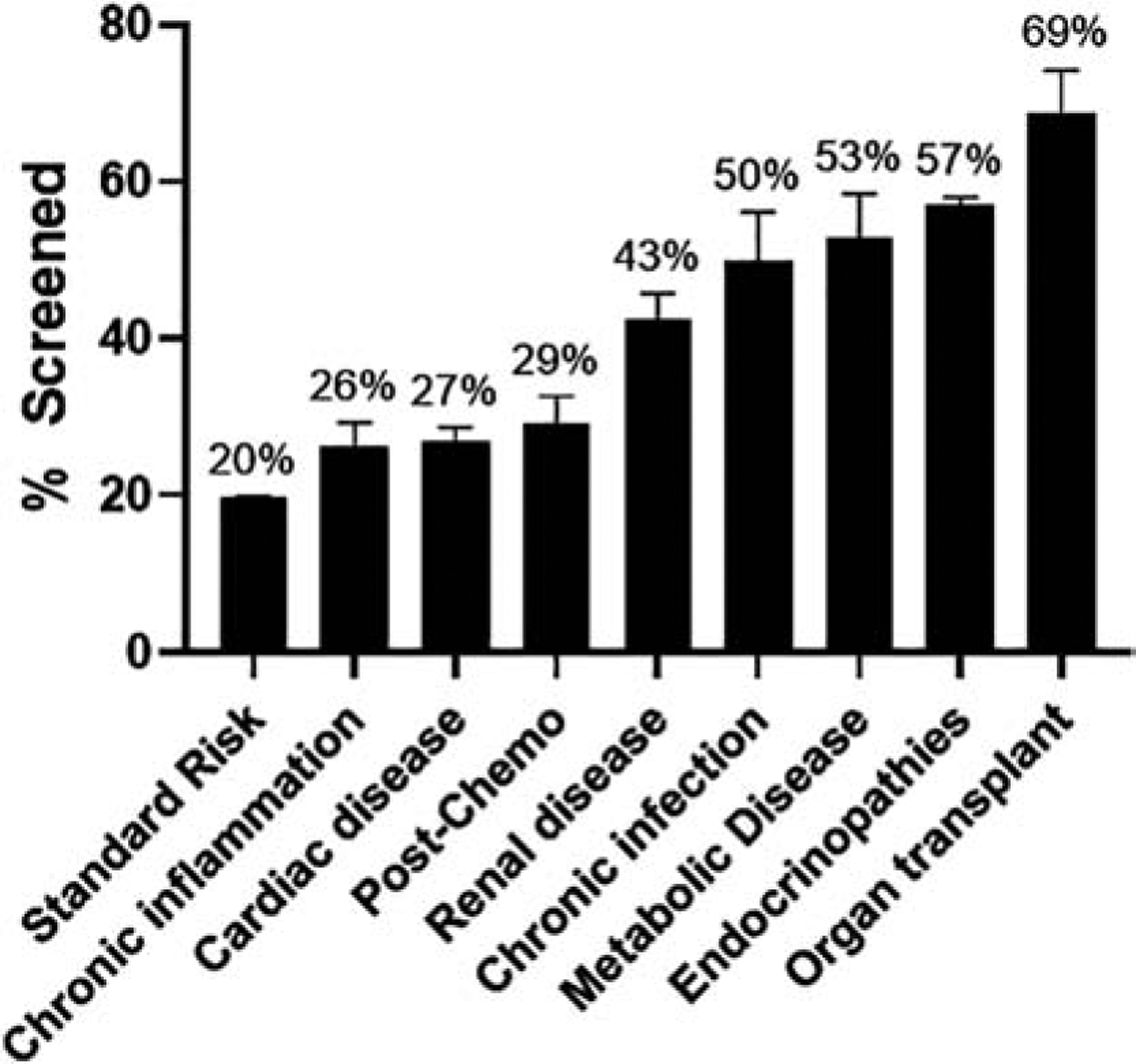
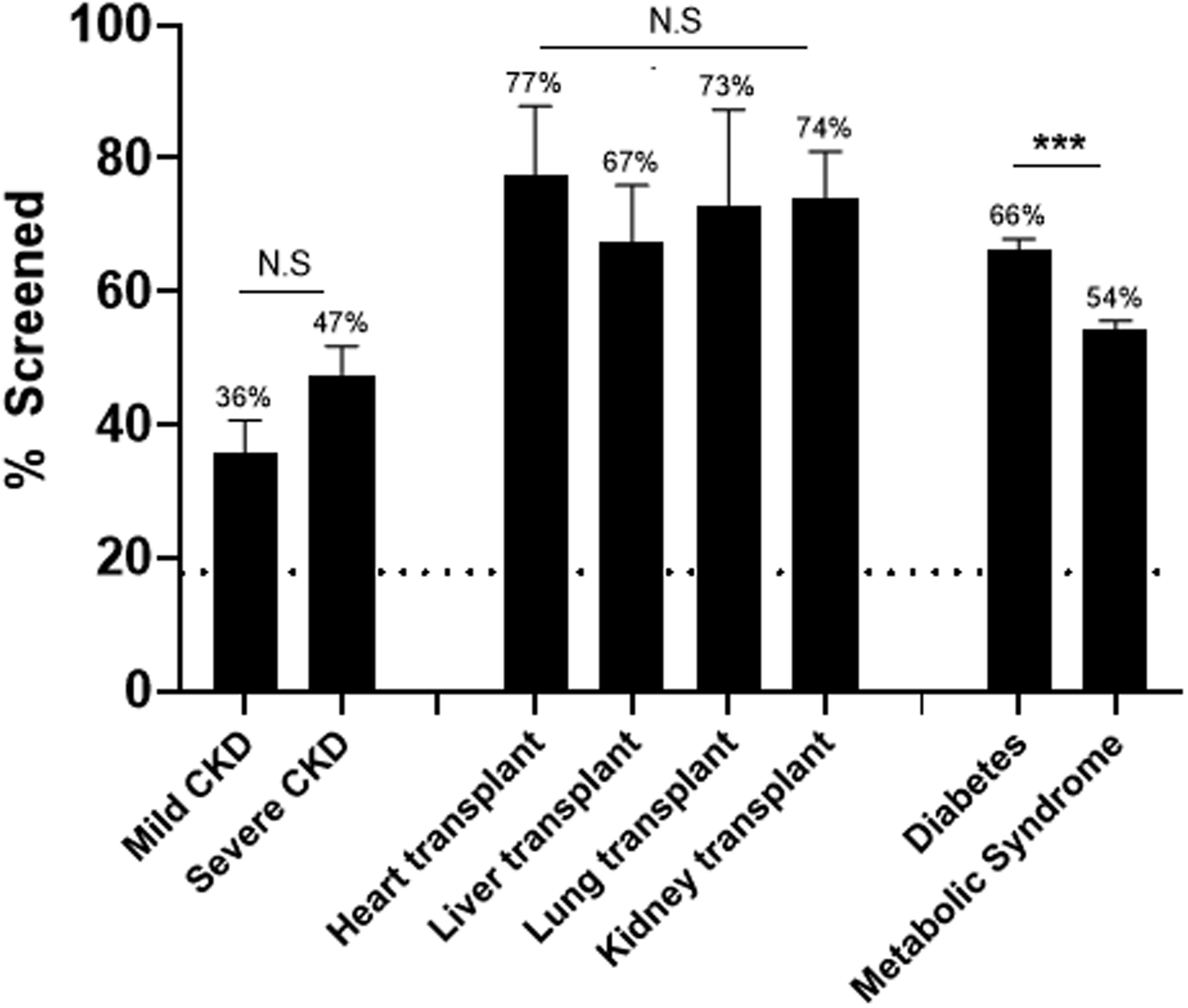
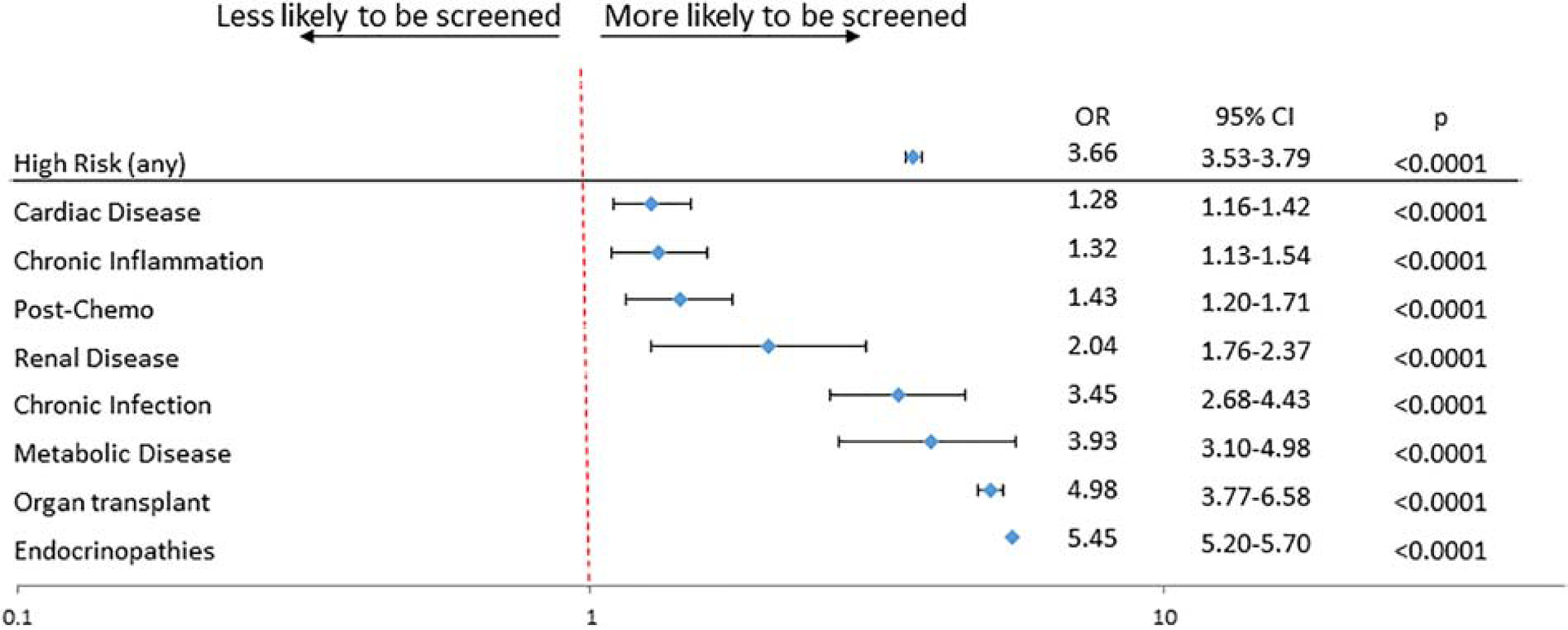
In total, 572,522 children (51% male, 33% black, 11% Hispanic, 51% Medicaid) were studied. The prevalence of high-risk conditions was 2.2%. In unadjusted and adjusted analyses, these subjects were more likely to be screened than standard-risk subjects (47% vs. 20%, OR: 3.7, 95% CI 3.5-3.8, P < .001). Within this group, the diagnosis-specific likelihood of screening varied (26-69%). Endocrinopathies (OR 5.4, 95% CI 5.2-5.7), solid organ transplants (OR 5.0, 95% CI 3.8-6.6), and metabolic disease (OR 3.9, 95% CI 3.1-5.0, all P < .001) were associated with the highest likelihood of undergoing screening.
Despite national recommendations, lipid screening was performed in a minority of children. Though subjects with high-risk conditions had a higher likelihood of screening, rates remained low. This study highlights the need for research and advocacy regarding obstacles to lipid screening of children in the United States.
由于动脉粥样硬化始于儿童期,因此建议普遍进行血脂筛查,并特别关注易发生早发性动脉粥样硬化的情况。目前尚无关于这些指南在实际应用中普及程度的数据。
这是一项使用 MarketScan®商业和医疗补助保险索赔数据库进行的回顾性队列研究,该数据库是美国具有代表性的儿童地理样本。研究对象是在 9 至 11 岁期间通过保险窗口,且在 2013 年 1 月 1 日至 2016 年 12 月 31 日期间连续投保的人群。通过多变量模型评估其他患者因素与筛查可能性之间的关联。主要假设是筛查率会较低,但高危情况与更高的筛查可能性相关。
共有 572522 名儿童(51%为男性,33%为黑人,11%为西班牙裔,51%为医疗补助对象)纳入研究。高危情况的患病率为 2.2%。在未调整和调整后的分析中,与标准风险组相比,这些患者更有可能接受筛查(47%比 20%,OR:3.7,95%CI 3.5-3.8,P<.001)。在该组中,具体疾病的筛查可能性各不相同(26%-69%)。内分泌疾病(OR 5.4,95%CI 5.2-5.7)、实体器官移植(OR 5.0,95%CI 3.8-6.6)和代谢疾病(OR 3.9,95%CI 3.1-5.0,均 P<.001)与筛查的可能性最高相关。
尽管有国家指南,但只有少数儿童接受了血脂筛查。尽管患有高危疾病的患者更有可能接受筛查,但筛查率仍然较低。本研究强调了需要研究和倡导解决美国儿童血脂筛查的障碍。