Luan Junjun, Fu Jingqi, Wang Dongdong, Jiao Congcong, Cui Xiangfei, Chen Chengjie, Liu Dan, Zhang Yixiao, Wang Yanqiu, Yuen Peter S T, Kopp Jeffrey B, Pi Jingbo, Zhou Hua
Department of Nephrology, Shengjing Hospital of China Medical University, Shenyang, China.
Program of Environmental Toxicology, School of Public Health, China Medical University, Shenyang, China.
Mol Ther Nucleic Acids. 2020 Oct 14;22:871-884. doi: 10.1016/j.omtn.2020.10.008. eCollection 2020 Dec 4.
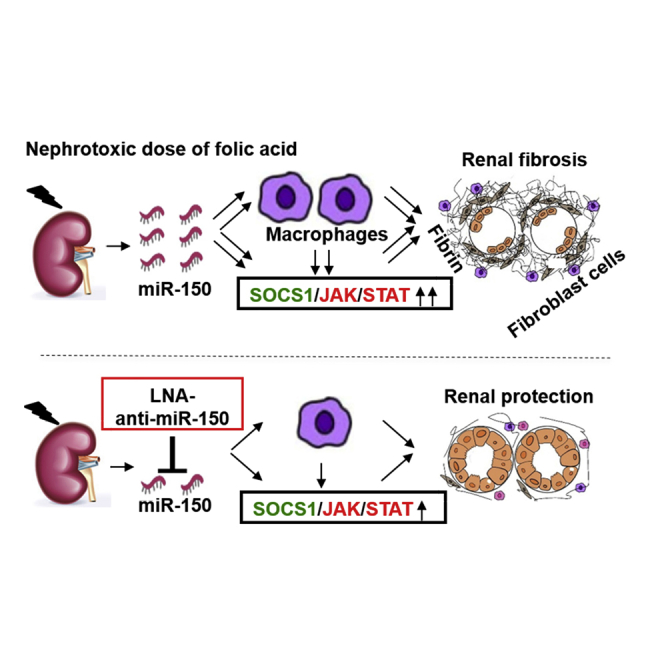
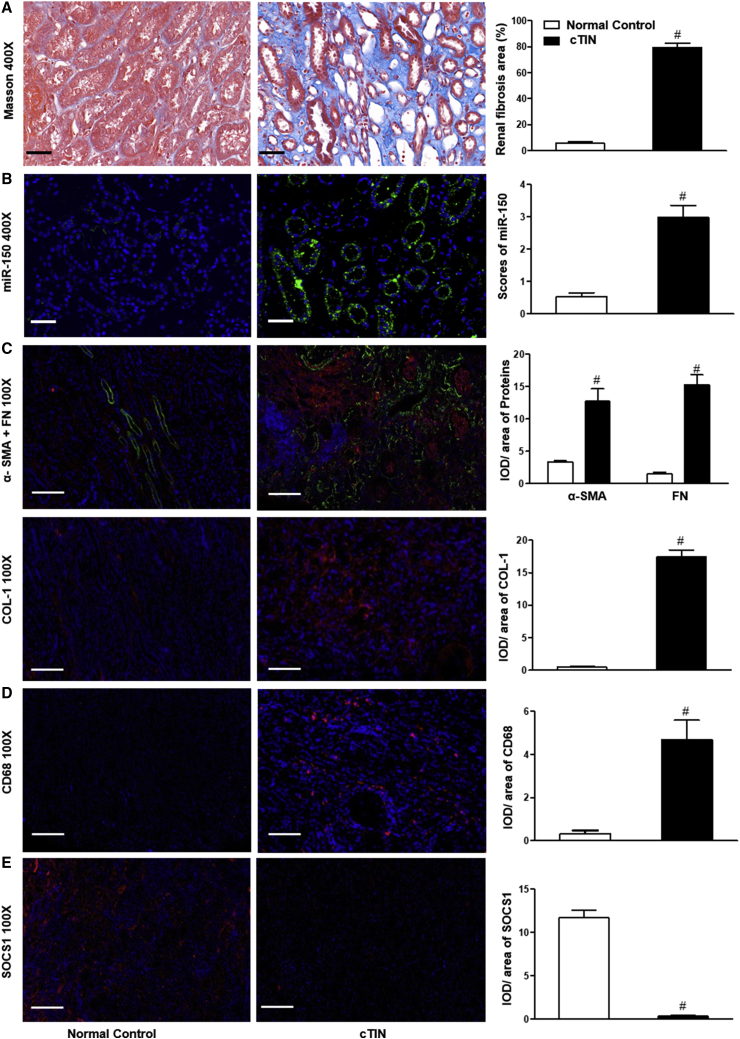
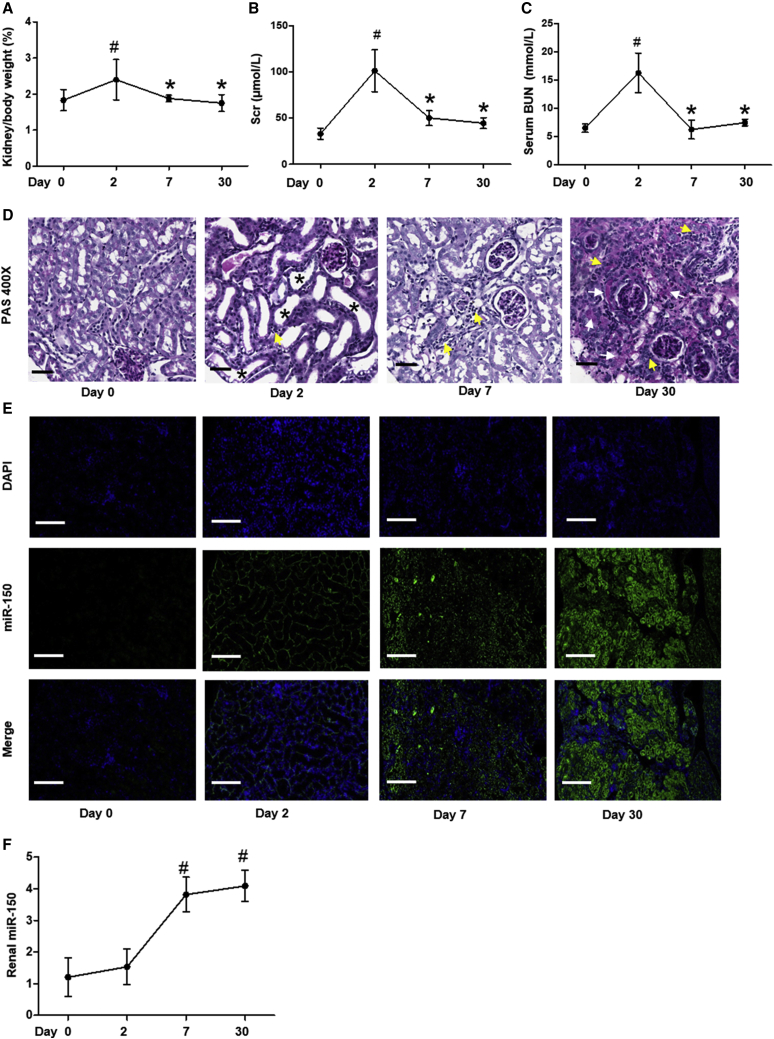
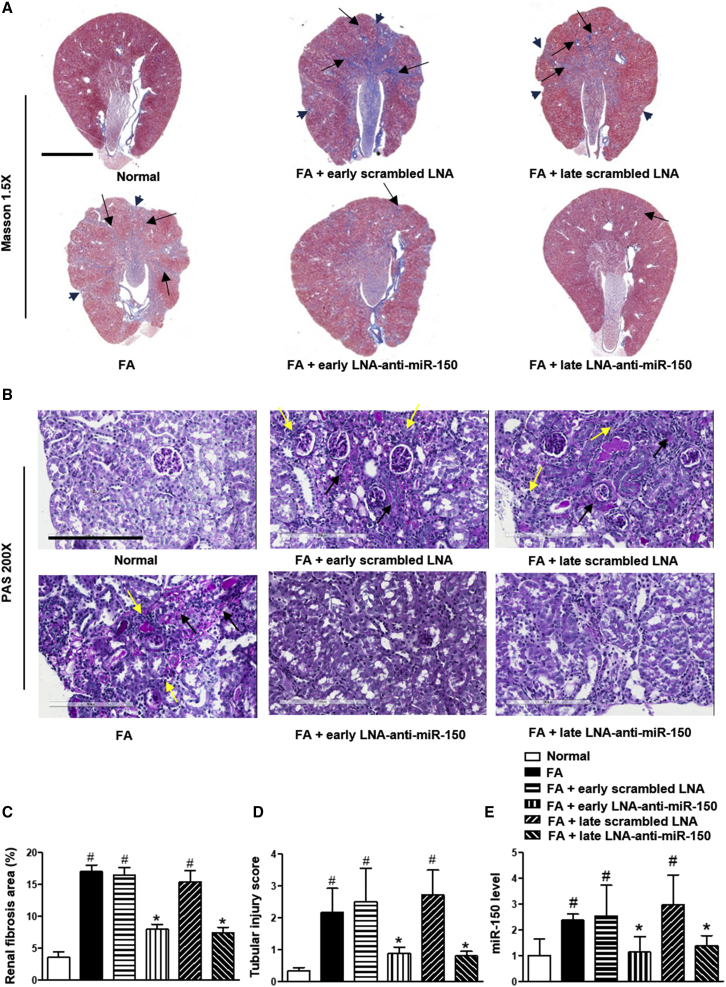
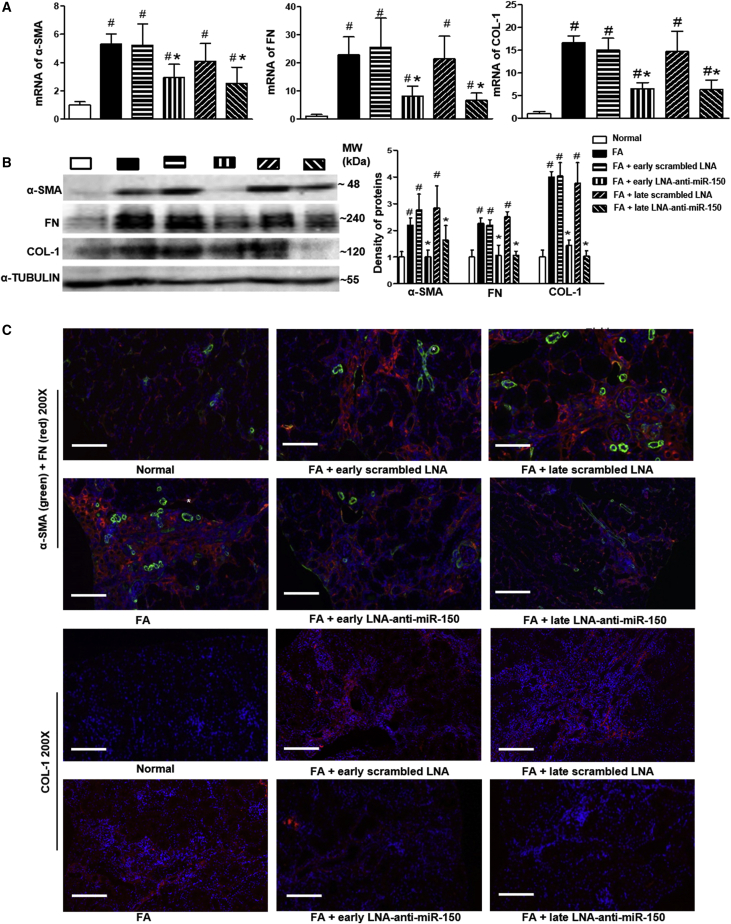
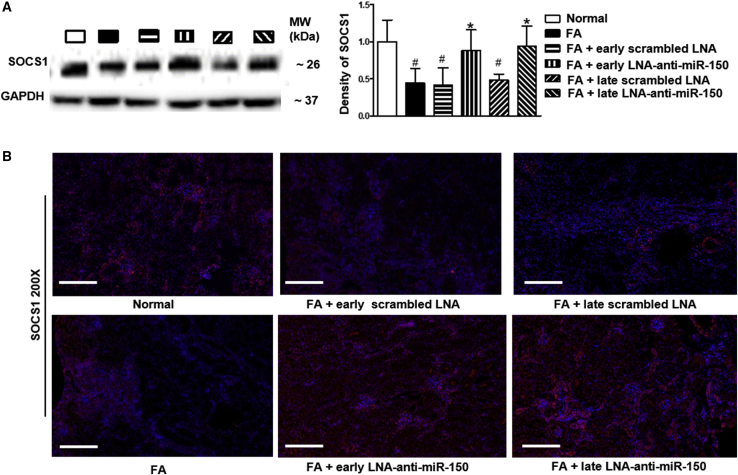
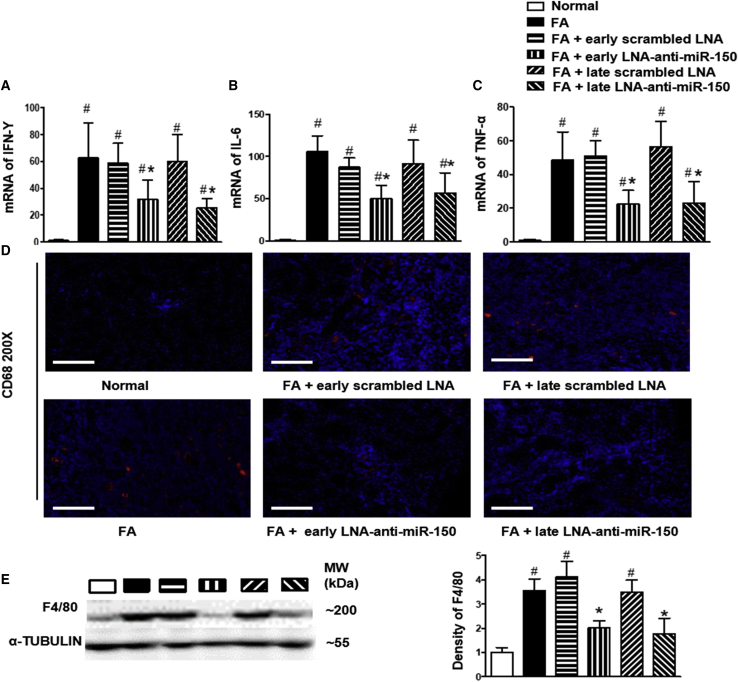
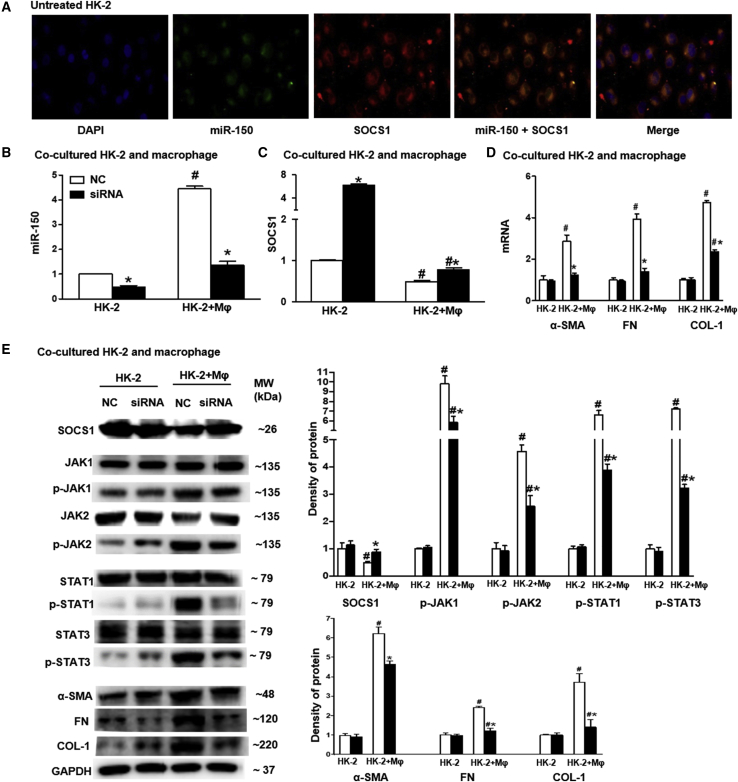
We investigated whether microRNA-150 (miR-150)-based RNA interference (RNAi) ameliorates tubular injury and tubulointerstitial fibrosis. Mice injected with folic acid developed tubulointerstitial fibrosis at day 30. miR-150 levels were increased at day 7 and peaked at day 30. At day 30, protein levels of α-smooth muscle actin, fibronectin (FN), and collagen 1 (COL-1) were increased, while suppressor of cytokine signal 1 (SOCS1) was decreased. Kidneys manifested increased macrophage numbers and increased expression of potential mediators: interferon-γ, interleukin-6, and tumor necrosis factor-α. Locked nucleic acid-anti-miR-150, started prior to or after tubular injury and administered twice weekly for 4 weeks, reversed renal inflammation and fibrosis. In HK-2 cells, co-culture with macrophages increased miR-150 expression and decreased SOCS1. Janus kinase (JAK) and signal transducer and activators of transcription (STAT) pathway-related proteins p-JAK1, p-JAK2, p-STAT1, p-STAT3, and pro-fibrotic genes encoding α-smooth muscle actin, FN, and COL-1 were all upregulated. The miR-150 antagonist reversed these transcriptional changes. Lastly, in renal biopsies from patients with chronic interstitial fibrosis, renal miR-150, and pro-fibrotic gene expression and macrophage numbers were increased, while SOCS1 expression was decreased. In conclusion, miR-150-based RNAi is as a potential novel therapeutic agent for tubulointerstitial fibrosis, suppressing the SOCS1/JAK/STAT pathway and reducing macrophage influx.
我们研究了基于微小RNA-150(miR-150)的RNA干扰(RNAi)是否能改善肾小管损伤和肾小管间质纤维化。注射叶酸的小鼠在第30天出现肾小管间质纤维化。miR-150水平在第7天升高,并在第30天达到峰值。在第30天,α平滑肌肌动蛋白、纤连蛋白(FN)和胶原蛋白1(COL-1)的蛋白水平升高,而细胞因子信号抑制因子1(SOCS1)水平降低。肾脏中巨噬细胞数量增加,潜在介质干扰素-γ、白细胞介素-6和肿瘤坏死因子-α的表达增加。在肾小管损伤之前或之后开始给予锁核酸-抗miR-150,每周给药两次,共4周,可逆转肾脏炎症和纤维化。在HK-2细胞中,与巨噬细胞共培养可增加miR-150表达并降低SOCS1。Janus激酶(JAK)以及信号转导和转录激活因子(STAT)途径相关蛋白p-JAK1、p-JAK2、p-STAT1、p-STAT3以及编码α平滑肌肌动蛋白、FN和COL-1的促纤维化基因均上调。miR-150拮抗剂可逆转这些转录变化。最后,在慢性间质性纤维化患者的肾活检组织中,肾脏miR-150、促纤维化基因表达和巨噬细胞数量增加,而SOCS1表达降低。总之,基于miR-150的RNAi作为一种潜在的新型治疗药物可用于治疗肾小管间质纤维化,它能抑制SOCS1/JAK/STAT途径并减少巨噬细胞浸润。