Department of Cardiology, Shanxi Provincial People's Hospital, Taiyuan, Shanxi, China.
Diab Vasc Dis Res. 2020 Nov-Dec;17(6):1479164120970895. doi: 10.1177/1479164120970895.
The current study aimed to explore the role of SENP3 in endothelial cell dysfunction in a high-glucose setting.
The gene and protein expressions of SENP3 in high-glucose cultured HAECs were examined using quantitative PCR and western blotting. The effects of SENP3 on HAEC viability, apoptosis, migration, and endothelial-monocyte adhesion were evaluated in vitro by knockdown. Moreover, a mouse streptozotocin-induced type I diabetes model was established for SENP3 expression assessment. In addition, the effects of SENP3 on ROS-related signaling pathways were investigated in high-glucose cultured HAECs.
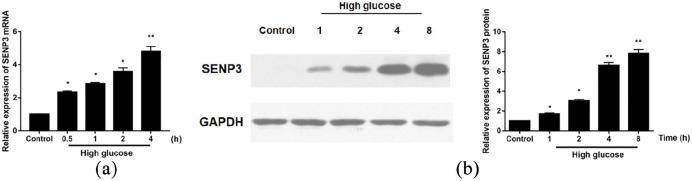
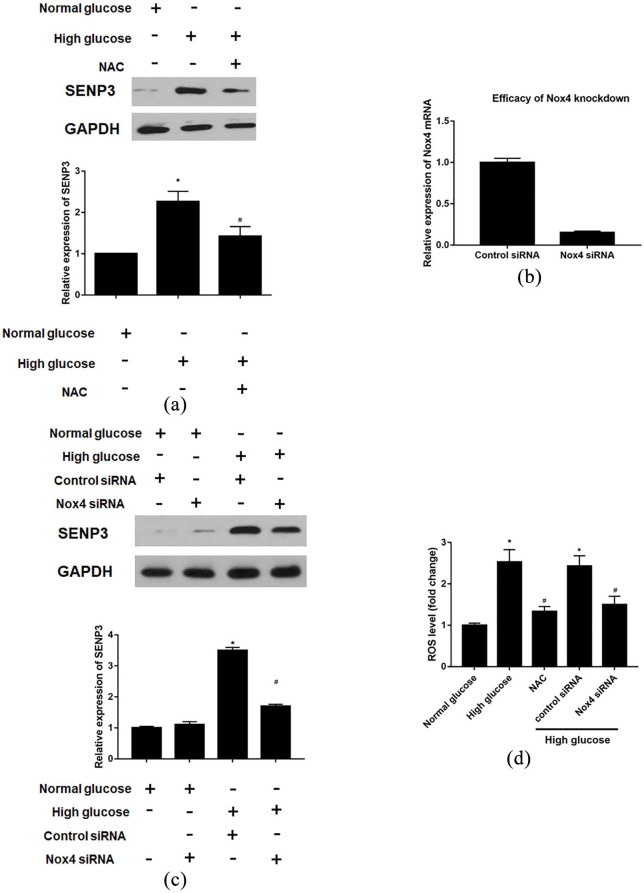
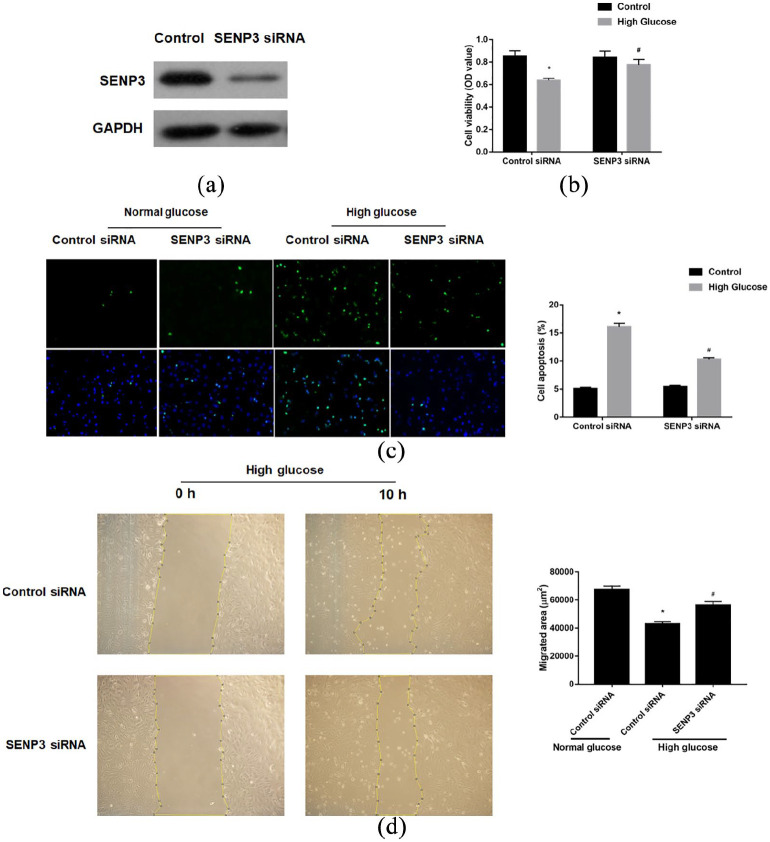
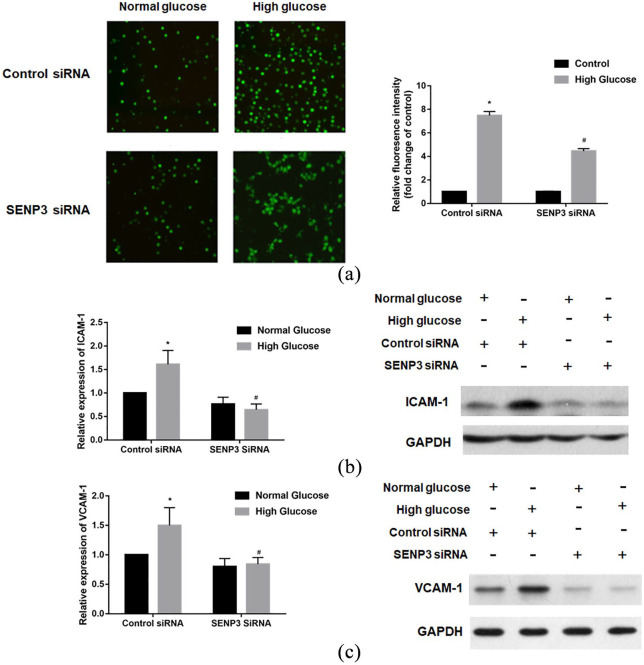
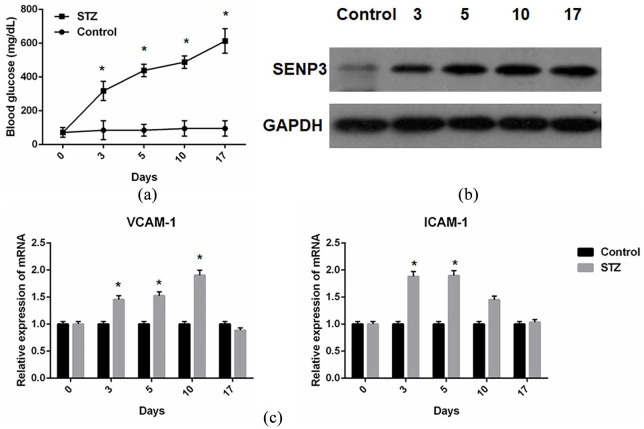
Significantly increased levels of SENP3 mRNA and protein were found in high-glucose cultured HAECs in a time-dependent manner. SENP3 knockdown reversed high glucose-induced HAEC viability, apoptosis, and migration reduction. SENP3 knockdown attenuated the high glucose-induced intercellular adhesion of THP-1 monocytic cells and HAECs via downregulation of ICAM-1 and VCAM-1 expression. Increased levels of SENP3, ICAM-1, and VCAM-1 expression were observed in the aorta tissue of mice with type I diabetes. Downregulation of SENP3 expression was observed in HAECs cultured with high glucose levels using the free radical scavenger N-acetyl-L-cysteine or NOX4 siRNA.
SENP3 was involved in high glucose-induced endothelial dysfunction, and ROS-dependent signaling served as the mechanism.
本研究旨在探讨 SENP3 在高糖环境下内皮细胞功能障碍中的作用。
采用实时定量 PCR 和 Western blot 检测高糖培养的人脐静脉内皮细胞(HAECs)中 SENP3 的基因和蛋白表达。通过敲低 SENP3 评估其对 HAEC 活力、凋亡、迁移和内皮细胞-单核细胞黏附的影响。此外,建立了小鼠链脲佐菌素诱导的 1 型糖尿病模型,以评估 SENP3 的表达。还研究了 SENP3 在高糖培养的 HAECs 中对 ROS 相关信号通路的影响。
高糖培养的 HAECs 中 SENP3 的 mRNA 和蛋白水平呈时间依赖性增加。SENP3 敲低逆转了高糖诱导的 HAEC 活力、凋亡和迁移减少。SENP3 敲低通过下调 ICAM-1 和 VCAM-1 的表达,减弱了高糖诱导的 THP-1 单核细胞和 HAEC 之间的细胞间黏附。1 型糖尿病小鼠主动脉组织中 SENP3、ICAM-1 和 VCAM-1 的表达水平增加。在高糖培养的 HAECs 中,使用自由基清除剂 N-乙酰-L-半胱氨酸或 NOX4 siRNA 下调 SENP3 表达。
SENP3 参与了高糖诱导的内皮功能障碍,ROS 依赖性信号通路是其作用机制。