Department of Gastroenterology, Hepatology and Nutrition, Center for Human Nutrition, Digestive Disease and Surgery Institute, Cleveland Clinic, Cleveland, Ohio, USA.
JPEN J Parenter Enteral Nutr. 2021 Sep;45(7):1441-1455. doi: 10.1002/jpen.2051. Epub 2020 Dec 17.
Short-bowel syndrome (SBS) is a common cause of chronic intestinal failure and is associated with increased morbidity, mortality, poor quality of life, and an increased burden on healthcare costs.
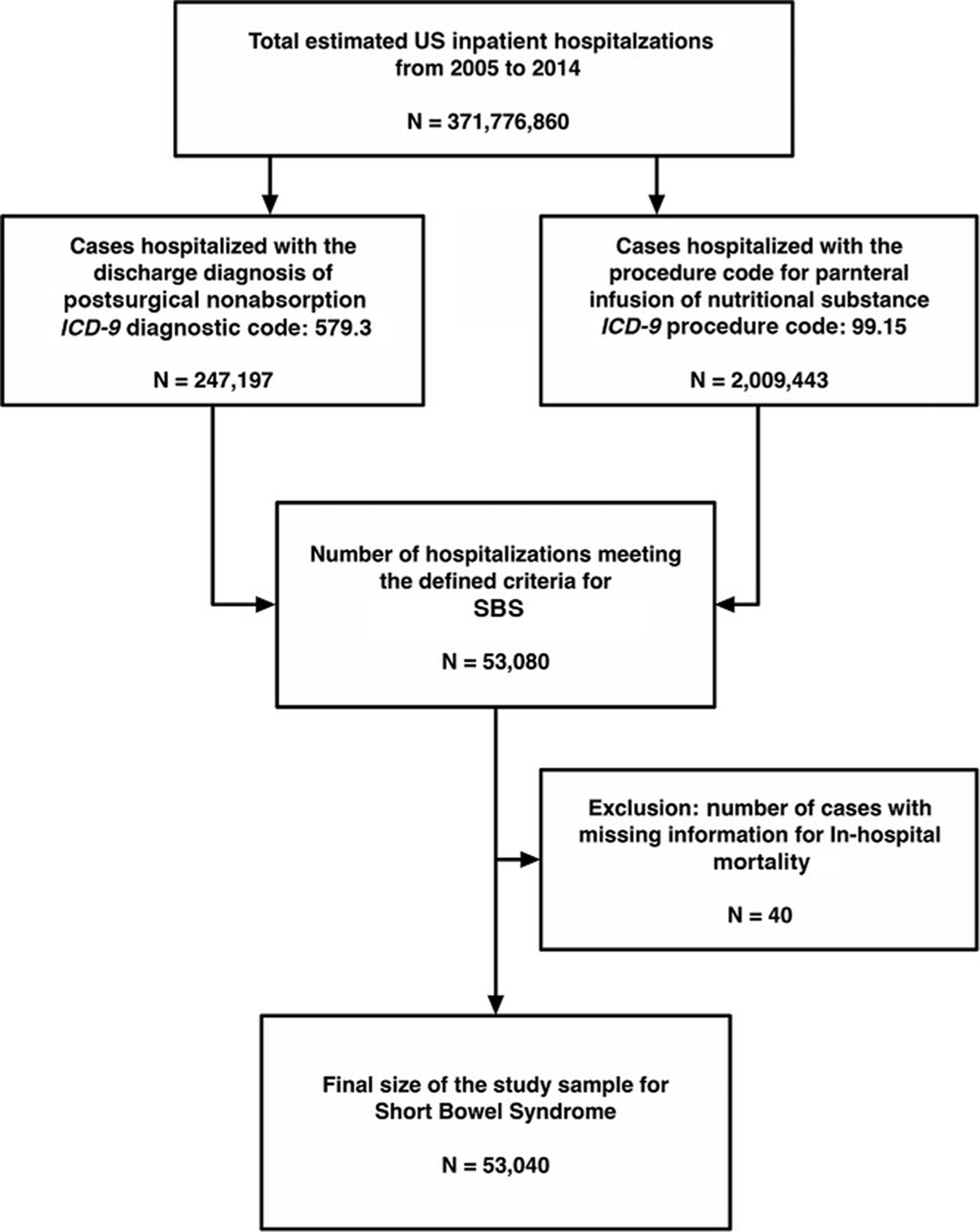
We used the US Nationwide Inpatient Sample database from 2005 to 2014. We identified adult SBS hospitalizations by using a combination of International Classification of Diseases, Ninth Revision, Clinical Modification codes. We studied the demographics of the patients with SBS and analyzed the trends in the number of hospitalizations, in-hospital mortality, and healthcare costs. We also identified the risk factors associated with in-hospital mortality.
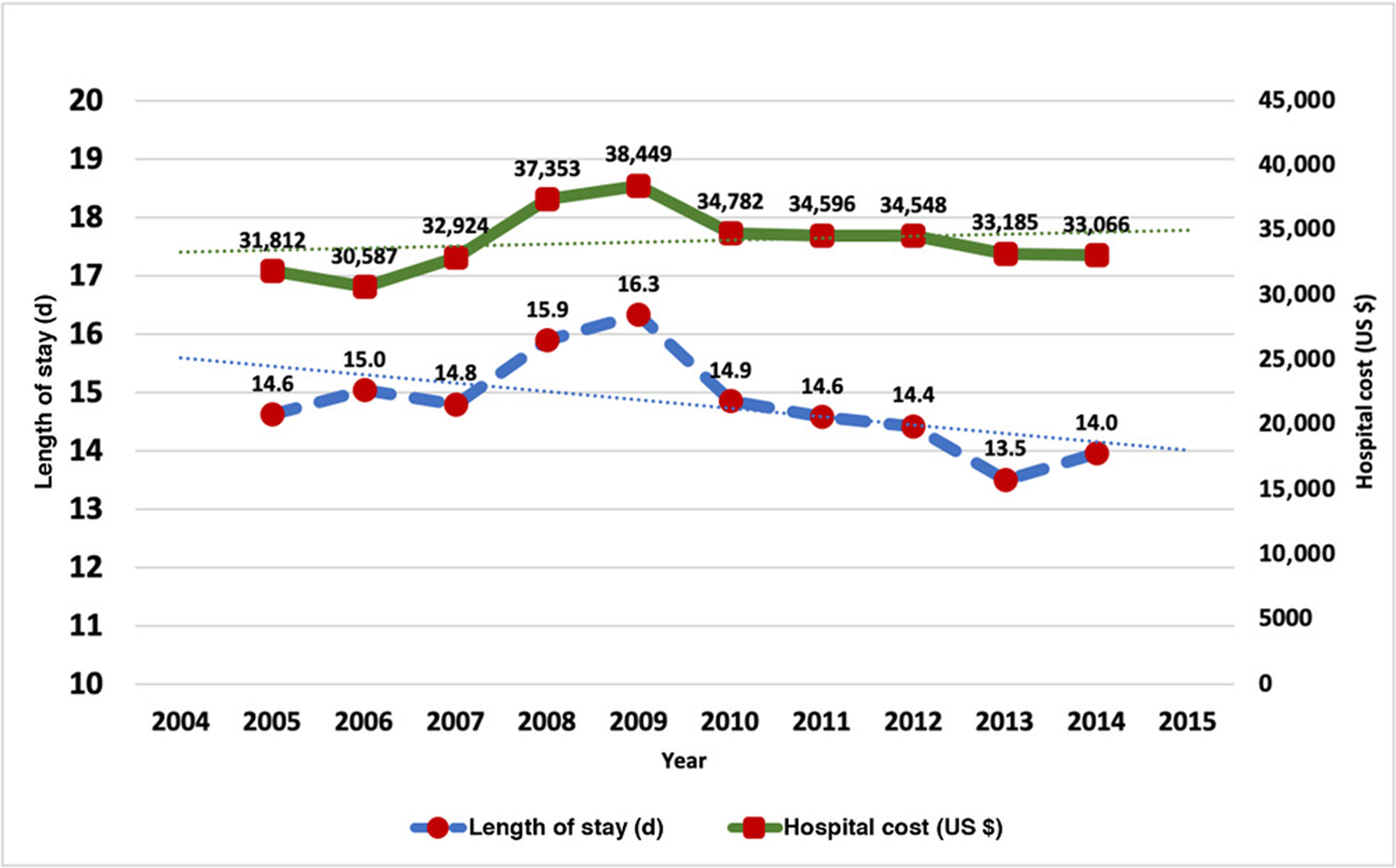
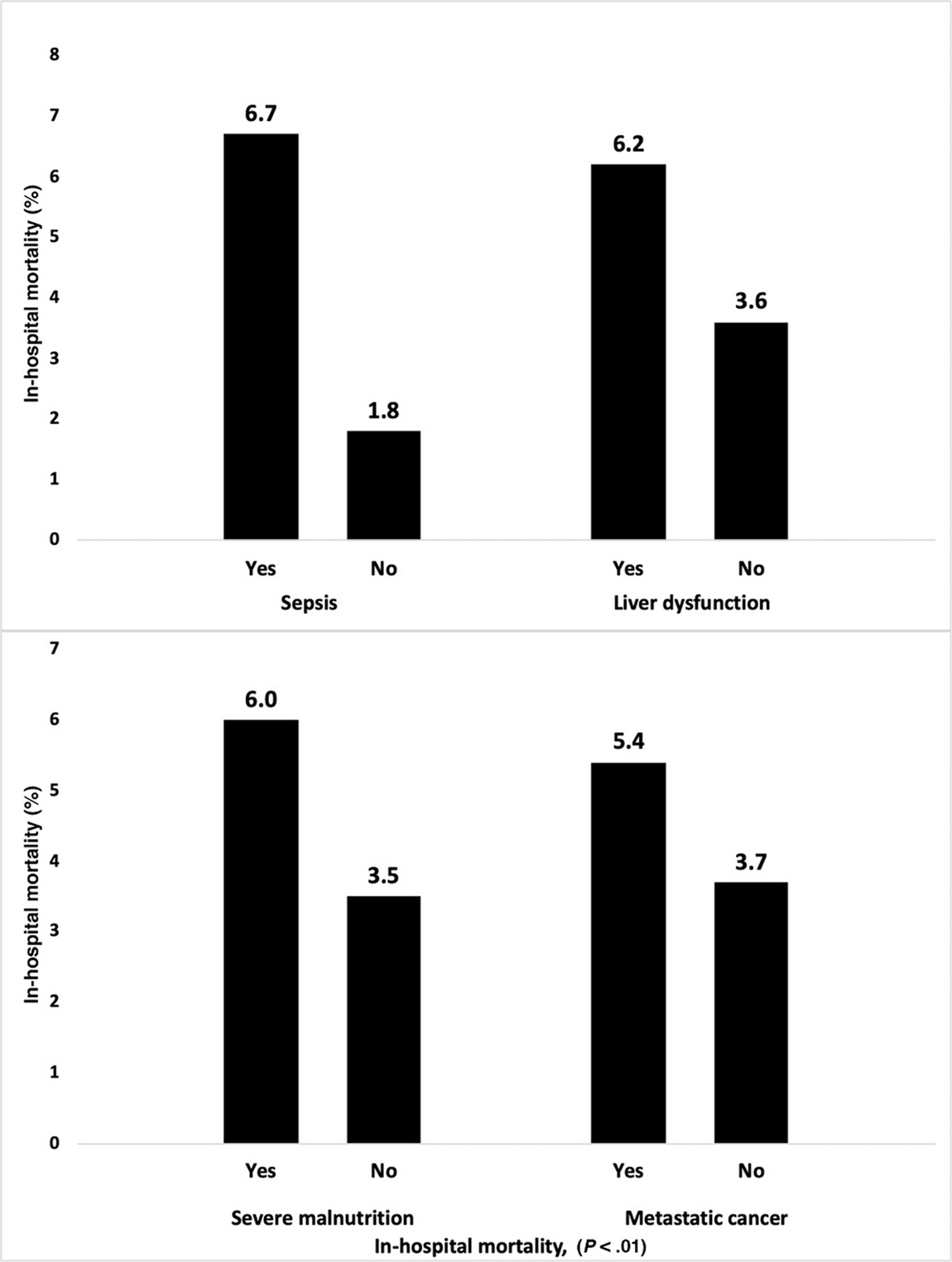
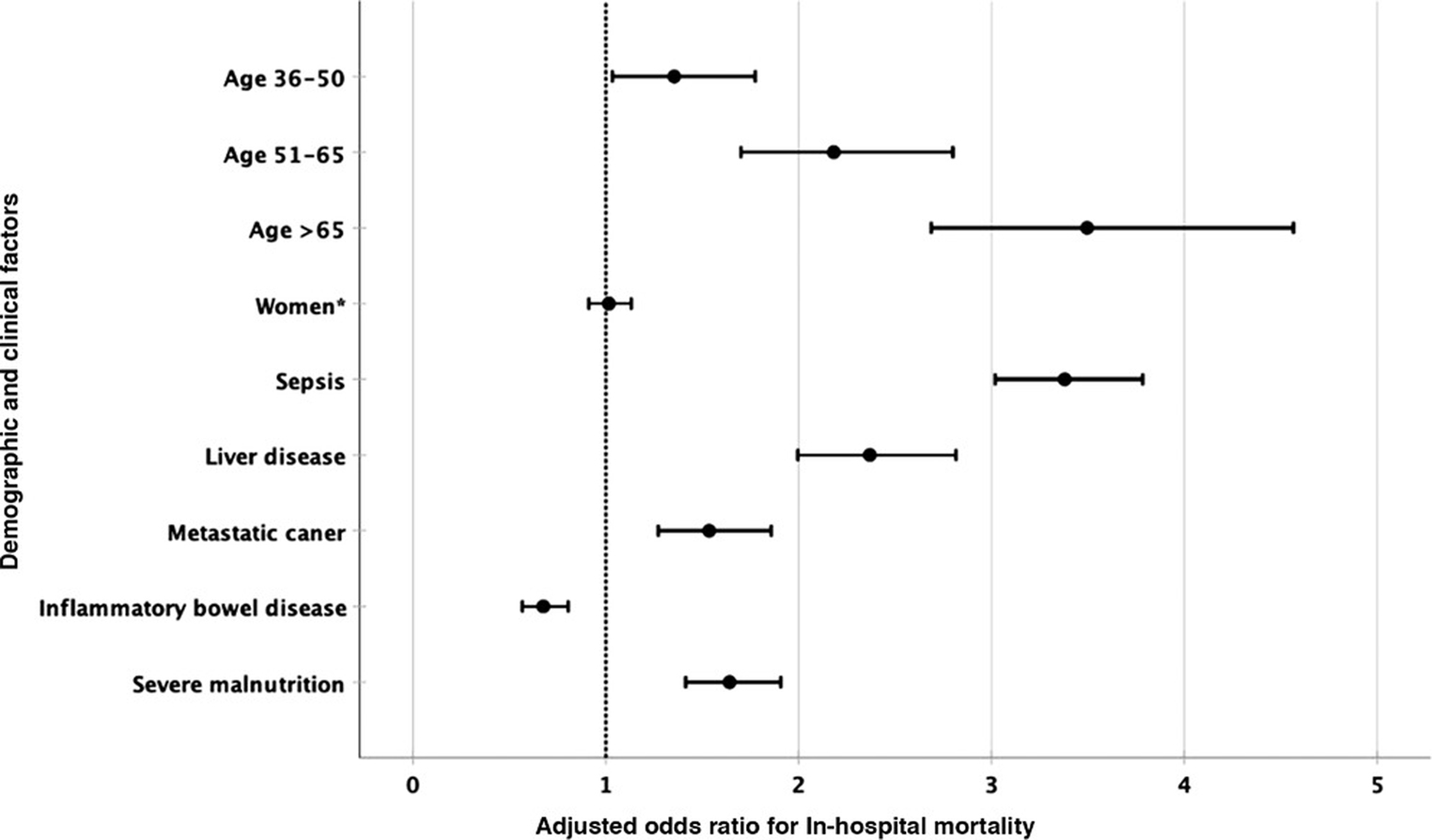
A total of 53,040 SBS hospitalizations were identified. We found that SBS-related hospitalizations increased by 55% between 2005 (N = 4037) and 2014 (N = 6265). During this period, the in-hospital mortality decreased from 40 per 1000 to 29 per 1000 hospitalizations, resulting in an overall reduction of 27%. Higher mortality was noted in SBS patients with sepsis (6.7%), liver dysfunction (6.2%), severe malnutrition (6.0%), and metastatic cancer (5.4%). The overall mean length of stay (LOS) for SBS-related hospitalizations was 14.7 days, with a mean hospital cost of $34,130. We noted a steady decrease in the LOS, whereas the cost of care remained relatively stable.
The national burden of SBS-related hospitalizations continues to rise, and the mortality associated with SBS has substantially decreased. Older SBS patients with sepsis, liver dysfunction, severe malnutrition, and metastatic cancer had the highest risk of mortality. Healthcare utilization in SBS remains high. healthcare utilization; hospitalization trend; mortality; research and diseases; short-bowel syndrome.
短肠综合征(SBS)是慢性肠衰竭的常见原因,与发病率、死亡率增加、生活质量差以及医疗保健费用负担增加有关。
我们使用了 2005 年至 2014 年美国全国住院患者样本数据库。我们使用国际疾病分类第 9 版临床修订版代码的组合来确定 SBS 住院患者。我们研究了 SBS 患者的人口统计学特征,并分析了住院人数、住院死亡率和医疗保健费用的趋势。我们还确定了与住院死亡率相关的危险因素。
共确定了 53040 例 SBS 住院病例。我们发现,2005 年(n=4037)和 2014 年(n=6265)之间 SBS 相关住院人数增加了 55%。在此期间,住院死亡率从每 1000 例中的 40 例降至每 1000 例中的 29 例,总体下降了 27%。败血症(6.7%)、肝功能障碍(6.2%)、严重营养不良(6.0%)和转移性癌症(5.4%)的 SBS 患者死亡率较高。SBS 相关住院的平均住院时间(LOS)为 14.7 天,平均医疗费用为 34130 美元。我们注意到 LOS 稳步下降,而护理成本保持相对稳定。
SBS 相关住院的全国负担继续增加,与 SBS 相关的死亡率大幅下降。患有败血症、肝功能障碍、严重营养不良和转移性癌症的老年 SBS 患者死亡风险最高。SBS 的医疗保健利用率仍然很高。医疗保健利用率;住院趋势;死亡率;研究与疾病;短肠综合征。