Xiong Ran, Zhao Changying, Zhong Min, Zhang Xinxia, Liu Wanfu
Hospital of Traditional Chinese Medicine Affiliated to Southwest Medical University.
Southwest Medical University, Luzhou.
Medicine (Baltimore). 2020 Nov 25;99(48):e23017. doi: 10.1097/MD.0000000000023017.
According to the data from the 2017 Chinese Guidelines for the Prevention and Treatment of Type 2 Diabetes [Chin J Diabetes. 2017;20:81-117], in 2013, the incidence of T2DM in China was 10.4%, while nearly 63% of the patients did not receive standard diagnosis. T2DM has become a serious public health problem in China and even in the world. Intestinal flora, as a research hotspot related to T2DM and other diseases in recent years, is a kind of microorganism with a large number in the human intestinal tract, which is considered as one of the important factors affecting the metabolism of the endocrine system and the human internal environment. In fact, many concepts of traditional Chinese medicine (TCM) coincide with modern research results of intestinal flora. In fact, TCM is also widely used to regulate intestinal flora disorders, and plays a very important role in restoring the dysfunctional intestinal flora [Hu et al. Drug Eval. 2013:8-10]. T2DM is a chronic systemic progressive disease. Studies [Wang et al. Tianjin Chin Med. 2007;24:507-508] have shown that even ideal blood glucose control cannot prevent the failure of islet cells [Wang et al. Tianjin Chin Med. 2007;24:507-508], and how to restore the function and number of islet cells has naturally become the focus and difficulty of our current research. Studies have shown that the changes in the contents of intestinal microflora and their metabolites are closely related to the performance of T2DM such as hyperglycemia, insulin resistance, and restoration of islet function, and play an important role in pathophysiological mechanisms such as chronic inflammation of T2DM [Sun et al. Shi Zhen Chin Med. 2012;23:1434-1436]. It has been confirmed that Shenqi compound, a TCM, regulates intestinal flora of T2DM. However, due to the lack of evidence, there is no specific method or suggestion, it is necessary to make a systematic evaluation of Shenqi compound to provide effective evidence for further research.
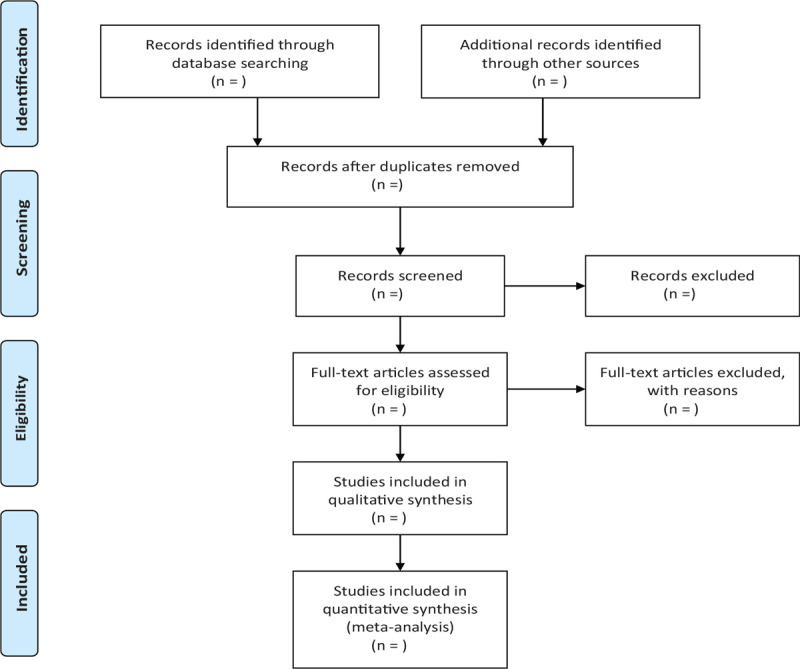
Electronic databases included PubMed, Embase, Cochrane Library, Web of Science, Nature, Science Online, WanFang China Biomedical Database, VIP Medical Information, China national Knowledge Infrastructure (CNKI).
Endotoxin, short-chain fatty acid, bile acid, indole.Other results: low density lipoprotein (LDL), high density lipoprotein (HDL), triglyceride (TG), total serum cholesterol (TC). The data will be extracted independently by 2 researchers, and the risk of bias in the meta-analysis will be systematically evaluated according to the Cochrane handbook. All data analysis will be performed using the Data statistics software Review Manager V.5.3. And occupy V.12.0.
The results of this study will systematically evaluate the effectiveness and safety of Shenqi compound on the effects of intestinal flora metabolites in patients with type 2 diabetes.
Through the systematic review of this study, the published evidence of the effect of Shenqi compound on intestinal flora metabolites in patients with type 2 diabetes was summarized to further guide its promotion and application.
This study is a systematic review with findings based on published evidence and does not require erB review or consent. We plan to publish the results in a journal or conference report.
OPEN SCIENCE FRAMEWORK (OSF) REGISTRATION NUMBER: September 29, 2020. osf.io/gb3m2.(https://osf.io/gb3m2).
根据《2017中国2型糖尿病防治指南》[《中华糖尿病杂志》。2017;20:81 - 117]的数据,2013年中国2型糖尿病(T2DM)发病率为10.4%,而近63%的患者未得到规范诊断。T2DM已成为中国乃至全球严重的公共卫生问题。肠道菌群作为近年来与T2DM等疾病相关的研究热点,是人体肠道内数量众多的一类微生物,被认为是影响内分泌系统代谢及人体内部环境的重要因素之一。事实上,中医的许多理念与肠道菌群的现代研究成果相契合。实际上,中医也被广泛用于调节肠道菌群紊乱,在恢复失调的肠道菌群方面发挥着非常重要的作用[胡等。药物评价。2013:8 - 10]。T2DM是一种慢性全身性进展性疾病。研究[王等。《天津中医药》。2007;24:507 - 508]表明,即使理想的血糖控制也无法阻止胰岛细胞功能衰竭[王等。《天津中医药》。2007;24:507 - 508],如何恢复胰岛细胞的功能和数量自然成为我们当前研究的重点和难点。研究表明,肠道微生物群及其代谢产物含量的变化与T2DM的高血糖、胰岛素抵抗、胰岛功能恢复等表现密切相关,在T2DM慢性炎症等病理生理机制中起重要作用[孙等。《时珍国医国药》。2012;23:1434 - 1436]。已证实中药复方制剂对T2DM患者肠道菌群有调节作用。然而,由于缺乏证据,尚无具体方法或建议,有必要对复方制剂进行系统评价,为进一步研究提供有效证据。
电子数据库包括PubMed、Embase、Cochrane图书馆、Web of Science、《自然》、《科学在线》、万方中国生物医学数据库、维普医药信息、中国知网(CNKI)。
内毒素、短链脂肪酸、胆汁酸、吲哚。其他结果:低密度脂蛋白(LDL)、高密度脂蛋白(HDL)、甘油三酯(TG)、总血清胆固醇(TC)。数据将由2名研究人员独立提取,根据Cochrane手册对荟萃分析中的偏倚风险进行系统评价。所有数据分析将使用数据统计软件Review Manager V.5.3进行。并占用V.12.0。
本研究结果将系统评价复方制剂对2型糖尿病患者肠道菌群代谢产物影响的有效性和安全性。
通过本研究的系统评价,总结复方制剂对2型糖尿病患者肠道菌群代谢产物影响的已发表证据,以进一步指导其推广应用。
本研究是一项基于已发表证据的系统评价,不需要伦理审查或同意。我们计划在期刊或会议报告中发表研究结果。
开放科学框架(OSF)注册号:2020年9月29日。osf.io/gb3m2.(https://osf.io/gb3m2)
