Liu Ke-Jun, Lv Yong-Xue, Niu Yi-Ming, Bu Yang
School of Clinical Medicine, Ningxia Medical University.
School of Basic Medicine, Ningxia Medical University.
Medicine (Baltimore). 2020 Nov 25;99(48):e23339. doi: 10.1097/MD.0000000000023339.
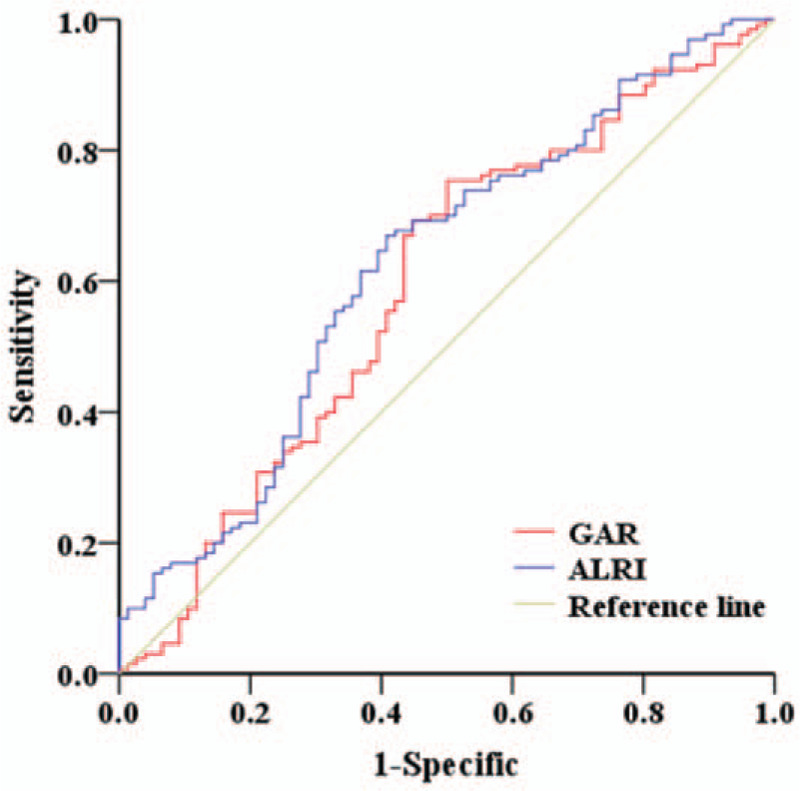
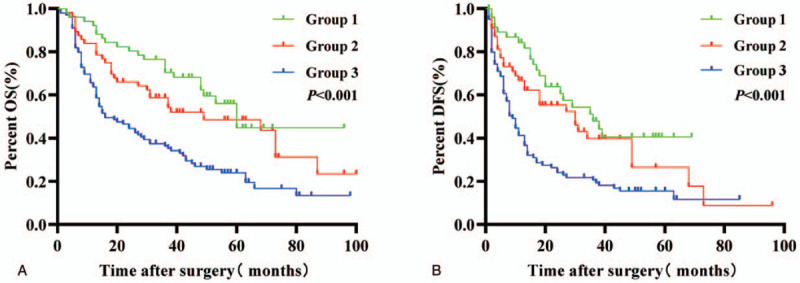
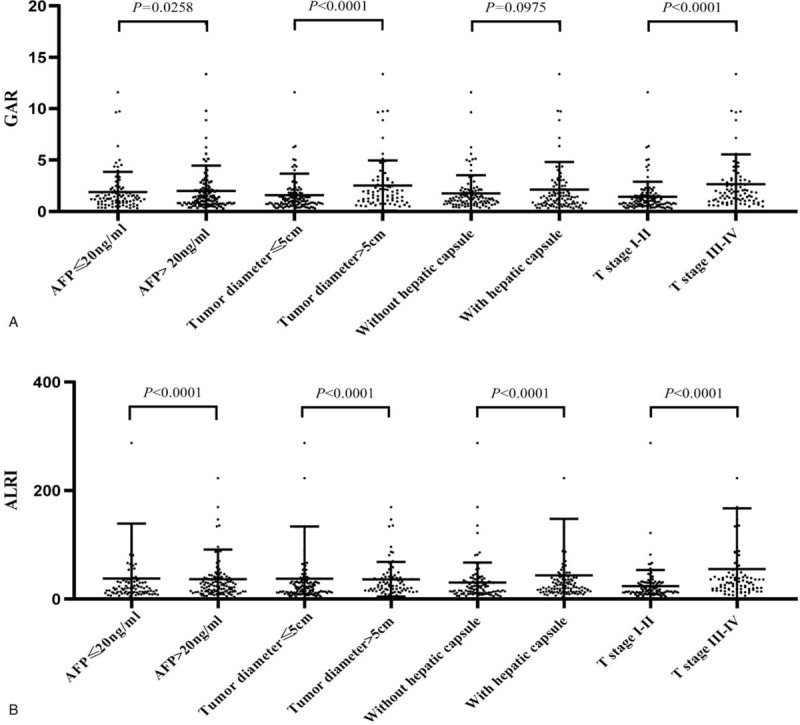
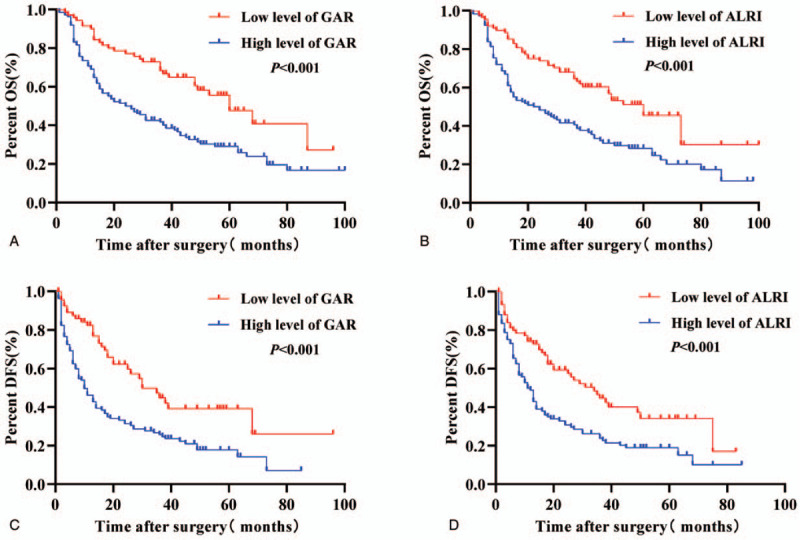
Hepatocellular carcinoma (HCC) is a malignant tumor associated with a high recurrence rate after hepatectomy. Recently, preoperative inflammatory and liver function reserve indices were found to predict increased risk of recurrence and decreased survival in HCC patients. This study aims to evaluate the ability of the γ-glutamyl transpeptidase-to-albumin ratio (GAR) and aspartate aminotransferase-to-lymphocyte ratio (ALRI), individually and in combination, to predict the prognosis of HCC patients after hepatectomy.We retrospectively reviewed 206 HCC patients who underwent radical resection at the General Hospital of Ningxia Medical University from January 2011 to November 2016. Receiver operating characteristic (ROC) curve analysis was performed to determine the optimal cut-off value for GAR and ALRI. The Pearson Chi-Squared test was used to analyze the correlations between GAR, ALRI and clinicopathological characteristics. Univariate and multivariate analyses were used to determine the predictive value of these factors for disease-free survival (DFS) and overall survival (OS). Survival rates were drawn according to the Kaplan-Meier method and differences between subgroups were compared by the log-rank statistics.GAR and ALRI were significantly correlated with gender, history of smoking, prothrombin time, tumor diameter, T stage and early intrahepatic recurrence by the Pearson Chi-Squared test (all P < .05). Univariate analysis indicated that T stage, GAR and ALRI were significantly correlated with DFS and OS in HCC patients after hepatectomy. Multivariate analysis illustrated that GAR and ALRI were independently related to DFS and OS in HCC patients. Preoperative GAR > 0.946 or ALRI > 18.734 predicted poor prognosis in HCC patients after hepatectomy. Additionally, the predictive scope of GAR combined with ALRI was more sensitive than that of either individual measurement alone.Our data indicate that there is a close association between the clinicopathological characteristics in HCC patients and increased GAR or ALRI. Higher levels of GAR and ALRI could sensitively and specifically predict a poor prognosis in HCC patients after hepatectomy. Furthermore, combined usage of GAR and ALRI could improve the accuracy of this prediction.
肝细胞癌(HCC)是一种肝切除术后复发率较高的恶性肿瘤。最近,术前炎症和肝功能储备指标被发现可预测HCC患者复发风险增加和生存率降低。本研究旨在评估γ-谷氨酰转肽酶与白蛋白比值(GAR)和天冬氨酸转氨酶与淋巴细胞比值(ALRI)单独及联合预测肝切除术后HCC患者预后的能力。
我们回顾性分析了2011年1月至2016年11月在宁夏医科大学总医院接受根治性切除的206例HCC患者。采用受试者工作特征(ROC)曲线分析确定GAR和ALRI的最佳截断值。采用Pearson卡方检验分析GAR、ALRI与临床病理特征之间的相关性。采用单因素和多因素分析确定这些因素对无病生存期(DFS)和总生存期(OS)的预测价值。根据Kaplan-Meier法绘制生存率,并通过对数秩检验比较亚组间的差异。
Pearson卡方检验显示,GAR和ALRI与性别、吸烟史、凝血酶原时间、肿瘤直径、T分期及早期肝内复发显著相关(均P<0.05)。单因素分析表明,T分期、GAR和ALRI与肝切除术后HCC患者的DFS和OS显著相关。多因素分析表明,GAR和ALRI与HCC患者的DFS和OS独立相关。术前GAR>0.946或ALRI>18.734预测肝切除术后HCC患者预后不良。此外,GAR联合ALRI的预测范围比单独测量更敏感。
我们的数据表明,HCC患者的临床病理特征与GAR或ALRI升高密切相关。较高水平的GAR和ALRI可敏感且特异预测肝切除术后HCC患者的不良预后。此外,联合使用GAR和ALRI可提高预测的准确性。