Universidad de Zaragoza, Zaragoza, Spain.
CIBER de Enfermedades Respiratorias, Madrid, Spain.
Sci Rep. 2020 Nov 24;10(1):20433. doi: 10.1038/s41598-020-77249-x.
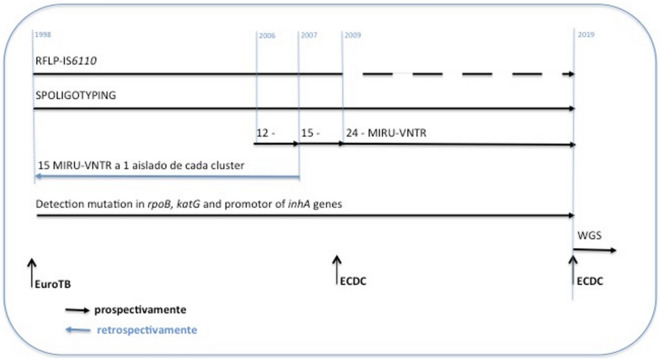
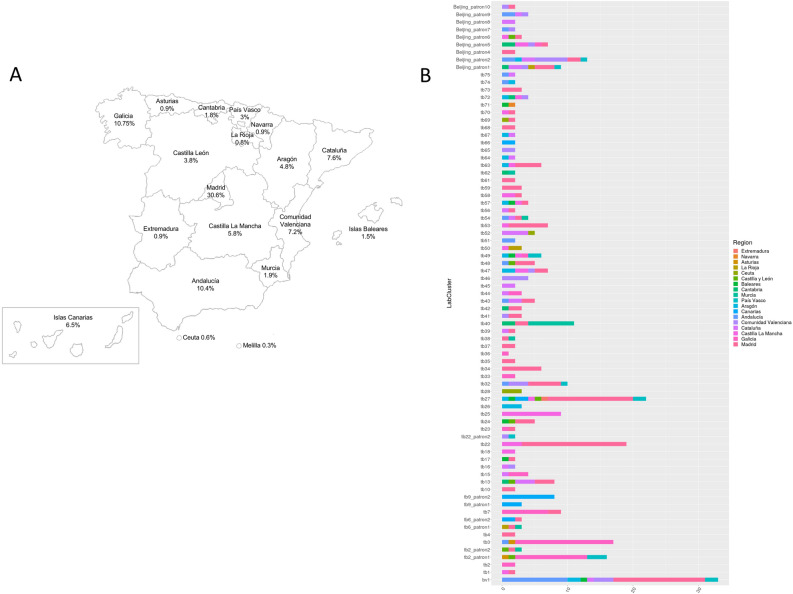
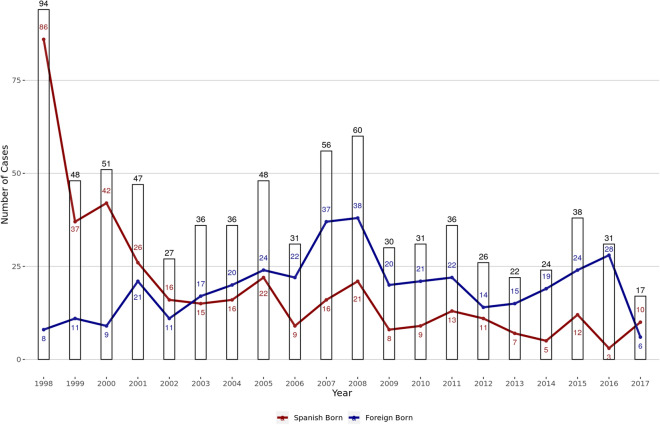
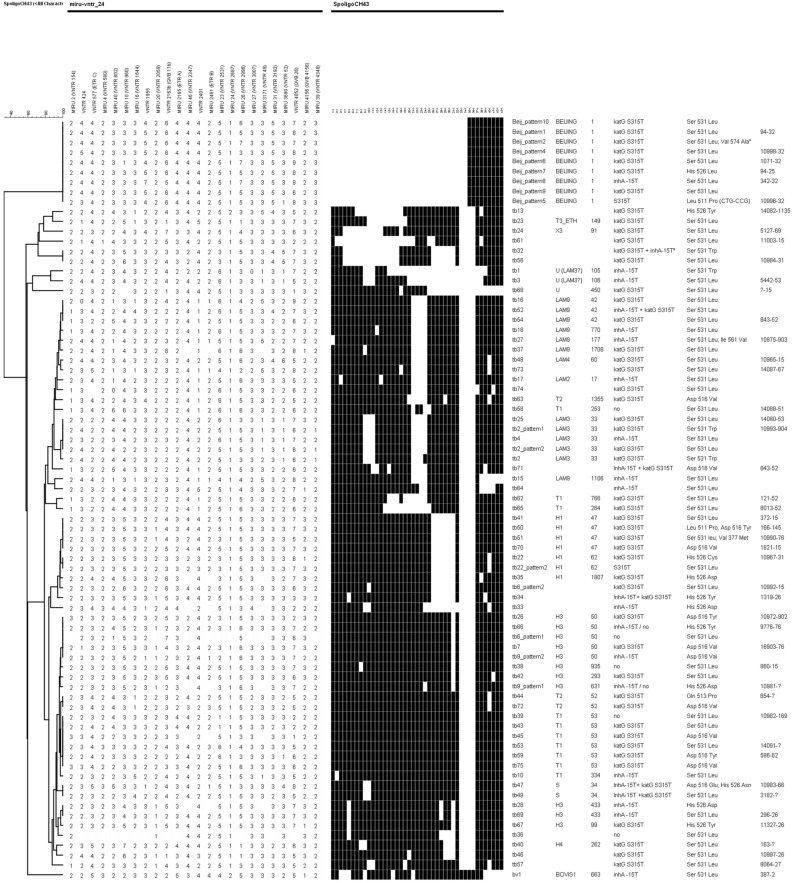
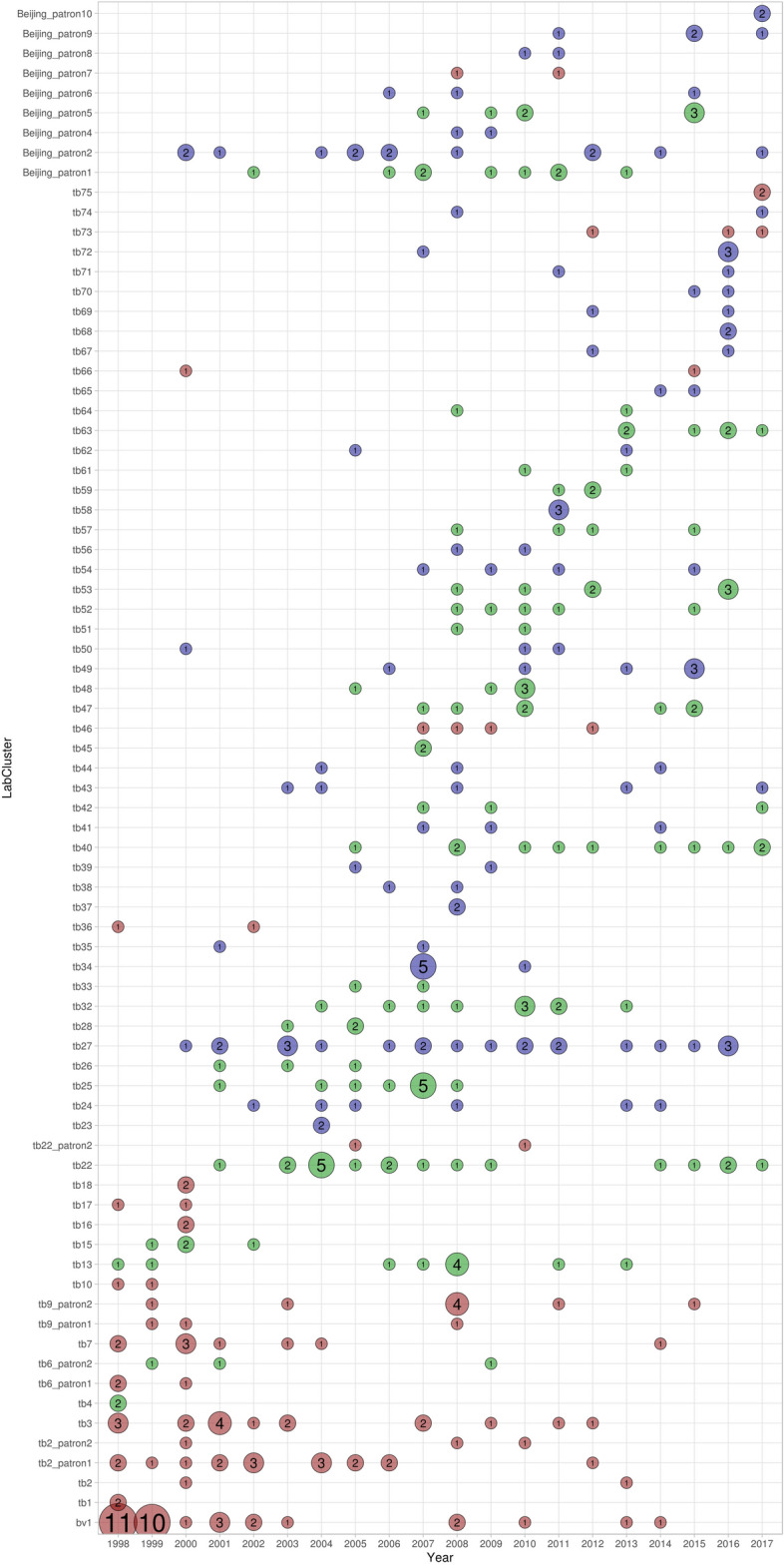
Molecular epidemiology of circulating clinical isolates is crucial to improve prevention strategies. The Spanish Working Group on multidrug resistant tuberculosis (MDR-TB) is a network that monitors the MDR-TB isolates in Spain since 1998. The aim of this study was to present the study of the MDR-TB and extensively drug-resistant tuberculosis (XDR-TB) patterns in Spain using the different recommended genotyping methods over time by a national coordinated system. Based on the proposed genotyping methods in the European Union until 2018, the preservation of one method, MIRU-VNTR, applied to selected clustered strains permitted to maintain our study open for 20 years. The distribution of demographic, clinical and epidemiological characteristics of clustered and non-clustered cases of MDR/XDR tuberculosis with proportion differences as assessed by Pearson's chi-squared or Fisher's exact test was compared. The differences in the quantitative variables using the Student's-t test and the Mann-Whitney U test were evaluated. The results obtained showed a total of 48.4% of the cases grouped in 77 clusters. Younger age groups, having a known TB case contact (10.2% vs 4.7%) and XDR-TB (16.5% vs 1.8%) were significantly associated with clustering. The largest cluster corresponded to a Mycobacterium bovis strain mainly spread during the nineties. A total of 68.4% of the clusters detected were distributed among the different Spanish regions and six clusters involving 104 cases were grouped in 17 and 18 years. Comparison of the genotypes obtained with those European genotypes included in The European Surveillance System (TESSy) showed that 87 cases had become part of 20 European clusters. The continuity of MDR strain genotyping in time has offered a widespread picture of the situation that allows better management of this public health problem. It also shows the advantage of maintaining one genotyping method over time, which allowed the comparison between ancient, present and future samples.
循环临床分离株的分子流行病学对于改进预防策略至关重要。西班牙耐多药结核病(MDR-TB)工作组是一个自 1998 年以来监测西班牙 MDR-TB 分离株的网络。本研究旨在介绍西班牙使用不同推荐的基因分型方法监测 MDR-TB 和广泛耐药结核病(XDR-TB)模式的情况,这些方法是通过国家协调系统随时间变化而提出的。基于欧盟在 2018 年之前提出的基因分型方法,保留一种方法(MIRU-VNTR)应用于选定的聚集菌株,使我们的研究能够持续 20 年。对聚集和非聚集 MDR/XDR 结核病病例的人口统计学、临床和流行病学特征进行比较,通过 Pearson 卡方检验或 Fisher 确切检验评估比例差异。使用 Student-t 检验和 Mann-Whitney U 检验评估定量变量的差异。结果显示,共有 48.4%的病例分为 77 个聚集。年轻年龄组、有已知结核病病例接触(10.2%比 4.7%)和 XDR-TB(16.5%比 1.8%)与聚集显著相关。最大的聚集与一种主要在 90 年代传播的牛分枝杆菌菌株相对应。总共检测到的 68.4%的聚集分布在西班牙的不同地区,涉及 104 例的 6 个聚集在 17 年和 18 年聚集在一起。将获得的基因型与包含在欧洲监测系统(TESSy)中的欧洲基因型进行比较,结果显示 87 例已成为 20 个欧洲聚集的一部分。MDR 菌株基因分型随时间的连续性提供了广泛的情况图片,使这种公共卫生问题得到更好的管理。它还显示了随着时间的推移保留一种基因分型方法的优势,这允许对古老、现在和未来的样本进行比较。