Bender M, Lakicevic S, Pravdic N, Schreiber S, Malojcic B
Department of Neurology, University Hospital Mostar, Bijeli Brijeg bb, 88 000, Mostar, Bosnia and Herzegovina.
Department of Neurology, Asklepios Kliniken, Brandenburg, Germany.
Ultrasound J. 2020 Nov 25;12(1):47. doi: 10.1186/s13089-020-00196-1.
Optic nerve sheath diameter (ONSD) sonography has been proposed as a reliable bedside tool for the detection of increased intracranial pressure (ICP). ONSD reacts almost simultaneously to oscillations in ICP. The aim of this study was to investigate the ONSD dynamics in the acute stage of intracerebral hemorrhage (ICH) and to compare ONSD dynamics to the clinical outcome.
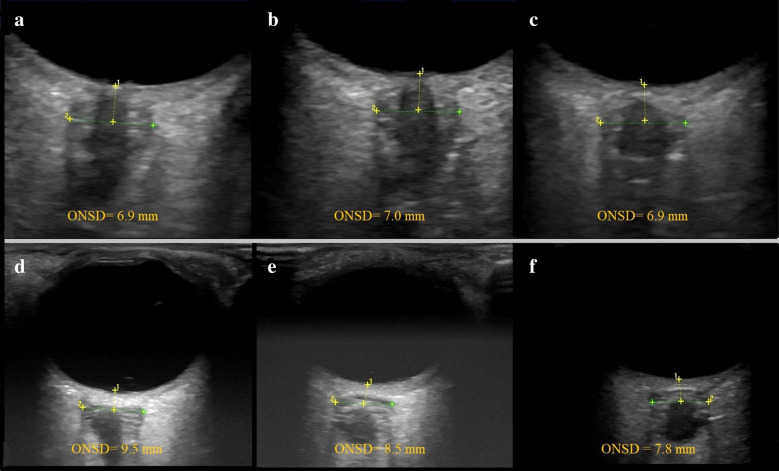
We enrolled 35 acute ICH patients and 20 healthy volunteers in this prospective study. At the admission, all patients underwent brain CT scan and ONSD sonography. We repeated the ONSD on the second and the third day in all patients while CT scan was repeated if a patient condition deteriorated. The changes in serial ONSD measurements were termed as stable or unstable ONSD trend. ONSD trend was considered as unstable if variations of average ONSD were above 5%. The outcome of the patient was assessed with the Modified Rankin Scale (mRS) and Glasgow Outcome Scale (GOS).
In healthy volunteers serial ONSD recordings for 3 days revealed a stable trend in 100%. However, in the study group, 23 patients had unstable and 12 had stable ONSD trend during the acute stage of ICH. The patients with unstable ONSD trend were more likely to have worse outcomes (p value 0.003).
In patients with ICH, the acute-phase ONSD dynamics can help in predicting the clinical outcome.
视神经鞘直径(ONSD)超声检查已被提议作为检测颅内压(ICP)升高的可靠床边工具。ONSD几乎会同时对ICP的波动做出反应。本研究的目的是调查脑出血(ICH)急性期的ONSD动态变化,并将ONSD动态变化与临床结局进行比较。
我们在这项前瞻性研究中纳入了35例急性ICH患者和20名健康志愿者。入院时,所有患者均接受脑部CT扫描和ONSD超声检查。我们在所有患者的第二天和第三天重复进行ONSD检查,而如果患者病情恶化,则重复进行CT扫描。连续ONSD测量的变化被称为稳定或不稳定的ONSD趋势。如果平均ONSD的变化超过5%,则ONSD趋势被认为是不稳定的。采用改良Rankin量表(mRS)和格拉斯哥预后量表(GOS)评估患者的结局。
在健康志愿者中,连续3天的ONSD记录显示100%呈稳定趋势。然而,在研究组中,23例患者在ICH急性期的ONSD趋势不稳定,12例患者的ONSD趋势稳定。ONSD趋势不稳定的患者更有可能出现较差的结局(p值为0.003)。
在ICH患者中,急性期的ONSD动态变化有助于预测临床结局。