Division of Peptide Biochemistry, TUM School of Life Sciences, Technische Universität München (TUM), 85354, Freising, Germany.
Institute for Stroke and Dementia Research (ISD), Klinikum der Universität München, Ludwig-Maximilians-Universität (LMU) München, 81377, Munich, Germany.
Nat Commun. 2020 Nov 25;11(1):5981. doi: 10.1038/s41467-020-19764-z.
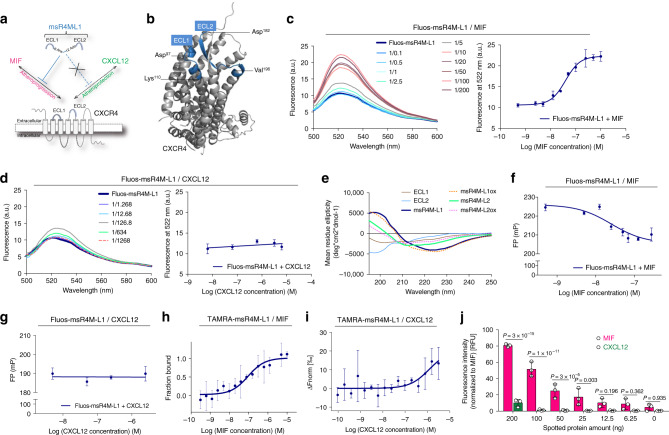
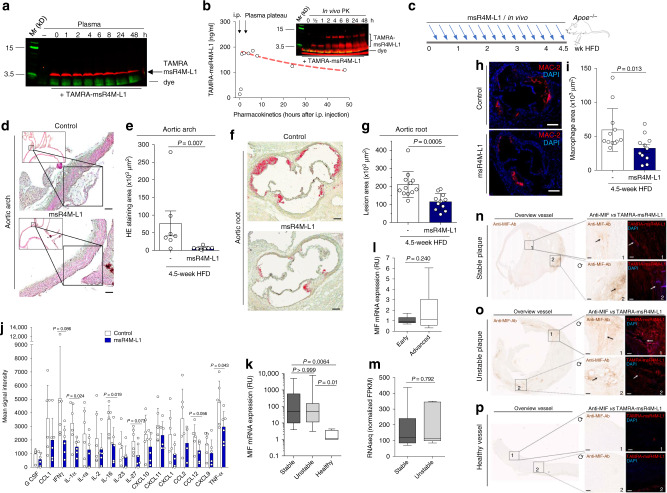
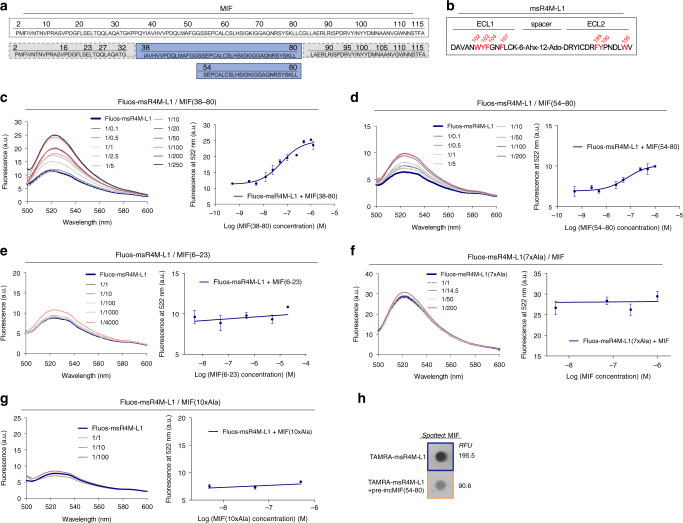
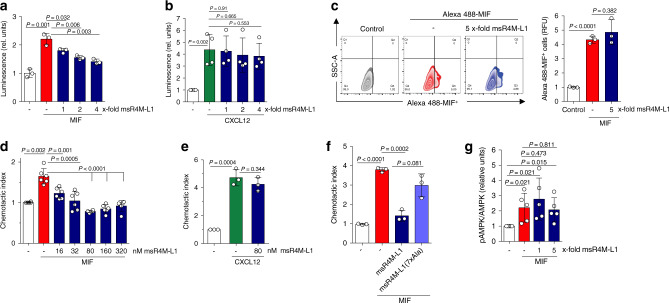
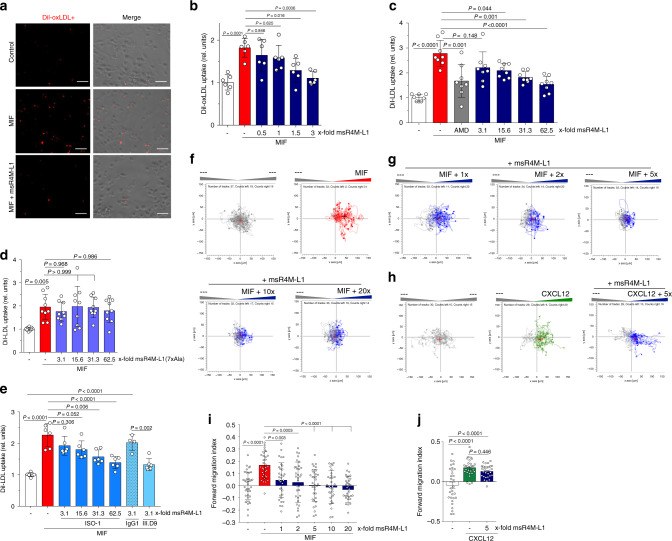
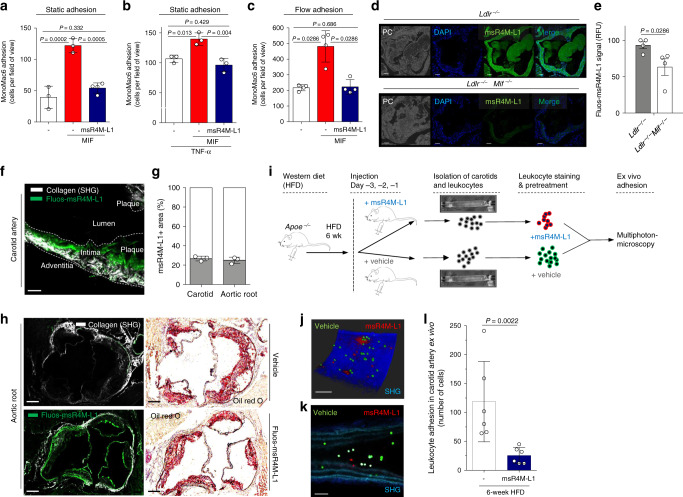
Targeting a specific chemokine/receptor axis in atherosclerosis remains challenging. Soluble receptor-based strategies are not established for chemokine receptors due to their discontinuous architecture. Macrophage migration-inhibitory factor (MIF) is an atypical chemokine that promotes atherosclerosis through CXC-motif chemokine receptor-4 (CXCR4). However, CXCR4/CXCL12 interactions also mediate atheroprotection. Here, we show that constrained 31-residue-peptides ('msR4Ms') designed to mimic the CXCR4-binding site to MIF, selectively bind MIF with nanomolar affinity and block MIF/CXCR4 without affecting CXCL12/CXCR4. We identify msR4M-L1, which blocks MIF- but not CXCL12-elicited CXCR4 vascular cell activities. Its potency compares well with established MIF inhibitors, whereas msR4M-L1 does not interfere with cardioprotective MIF/CD74 signaling. In vivo-administered msR4M-L1 enriches in atherosclerotic plaques, blocks arterial leukocyte adhesion, and inhibits atherosclerosis and inflammation in hyperlipidemic Apoe mice in vivo. Finally, msR4M-L1 binds to MIF in plaques from human carotid-endarterectomy specimens. Together, we establish an engineered GPCR-ectodomain-based mimicry principle that differentiates between disease-exacerbating and -protective pathways and chemokine-selectively interferes with atherosclerosis.
靶向动脉粥样硬化特定趋化因子/受体轴仍然具有挑战性。由于趋化因子受体的不连续结构,基于可溶性受体的策略尚未在趋化因子受体中确立。巨噬细胞移动抑制因子(MIF)是一种非典型趋化因子,通过 CXC 基序趋化因子受体 4(CXCR4)促进动脉粥样硬化。然而,CXCR4/CXCL12 相互作用也介导动脉粥样硬化保护。在这里,我们表明,设计用于模拟 CXCR4 与 MIF 结合位点的 31 个残基肽(“msR4Ms”),以纳摩尔亲和力选择性结合 MIF,并阻断 MIF/CXCR4,而不影响 CXCL12/CXCR4。我们鉴定出 msR4M-L1,它可以阻断 MIF-但不阻断 CXCL12 引发的 CXCR4 血管细胞活性。其效力与已建立的 MIF 抑制剂相当,而 msR4M-L1 不干扰保护性 MIF/CD74 信号。体内给予 msR4M-L1 可在动脉粥样硬化斑块中富集,阻断动脉白细胞黏附,并抑制高脂血症 Apoe 小鼠体内的动脉粥样硬化和炎症。最后,msR4M-L1 与人颈动脉内膜切除术标本中的 MIF 结合。总之,我们建立了一种基于工程化 GPCR 细胞外结构域的模拟原理,可以区分疾病加重和保护途径,并趋化因子选择性地干扰动脉粥样硬化。