Qi Chunxiao, Lei Lei, Hu Jinqu, Wang Gang, Liu Jiyuan, Ou Shaowu
Department of Neurosurgery, The First Hospital of China Medical University, Shenyang, Liaoning 110001, P.R. China.
Department of Neurosurgery, The Second Hospital of Dalian Medical University, Dalian, Liaoning 116027, P.R. China.
Oncol Lett. 2021 Jan;21(1):22. doi: 10.3892/ol.2020.12283. Epub 2020 Nov 9.
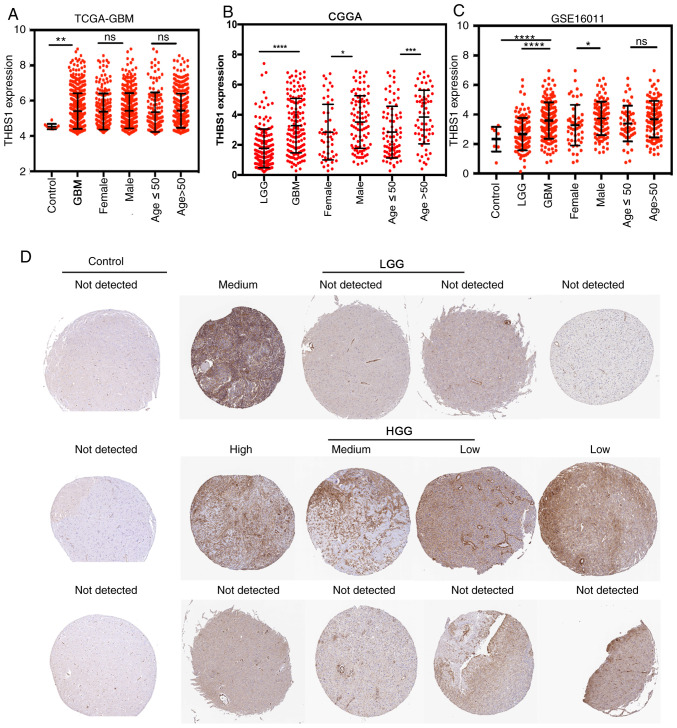
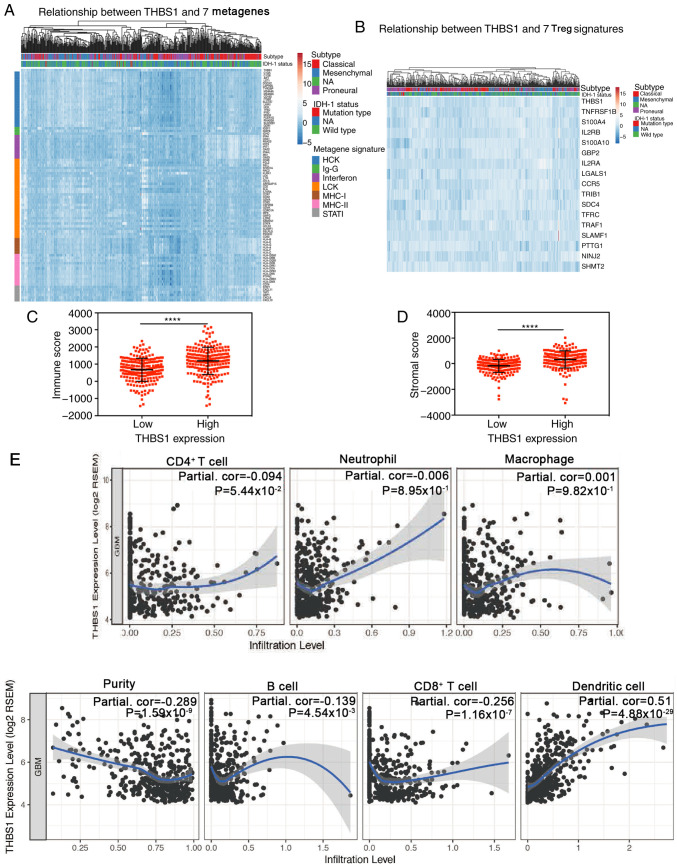
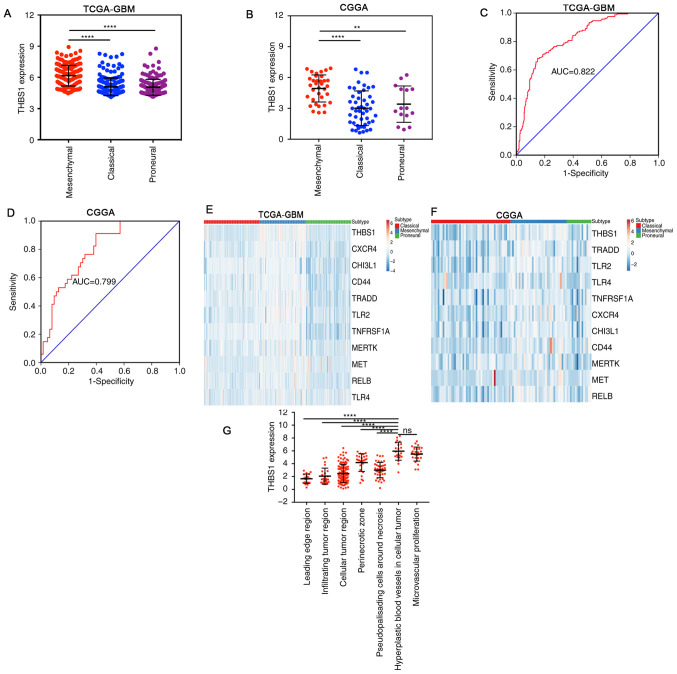
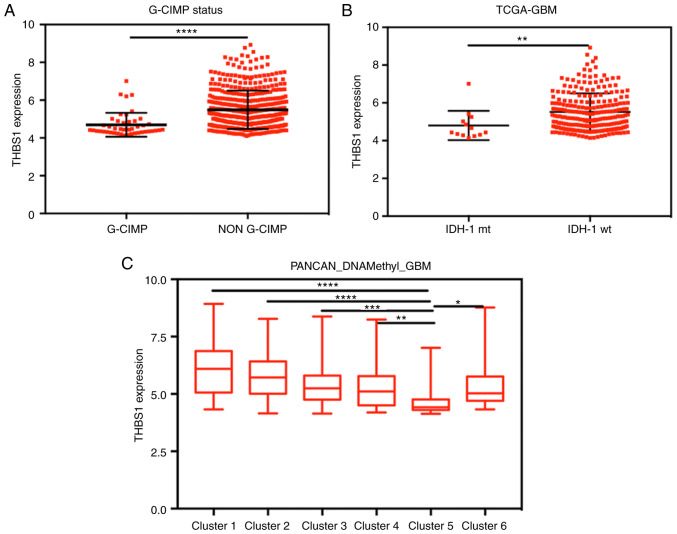
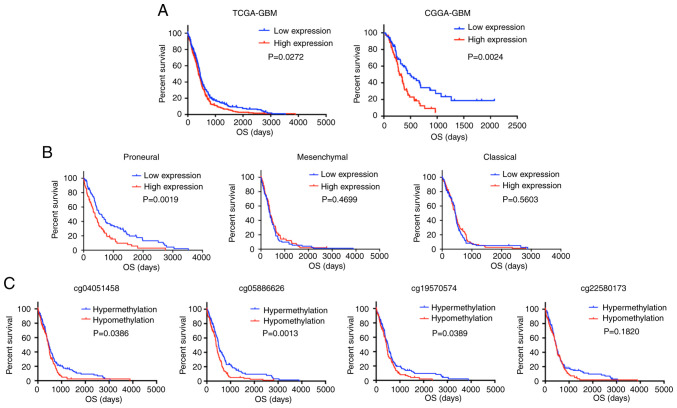
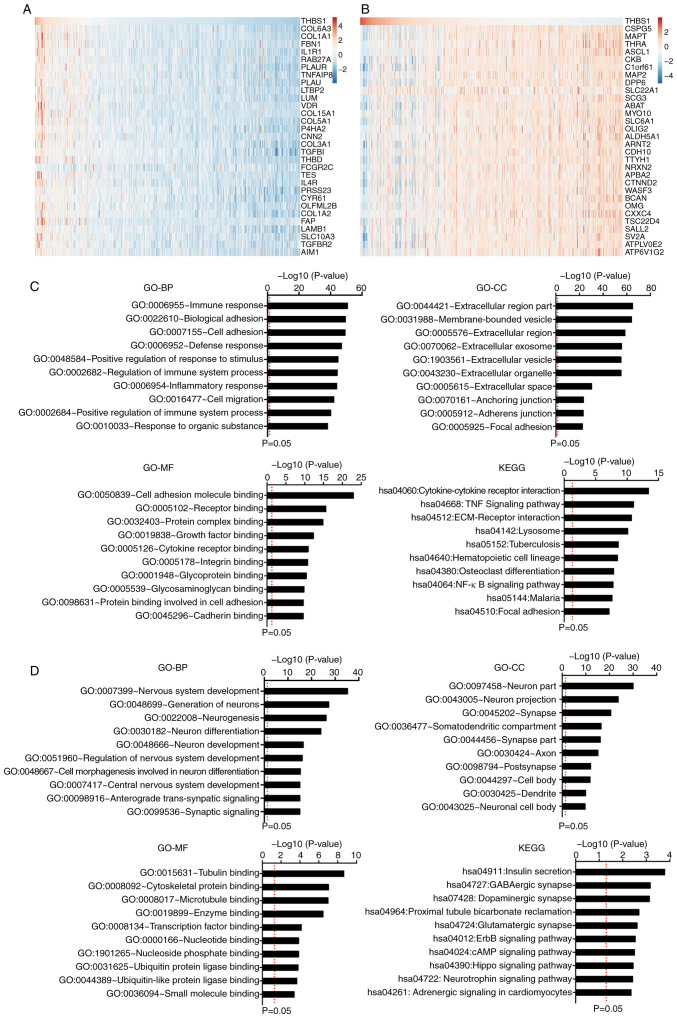
Glioblastoma (GBM) is the most common malignant brain tumor and the most aggressive type of glioma, characterized by strong invasive potential and rapid recurrence despite severe treatment methods, such as maximal tumor resection followed by chemotherapy and radiotherapy. Thrombospondin-1 (THBS1) was first discovered in platelets and subsequent studies have indicated its functions in the development of several cancers, including breast cancer, melanoma, gastric cancer, cervical cancer and GBM. However, to the best of our knowledge, the expression profiles of THBS1 in GBM subtypes remain unknown, and the underlying mechanism by which THBS1 expression is regulated, and its effect on the local immune response in GBM, remains unclear. The present study used public datasets from The Cancer Genome Atlas, the Chinese Glioma Genome Atlas, the Gene Expression Omnibus, the Ivy Glioblastoma Atlas Project, Tumor Immune Estimation Resource, Estimation of STromal and Immune cells in MAlignant Tumor tissues using Expression data and the Human Protein Atlas to investigate the prognostic value of THBS1 and its expression profiles, as well as its correlation with the local immune response in GBM. The results demonstrated that THBS1 was a biomarker of the pathological malignancy of glioma, and predicted the mesenchymal subtype of GBM. Furthermore, DNA methylation of THBS1 may be an important mechanism by which THBS1 expression is regulated in GBM. The hypomethylation or overexpression of THBS1 predicted an unfavorable prognosis in patients with GBM. Additionally, THBS1 was correlated with immune and inflammatory responses in GBM. Thus, the findings of the present study provide insight into the potential value of THBS1 in the treatment of GBM.
胶质母细胞瘤(GBM)是最常见的恶性脑肿瘤,也是最具侵袭性的胶质瘤类型,其特点是具有很强的侵袭潜力,尽管采用了如最大程度肿瘤切除后进行化疗和放疗等严厉的治疗方法,仍会快速复发。血小板反应蛋白-1(THBS1)最初在血小板中被发现,随后的研究表明其在多种癌症的发生发展中发挥作用,包括乳腺癌、黑色素瘤、胃癌、宫颈癌和GBM。然而,据我们所知,THBS1在GBM各亚型中的表达谱仍不清楚,THBS1表达的调控机制及其对GBM局部免疫反应的影响也尚不明确。本研究使用了来自癌症基因组图谱(The Cancer Genome Atlas)、中国胶质瘤基因组图谱(the Chinese Glioma Genome Atlas)、基因表达综合数据库(the Gene Expression Omnibus)、艾维胶质母细胞瘤图谱计划(the Ivy Glioblastoma Atlas Project)、肿瘤免疫估计资源库(Tumor Immune Estimation Resource)、利用表达数据估计恶性肿瘤组织中的基质和免疫细胞(Estimation of STromal and Immune cells in MAlignant Tumor tissues using Expression data)以及人类蛋白质图谱(the Human Protein Atlas)的公共数据集,来研究THBS1的预后价值及其表达谱,以及它与GBM局部免疫反应的相关性。结果表明,THBS1是胶质瘤病理恶性程度的生物标志物,并可预测GBM的间充质亚型。此外,THBS1的DNA甲基化可能是GBM中THBS1表达调控的重要机制。THBS1的低甲基化或过表达预示着GBM患者预后不良。此外,THBS1与GBM中的免疫和炎症反应相关。因此,本研究结果为THBS1在GBM治疗中的潜在价值提供了见解。