Unité de Trafic Membranaire et Pathogenèse, Institut Pasteur, UMR3691 CNRS, 28 rue du Docteur Roux, F-75015 Paris, France.
Sorbonne Université, ED394 - Physiologie, Physiopathologie et Thérapeutique, F-75005 Paris, France.
Biochem J. 2021 Jan 15;478(1):21-39. doi: 10.1042/BCJ20200710.
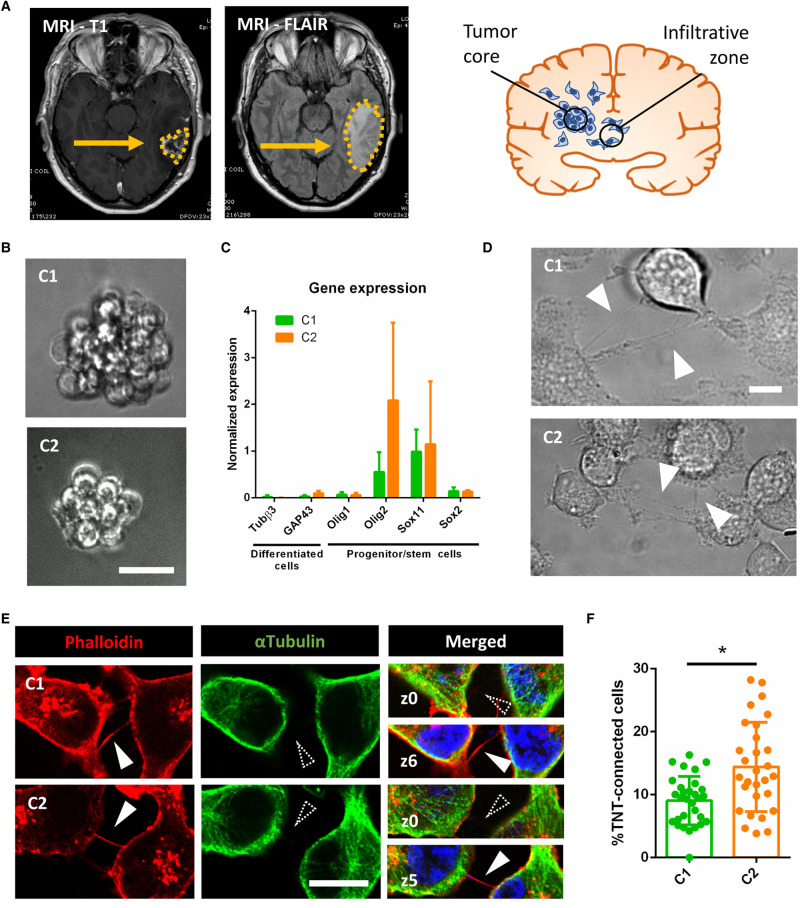
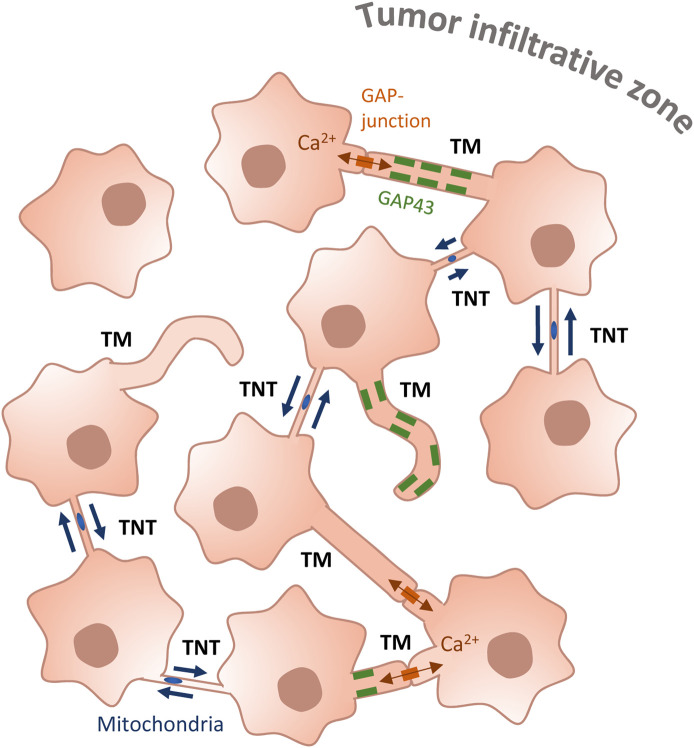
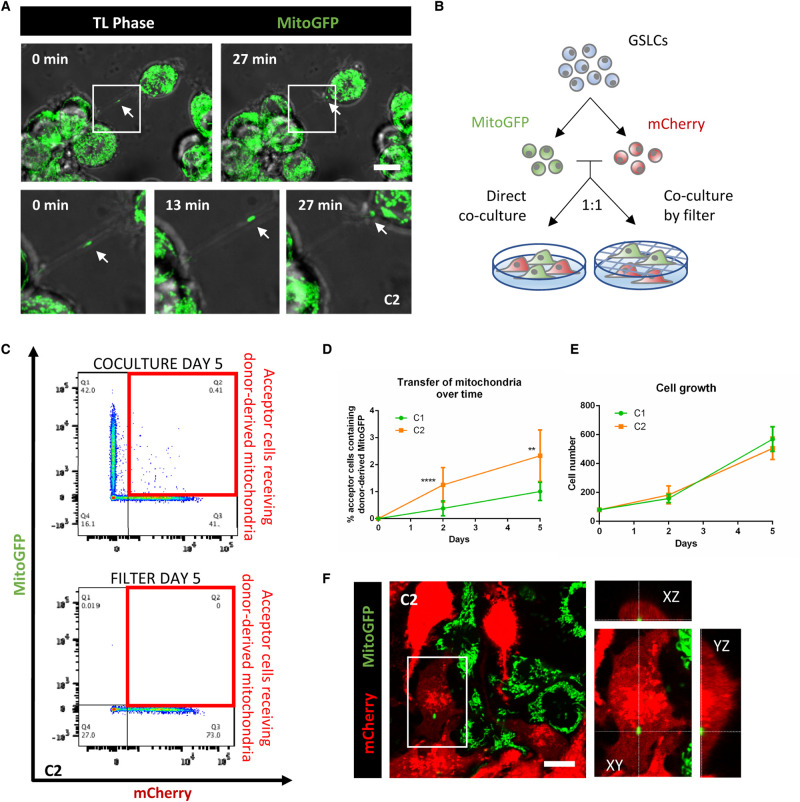
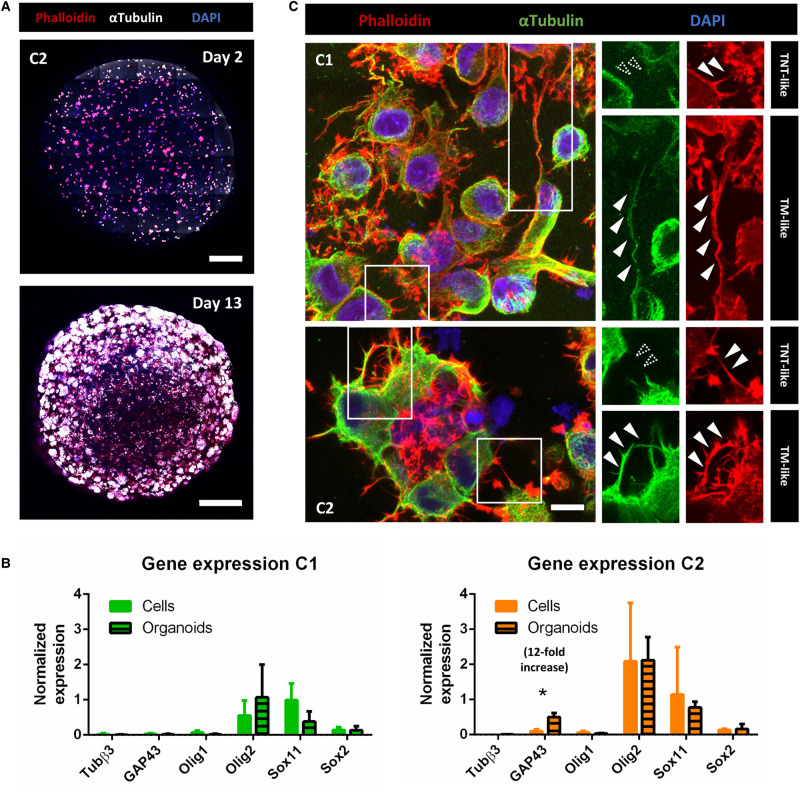
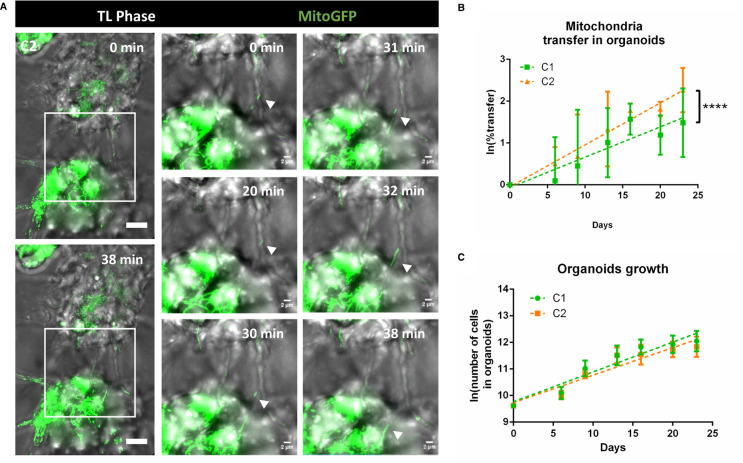
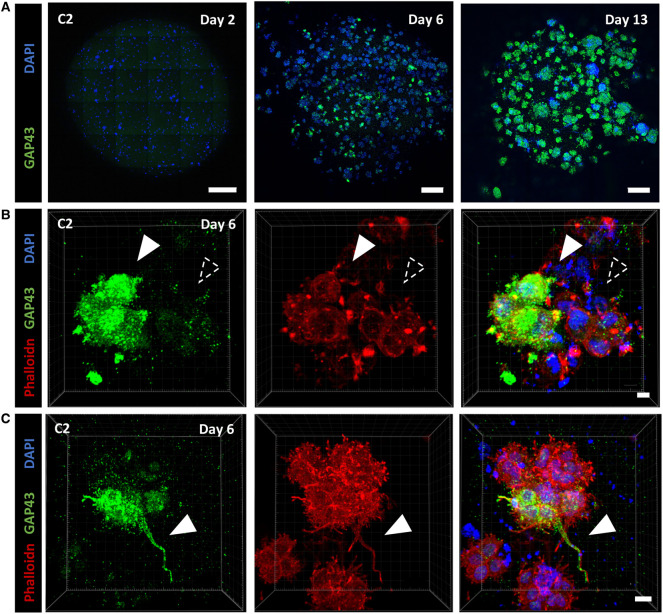
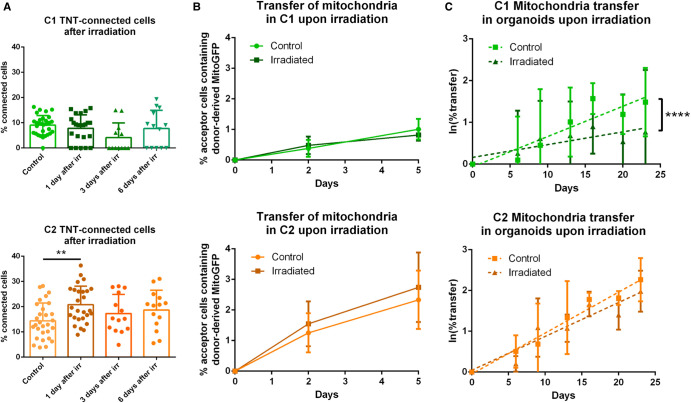
Glioblastoma (GBM) is the most aggressive brain cancer and its relapse after surgery, chemo and radiotherapy appears to be led by GBM stem cells (GSCs). Also, tumor networking and intercellular communication play a major role in driving GBM therapy-resistance. Tunneling Nanotubes (TNTs), thin membranous open-ended channels connecting distant cells, have been observed in several types of cancer, where they emerge to drive a more malignant phenotype. Here, we investigated whether GBM cells are capable to intercommunicate by TNTs. Two GBM stem-like cells (GSLCs) were obtained from the external and infiltrative zone of one GBM from one patient. We show, for the first time, that both GSLCs, grown in classical 2D culture and in 3D-tumor organoids, formed functional TNTs which allowed mitochondria transfer. In the organoid model, recapitulative of several tumor's features, we observed the formation of a network between cells constituted of both Tumor Microtubes (TMs), previously observed in vivo, and TNTs. In addition, the two GSLCs exhibited different responses to irradiation in terms of TNT induction and mitochondria transfer, although the correlation with the disease progression and therapy-resistance needs to be further addressed. Thus, TNT-based communication is active in different GSLCs derived from the external tumoral areas associated to GBM relapse, and we propose that they participate together with TMs in tumor networking.
胶质母细胞瘤(GBM)是最具侵袭性的脑癌,其在手术后、化疗和放疗后的复发似乎是由 GBM 干细胞(GSCs)引起的。此外,肿瘤网络和细胞间通讯在驱动 GBM 治疗耐药性方面起着重要作用。隧道纳米管(TNTs)是连接远距离细胞的薄膜开放式通道,已在多种类型的癌症中观察到,它们的出现驱动了更恶性的表型。在这里,我们研究了 GBM 细胞是否能够通过 TNTs 进行相互通讯。从一名患者的一个 GBM 的外部和浸润区获得了两个 GBM 干细胞样细胞(GSLCs)。我们首次表明,在经典的 2D 培养和 3D 肿瘤类器官中生长的两种 GSLC 都形成了允许线粒体转移的功能性 TNTs。在类器官模型中,我们观察到由 TM 和 TNTs 组成的细胞网络的形成,TM 是先前在体内观察到的,在类器官模型中观察到的几种肿瘤特征的重现。此外,两种 GSLCs 在 TNT 诱导和线粒体转移方面对辐射表现出不同的反应,尽管与疾病进展和治疗耐药性的相关性需要进一步研究。因此,源自与 GBM 复发相关的外部肿瘤区域的不同 GSLC 中存在基于 TNT 的通讯,并且我们提出它们与 TM 一起参与肿瘤网络。