Meyer Cancer Center, Weill Cornell Medicine, New York, NY, USA.
Division of Neuropathology, Department of Pathology, NYU Langone Medical Center and Medical School, New York, NY, USA.
Cell Rep. 2019 Mar 19;26(12):3203-3211.e5. doi: 10.1016/j.celrep.2019.02.063.
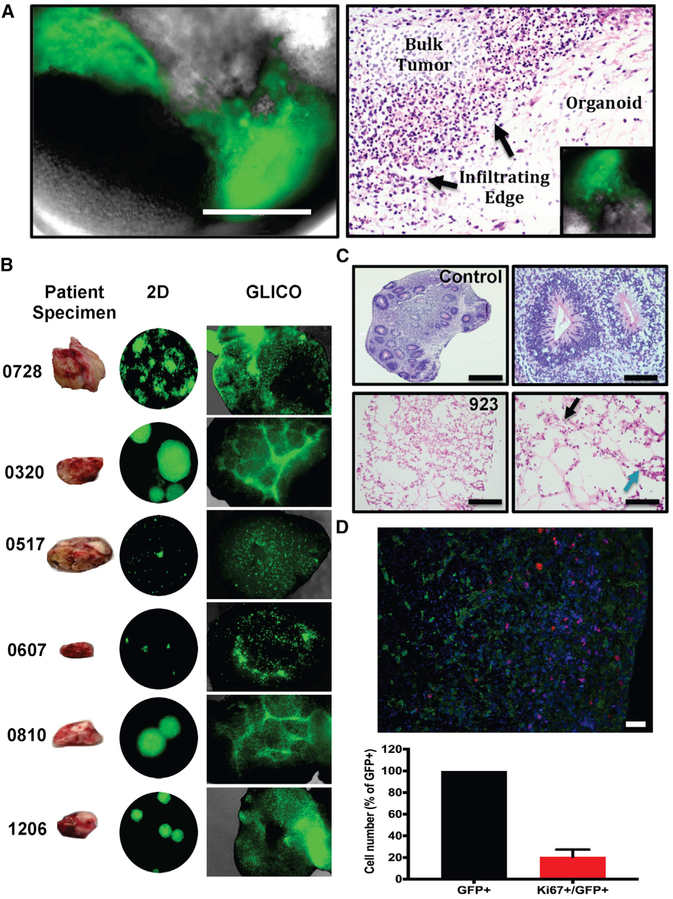
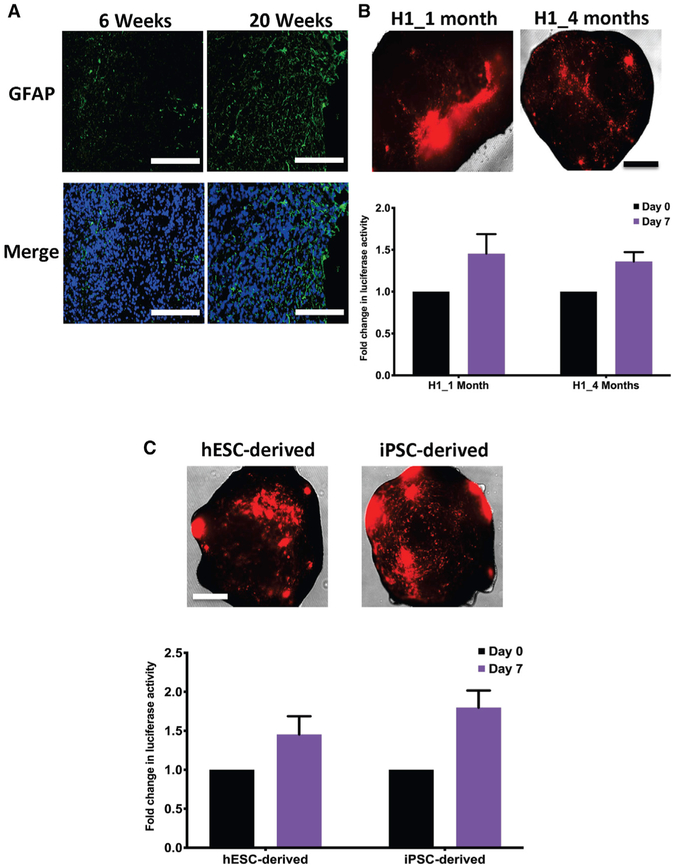
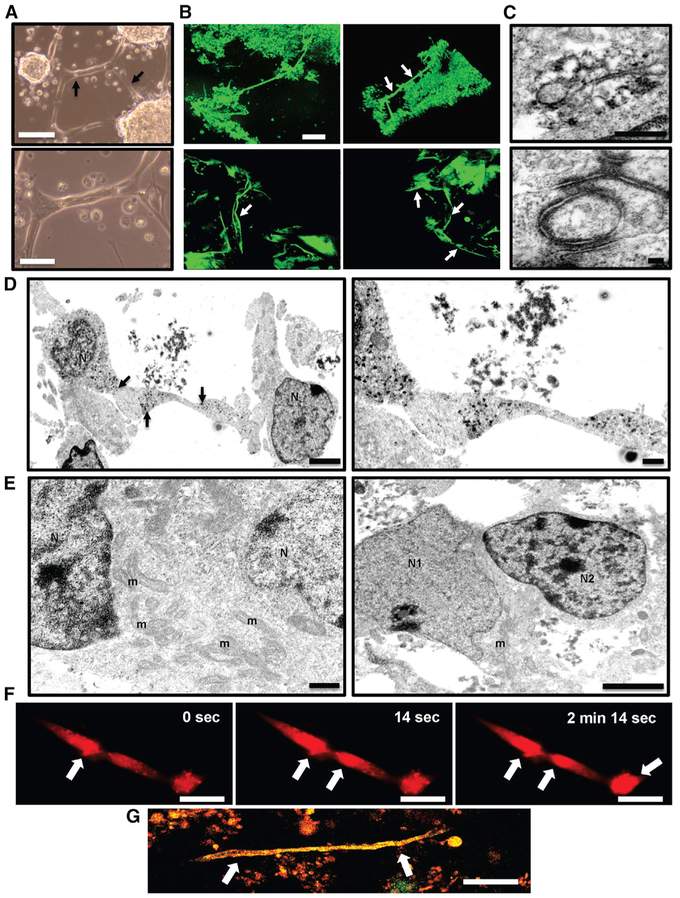
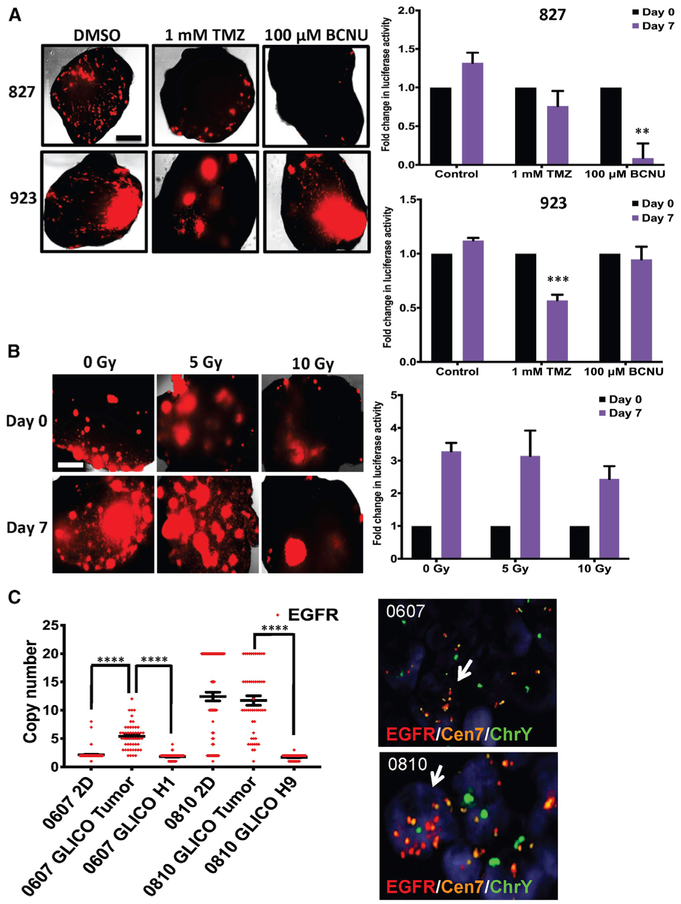
The prognosis of patients with glioblastoma (GBM) remains dismal, with a median survival of approximately 15 months. Current preclinical GBM models are limited by the lack of a "normal" human microenvironment and the inability of many tumor cell lines to accurately reproduce GBM biology. To address these limitations, we have established a model system whereby we can retro-engineer patient-specific GBMs using patient-derived glioma stem cells (GSCs) and human embryonic stem cell (hESC)-derived cerebral organoids. Our cerebral organoid glioma (GLICO) model shows that GSCs home toward the human cerebral organoid and deeply invade and proliferate within the host tissue, forming tumors that closely phenocopy patient GBMs. Furthermore, cerebral organoid tumors form rapidly and are supported by an interconnected network of tumor microtubes that aids in the invasion of normal host tissue. Our GLICO model provides a system for modeling primary human GBM ex vivo and for high-throughput drug screening.
胶质母细胞瘤(GBM)患者的预后仍然不容乐观,中位生存期约为 15 个月。目前的 GBM 临床前模型受到缺乏“正常”人类微环境和许多肿瘤细胞系无法准确再现 GBM 生物学的限制。为了解决这些限制,我们建立了一种模型系统,通过该系统,我们可以使用患者来源的神经胶质瘤干细胞(GSCs)和人胚胎干细胞(hESC)衍生的大脑类器官来逆向工程患者特异性 GBM。我们的大脑类器官神经胶质瘤(GLICO)模型表明,GSCs 归巢到人类大脑类器官,并深入侵入和在宿主组织内增殖,形成与患者 GBM 非常相似的肿瘤。此外,大脑类器官肿瘤快速形成,并由有助于正常宿主组织浸润的相互连接的肿瘤微管网络支持。我们的 GLICO 模型为体外模拟原发性人类 GBM 和高通量药物筛选提供了一个系统。