Engineering Technological Center of Mushroom Industry, Minnan Normal University, Zhangzhou, Fujian 363000, People's Republic of China.
Vascular Department Zhongshan Hospital of Xiamen University, Xiamen, Fujian 363000, People's Republic of China.
Biosci Rep. 2020 Dec 23;40(12). doi: 10.1042/BSR20201006.
β-glucan from Lentinus edodes (LNT) is a plant-derived medicinal fungus possessing significant bioactivities on anti-tumor. Both hypoxia-induced factor-1α (HIF)-1α and Nur77 have been shown to be involved in the development of breast cancer. However, there is yet no proof of Nur77/HIF-1α involvement in the process of LNT-mediated tumor-inhibition effect.
Immunohistochemistry, immunofluorescence and Hematoxylin-Eosin staining were used to investigate tumor growth and metastasis in MMTV-PyMT transgenic mice. Proliferation and metastasis-associated molecules were determined by Western blotting and reverse transcription-quantitative PCR. Hypoxic cellular model was established under the exposure of CoCl2. Small interference RNA was transfected using Lipofectamine reagent. The ubiquitin proteasome pathway was blunted by adding the proteasome inhibitor MG132.
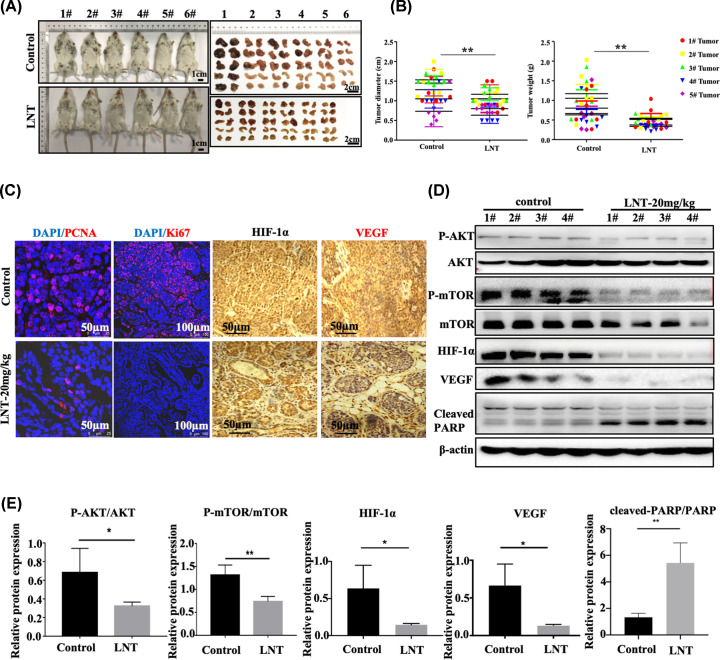
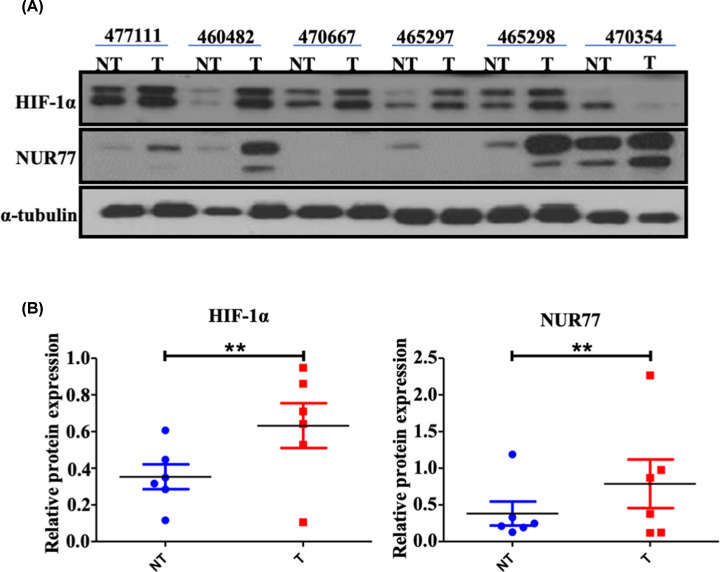
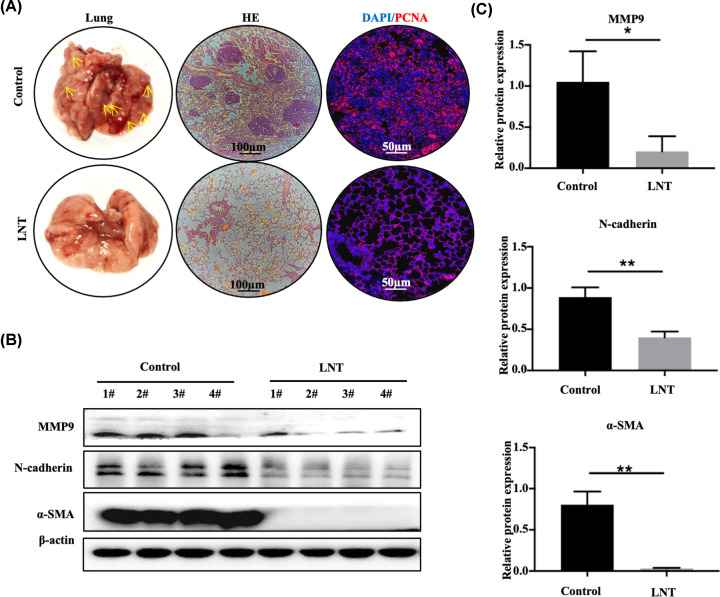
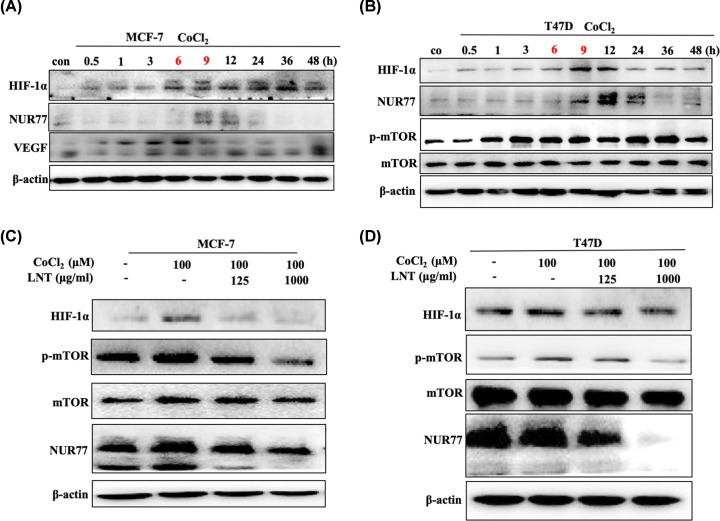
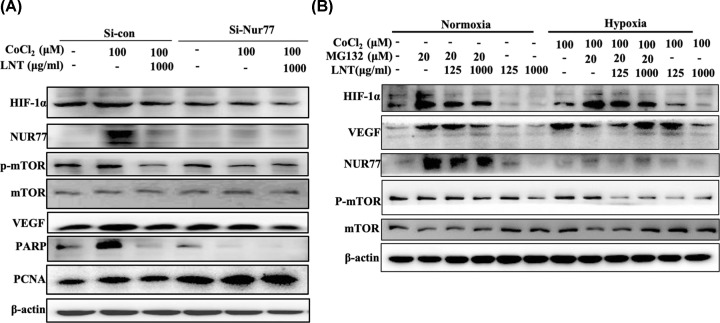
LNT inhibited the growth of breast tumors and the development of lung metastases from breast cancer, accompanied by a decreased expression of HIF-1α in the tumor tissues. In in vitro experiments, hypoxia induced the expression of HIF-1α and Nur77 in breast cancer cells, while LNT addition down-regulated HIF-1α expression in an oxygen-free environment, and this process was in a manner of Nur77 dependent. Mechanistically, LNT evoked the down-regulation of HIF-1α involved the Nur77-mediated ubiquitin proteasome pathway. A strong positive correlation between Nur77 and HIF-1α expression in human breast cancer specimens was also confirmed.
Therefore, LNT appears to inhibit the progression of breast cancer partly through the Nur77/HIF-1α signaling axis. The findings of the present study may provide a theoretical basis for targeting HIFs in the treatment of breast cancer.
香菇(LNT)β-葡聚糖是一种植物来源的药用真菌,具有显著的抗肿瘤生物活性。缺氧诱导因子-1α(HIF-1α)和 Nur77 均已被证明参与乳腺癌的发生发展。然而,目前尚无证据表明 Nur77/HIF-1α 参与了 LNT 介导的肿瘤抑制作用过程。
采用免疫组化、免疫荧光和苏木精-伊红染色法观察 MMTV-PyMT 转基因小鼠的肿瘤生长和转移情况。采用 Western blot 和反转录定量 PCR 检测增殖和转移相关分子。采用 CoCl2 暴露建立低氧细胞模型。采用 Lipofectamine 试剂转染小干扰 RNA。采用蛋白酶体抑制剂 MG132 阻断泛素蛋白酶体通路。
LNT 抑制了乳腺癌肿瘤的生长和肺转移的发展,同时肿瘤组织中 HIF-1α 的表达降低。在体外实验中,低氧诱导乳腺癌细胞中 HIF-1α 和 Nur77 的表达,而 LNT 加入可在无氧环境下调 HIF-1α 的表达,这一过程依赖于 Nur77。机制上,LNT 通过 Nur77 介导的泛素蛋白酶体通路引起 HIF-1α 的下调。在人乳腺癌标本中也证实了 Nur77 和 HIF-1α 表达之间存在强烈的正相关。
因此,LNT 似乎通过 Nur77/HIF-1α 信号轴抑制乳腺癌的进展。本研究结果可能为针对 HIFs 治疗乳腺癌提供理论依据。