Shah Chirag, Zambelli-Weiner April, Delgado Nicole, Sier Ashley, Bauserman Robert, Nelms Jerrod
Department of Radiation Oncology, Taussig Cancer Institute, Cleveland Clinic, Cleveland, OH, USA.
TTi Health Research and Economics, Westminster, MD, USA.
Breast Cancer Res Treat. 2021 Feb;185(3):709-740. doi: 10.1007/s10549-020-05988-6. Epub 2020 Nov 27.
Chronic breast cancer-related lymphedema (BCRL) is a potentially serious complication following treatment. Monitoring for progression to BCRL may allow for earlier detection and intervention, reducing the rate of progression to chronic BCRL. Therefore, the purpose of this meta-analysis is to evaluate the impact of monitoring techniques on the incidence of chronic BCRL among patients monitored by bioimpedance spectroscopy (BIS) and circumference as compared to background rates.
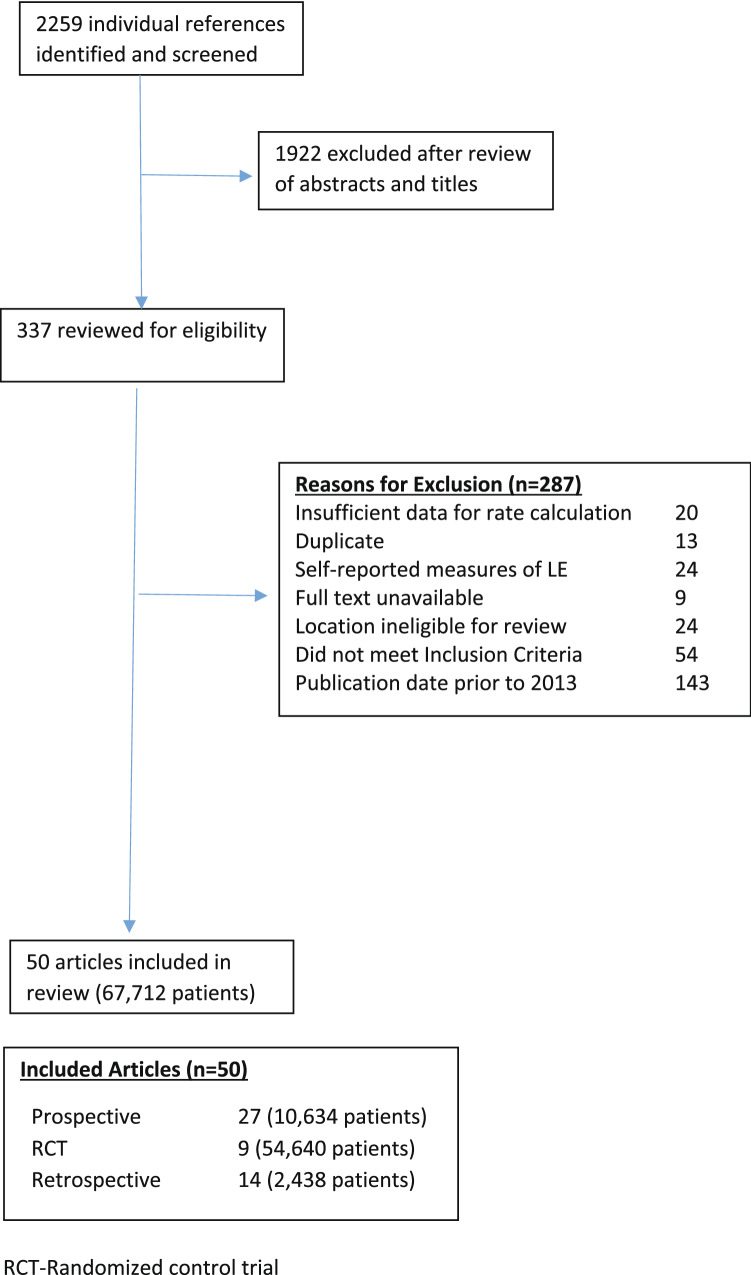
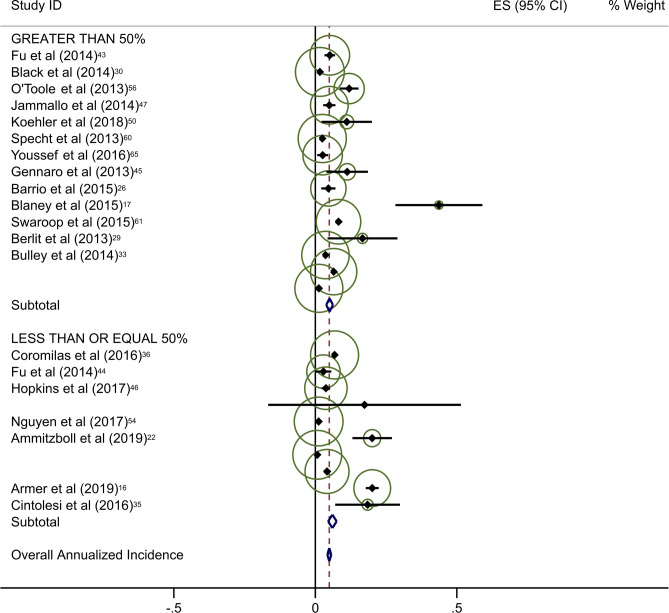
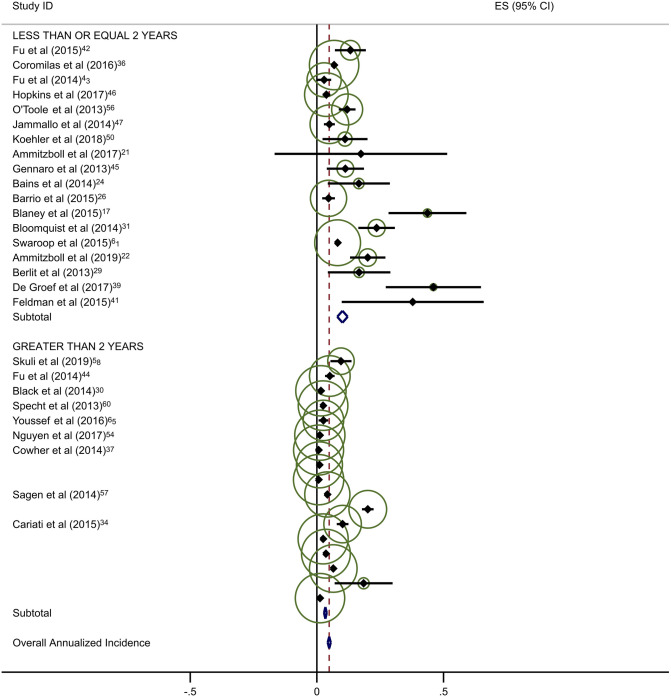
Eligible peer-reviewed studies from PubMed, CINHAL, or Google Scholar that were published in English from 2013 onward and conducted in North America, Europe, or Oceania. Incidence rates abstracted from studies were classified by BCRL monitoring method: background (no standardized BIS or circumference assessments), BIS or circumference. A random-effects model was used to calculate a pooled annualized estimate of BCRL incidence while accounting for clinical and methodological heterogeneity. Subgroup analyses examined differences in duration of follow-up as well as breast and axillary surgery.
50 studies were included, representing over 67,000 women. The annualized incidence of BCRL was 4.9% (95% CI: 4.3-5.5) for background studies (n = 35), 1.5% (95% CI: 0.6-2.4) for BIS-monitored studies (n = 7), and 7.7% (95% CI: 5.6-9.8) for circumference-monitored studies (n = 11). The cumulative BCRL incidence rate in BIS-monitored patients was 3.1% as compared to 12.9% with background monitoring (69% reduction) and 17.0% with circumference-monitored patients (81% reduction).
Evidence suggests that monitoring with BIS allowing for early intervention significantly reduces the relative risk of chronic BCRL with a 69% and 81% reduction compared to background and circumference, respectively. Circumference monitoring did not appear to provide a benefit with respect to chronic BCRL incidence. Based on these results, BIS should be considered for BCRL screening in order to detect subclinical BCRL and reduce rates of chronic BCRL, particularly in high-risk patients.
慢性乳腺癌相关淋巴水肿(BCRL)是治疗后一种潜在的严重并发症。监测BCRL的进展情况可能有助于早期发现和干预,从而降低进展为慢性BCRL的发生率。因此,本荟萃分析的目的是评估与背景发生率相比,生物电阻抗光谱法(BIS)和周长监测技术对慢性BCRL发生率的影响。
从PubMed、CINHAL或谷歌学术中筛选符合条件的同行评审研究,这些研究于2013年以后以英文发表,且在北美、欧洲或大洋洲进行。从研究中提取的发病率按BCRL监测方法分类:背景(无标准化的BIS或周长评估)、BIS或周长。采用随机效应模型计算BCRL发病率的合并年化估计值,同时考虑临床和方法学异质性。亚组分析考察了随访时间以及乳房和腋窝手术的差异。
纳入50项研究,涉及超过67000名女性。背景研究(n = 35)中BCRL的年化发病率为4.9%(95%CI:4.3 - 5.5),BIS监测研究(n = 7)中为1.5%(95%CI:0.6 - 2.4),周长监测研究(n = 11)中为7.7%(95%CI:5.6 - 9.8)。BIS监测患者的BCRL累积发病率为3.1%,而背景监测为12.9%(降低69%),周长监测患者为17.0%(降低81%)。
有证据表明,采用BIS进行监测并能早期干预可显著降低慢性BCRL的相对风险,与背景和周长监测相比,分别降低了69%和81%。周长监测在慢性BCRL发病率方面似乎未显示出益处。基于这些结果,应考虑将BIS用于BCRL筛查,以检测亚临床BCRL并降低慢性BCRL的发生率,尤其是在高危患者中。