Boston Children's Hospital, Boston, MA, USA; Harvard Medical School, Boston, MA, USA.
Boston Children's Hospital, Boston, MA, USA; Child Neuropsychology Section, Department of Child and Adolescent Psychiatry, Psychosomatics and Psychotherapy, University Hospital RWTH Aachen, Aachen, Germany.
Dev Cogn Neurosci. 2021 Feb;47:100882. doi: 10.1016/j.dcn.2020.100882. Epub 2020 Nov 10.
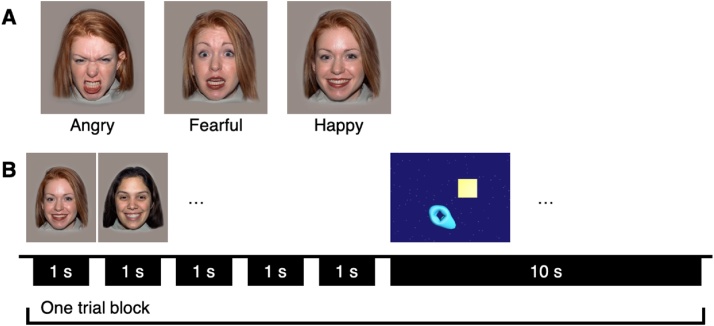
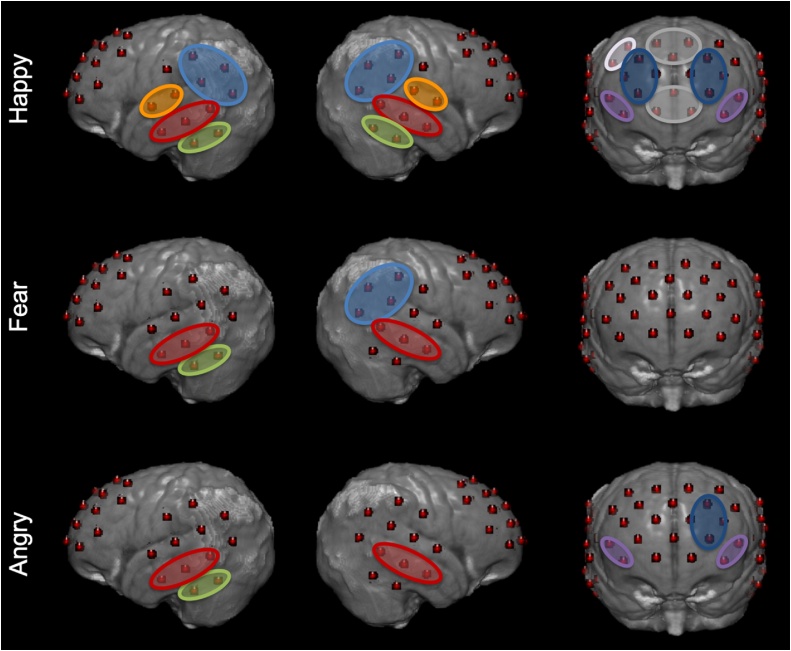
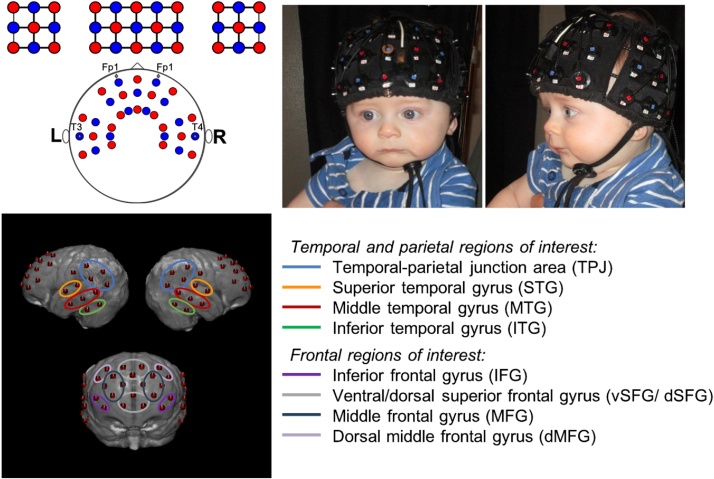
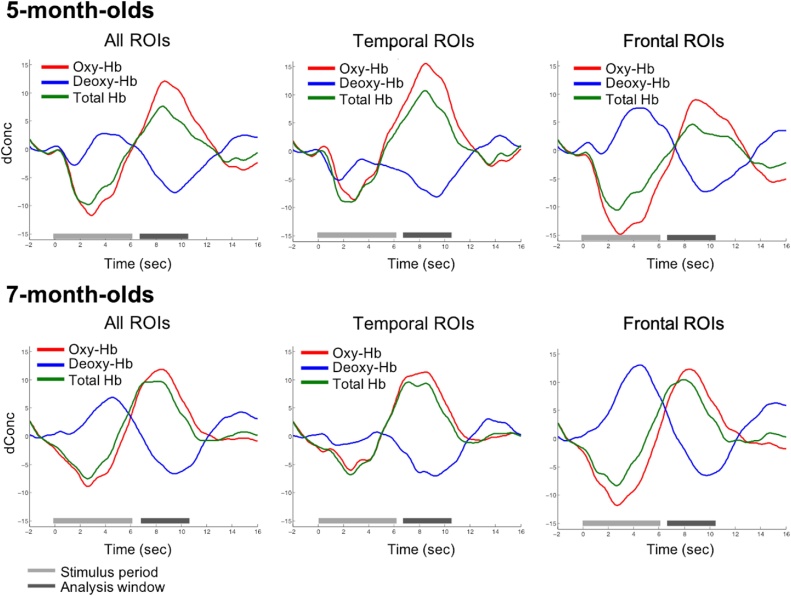
The processing of facial emotion is an important social skill that develops throughout infancy and early childhood. Here we investigate the neural underpinnings of the ability to process facial emotion across changes in facial identity in cross-sectional groups of 5- and 7-month-old infants. We simultaneously measured neural metabolic, behavioral, and autonomic responses to happy, fearful, and angry faces of different female models using functional near-infrared spectroscopy (fNIRS), eye-tracking, and heart rate measures. We observed significant neural activation to these facial emotions in a distributed set of frontal and temporal brain regions, and longer looking to the mouth region of angry faces compared to happy and fearful faces. No differences in looking behavior or neural activations were observed between 5- and 7-month-olds, although several exploratory, age-independent associations between neural activations and looking behavior were noted. Overall, these findings suggest more developmental stability than previously thought in responses to emotional facial expressions of varying identities between 5- and 7-months of age.
面部表情处理是一种重要的社交技能,它在婴儿期和幼儿期逐渐发展。在这里,我们通过对 5 个月和 7 个月大的婴儿进行横断面研究,调查了在面部身份变化过程中处理面部表情的能力的神经基础。我们使用功能近红外光谱 (fNIRS)、眼动跟踪和心率测量同时测量了对不同女性模特的快乐、恐惧和愤怒面孔的神经代谢、行为和自主反应。我们观察到这些面部表情在额颞区的一组分布式脑区中产生了显著的神经激活,并且与快乐和恐惧面孔相比,愤怒面孔的嘴巴区域观察时间更长。5 个月和 7 个月大的婴儿在观察行为或神经激活方面没有差异,尽管注意到一些探索性的、与年龄无关的神经激活和观察行为之间的关联。总的来说,这些发现表明,在 5 至 7 个月大的婴儿中,对不同身份的情绪面部表情的反应比以前认为的更具有发展稳定性。