Department of Neuroscience, Medical University of South Carolina, Charleston, SC, 29425, USA.
Charleston Alcohol Research Center, Medical University of South Carolina, Charleston, SC, 29425, USA.
Transl Psychiatry. 2020 Nov 27;10(1):414. doi: 10.1038/s41398-020-01099-4.
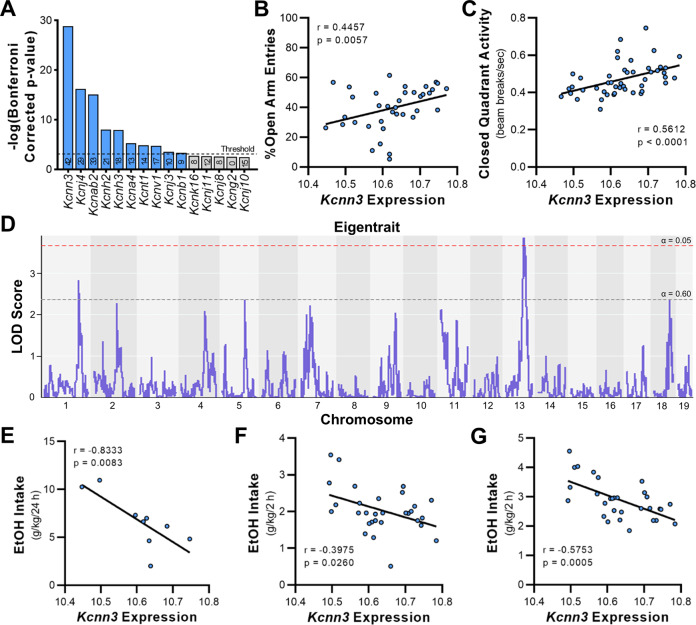
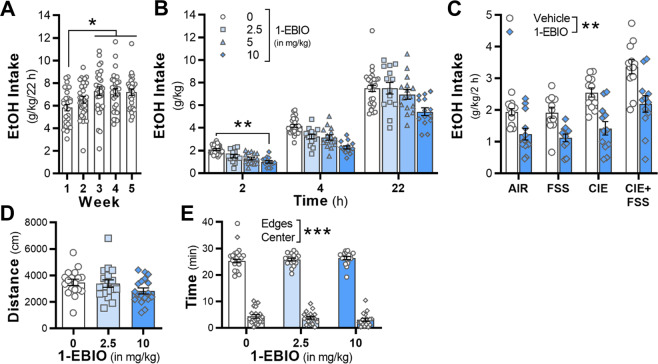
Mood disorders are often comorbid with alcohol use disorder (AUD) and play a considerable role in the development and maintenance of alcohol dependence and relapse. Because of this high comorbidity, it is necessary to determine shared and unique genetic factors driving heavy drinking and negative affective behaviors. In order to identify novel pharmacogenetic targets, a bioinformatics analysis was used to quantify the expression of amygdala K channel genes that covary with anxiety-related phenotypes in the well-phenotyped and fully sequenced family of BXD strains. We used a model of stress-induced escalation of drinking in alcohol-dependent mice to measure negative affective behaviors during abstinence. A pharmacological approach was used to validate the key bioinformatics findings in alcohol-dependent, stressed mice. Amygdalar expression of Kcnn3 correlated significantly with 40 anxiety-associated phenotypes. Further examination of Kcnn3 expression revealed a strong eigentrait for anxiety-like behaviors and negative correlations with binge-like and voluntary alcohol drinking. Mice treated with chronic intermittent alcohol exposure and repeated swim stress consumed more alcohol in their home cages and showed hypophagia on the novelty-suppressed feeding test during abstinence. Pharmacologically targeting Kcnn gene products with the K2 (SK) channel-positive modulator 1-EBIO decreased drinking and reduced feeding latency in alcohol-dependent, stressed mice. Collectively, these validation studies provide central nervous system links into the covariance of stress, negative affective behaviors, and AUD in the BXD strains. Further, the bioinformatics discovery tool is effective in identifying promising targets (i.e., K2 channels) for treating alcohol dependence exacerbated by comorbid mood disorders.
心境障碍常与酒精使用障碍(AUD)共病,并在酒精依赖和复发的发展和维持中起重要作用。由于这种高共病性,有必要确定共同和独特的遗传因素,这些因素会导致大量饮酒和消极情感行为。为了确定新的药物遗传学靶点,采用生物信息学分析来量化与 BXD 品系中焦虑相关表型共变的杏仁核 K 通道基因的表达,这些品系具有良好的表型和完全测序。我们使用酒精依赖小鼠的应激诱导饮酒升级模型来测量戒断期间的消极情感行为。采用药理学方法来验证酒精依赖、应激小鼠中的关键生物信息学发现。Kcnn3 在杏仁核中的表达与 40 种与焦虑相关的表型显著相关。进一步检查 Kcnn3 的表达情况发现,焦虑样行为的特征非常明显,与狂欢样和自愿饮酒呈负相关。用慢性间歇性酒精暴露和重复游泳应激处理的小鼠在其巢箱中消耗更多的酒精,并在戒断期间的新颖性抑制喂养测试中表现出摄食减少。用 K2(SK)通道阳性调节剂 1-EBIO 靶向 Kcnn 基因产物,可减少酒精依赖、应激小鼠的饮酒量,并降低其摄食潜伏期。总的来说,这些验证研究为 BXD 品系中应激、消极情感行为和 AUD 的共变提供了中枢神经系统联系。此外,生物信息学发现工具在确定治疗共病心境障碍加重的酒精依赖的有前途的靶点(即 K2 通道)方面是有效的。