Joint BioEnergy Institute, Emeryville, CA, 94608, USA.
Environmental Genomics and Systems Biology Division, Lawrence Berkeley National Laboratory, 1 Cyclotron Road, Berkeley, CA, 94720, USA.
Nat Commun. 2020 Nov 27;11(1):6081. doi: 10.1038/s41467-020-19837-z.
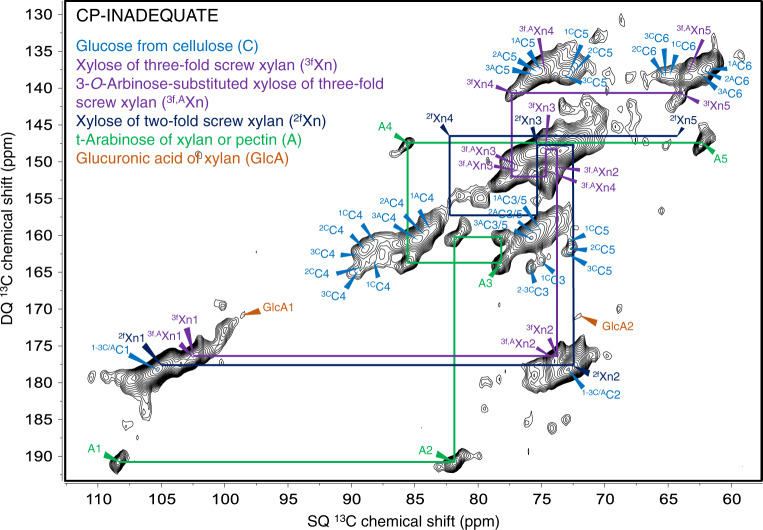
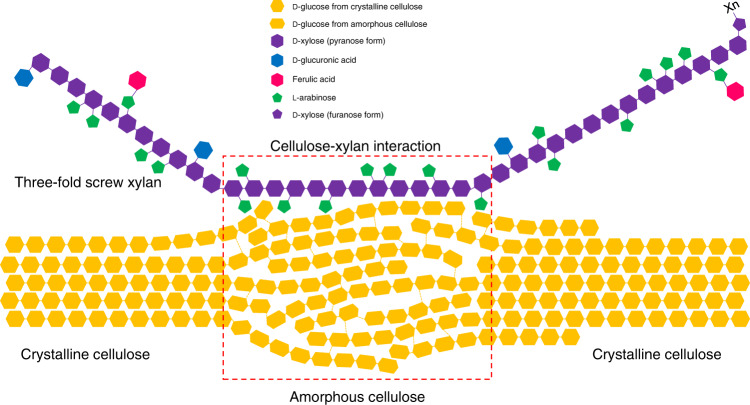
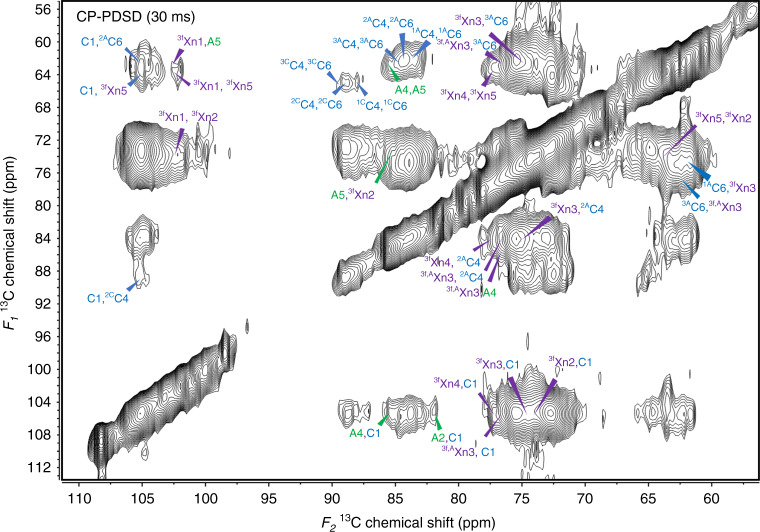
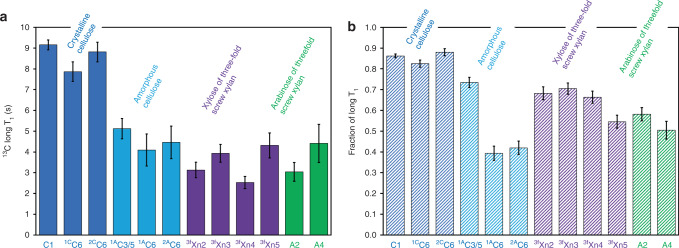
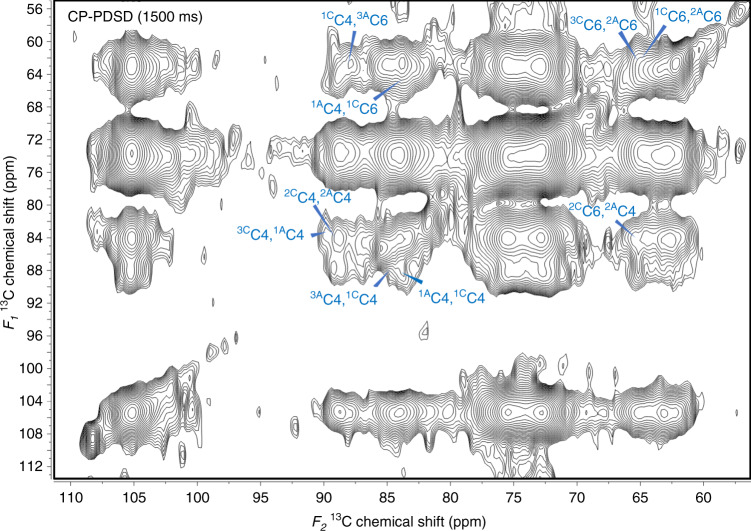
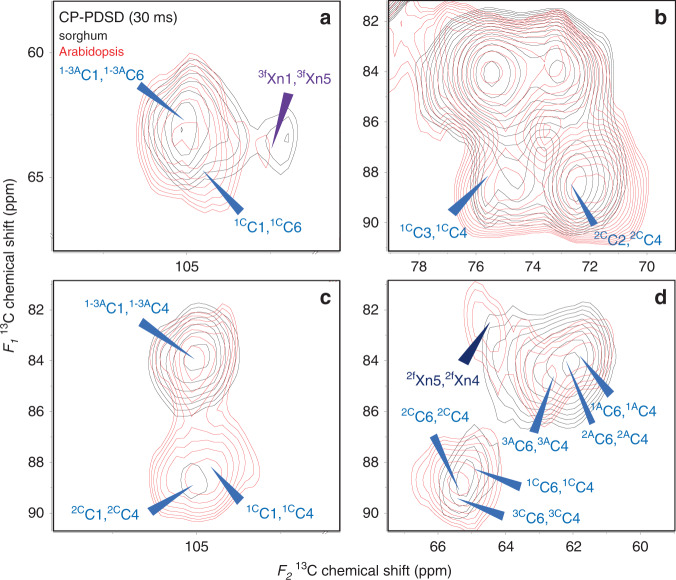
Sorghum (Sorghum bicolor L. Moench) is a promising source of lignocellulosic biomass for the production of renewable fuels and chemicals, as well as for forage. Understanding secondary cell wall architecture is key to understanding recalcitrance i.e. identifying features which prevent the efficient conversion of complex biomass to simple carbon units. Here, we use multi-dimensional magic angle spinning solid-state NMR to characterize the sorghum secondary cell wall. We show that xylan is mainly in a three-fold screw conformation due to dense arabinosyl substitutions, with close proximity to cellulose. We also show that sorghum secondary cell walls present a high ratio of amorphous to crystalline cellulose as compared to dicots. We propose a model of sorghum cell wall architecture which is dominated by interactions between three-fold screw xylan and amorphous cellulose. This work will aid the design of low-recalcitrance biomass crops, a requirement for a sustainable bioeconomy.
高粱(Sorghum bicolor L. Moench)是一种很有前途的木质纤维素生物质来源,可用于生产可再生燃料和化学品,也可用作饲料。了解次生细胞壁结构是理解抗逆性的关键,即确定哪些特征会阻止复杂生物质有效地转化为简单的碳单位。在这里,我们使用多维魔角旋转固态 NMR 来表征高粱次生细胞壁。我们表明,由于密集的阿拉伯糖取代,木聚糖主要处于三螺旋构象,与纤维素紧密相邻。我们还表明,与双子叶植物相比,高粱次生细胞壁的无定形纤维素与结晶纤维素的比例很高。我们提出了一个高粱细胞壁结构模型,该模型主要由三螺旋木聚糖和无定形纤维素之间的相互作用决定。这项工作将有助于设计低抗逆性生物质作物,这是可持续生物经济的要求。