Dadashi Noshahr Karim, Shamsi Fahimeh, Valtchev Peter, Kokhaei Parviz, Hemati Maral, Reza Akbari Eidgahi Mohammad, Khaleghian Ali
Department of Biotechnology, Faculty of Medicine, Semnan University of Medical Sciences, Semnan, Iran.
School of Chemical and Biomolecular Engineering, University of Sydney, NSW 2006, Australia.
Saudi Pharm J. 2020 Nov;28(11):1392-1401. doi: 10.1016/j.jsps.2020.09.003. Epub 2020 Sep 12.
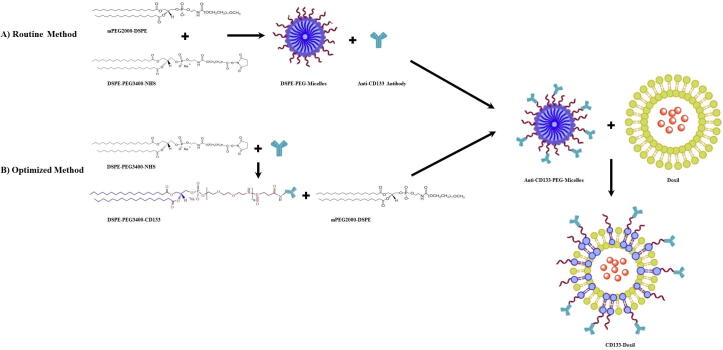
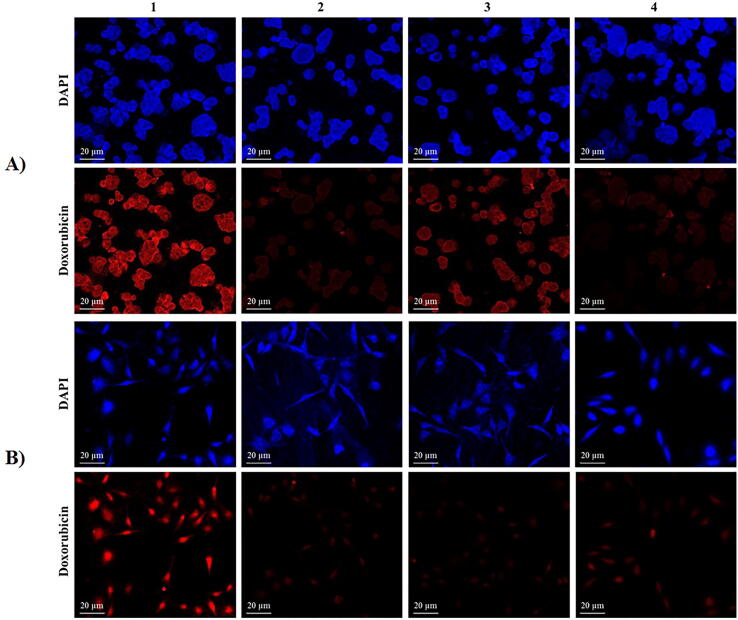
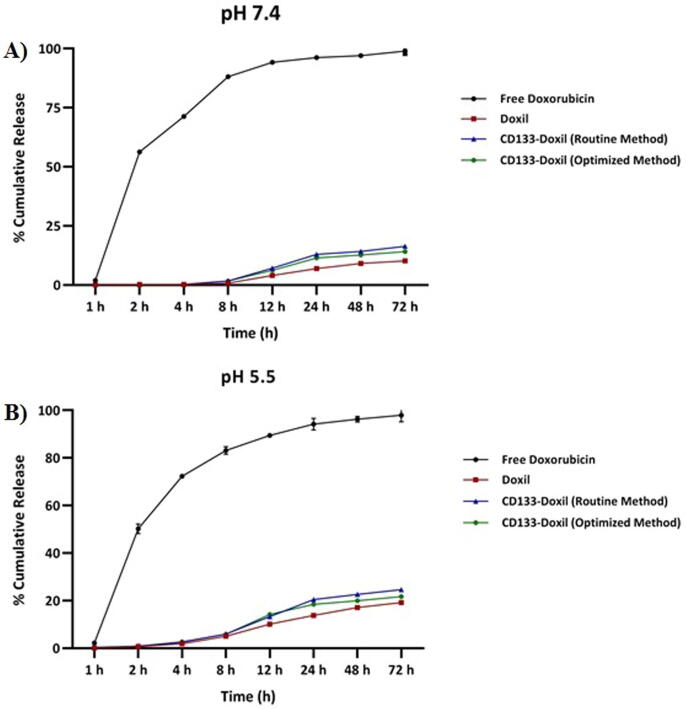
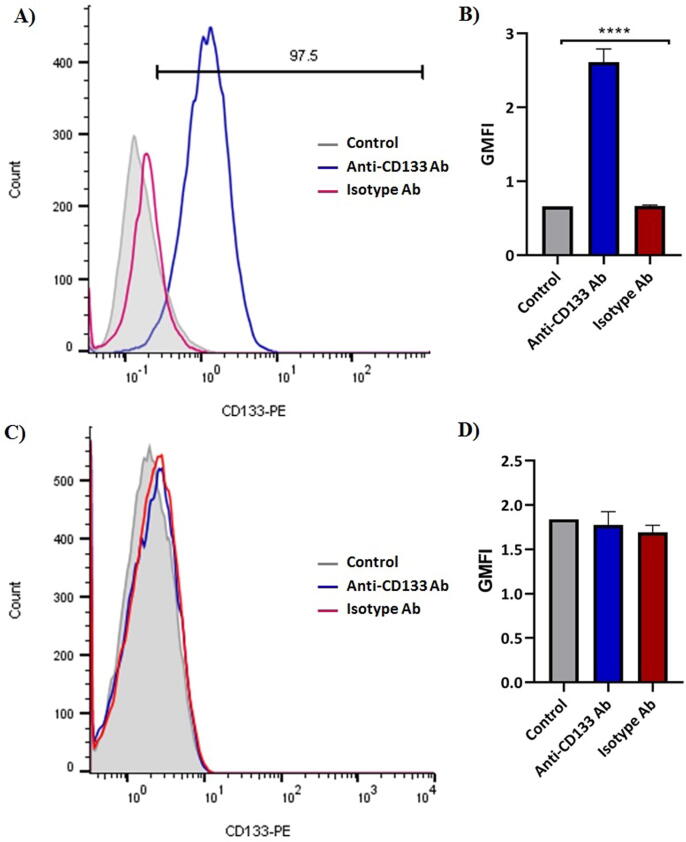
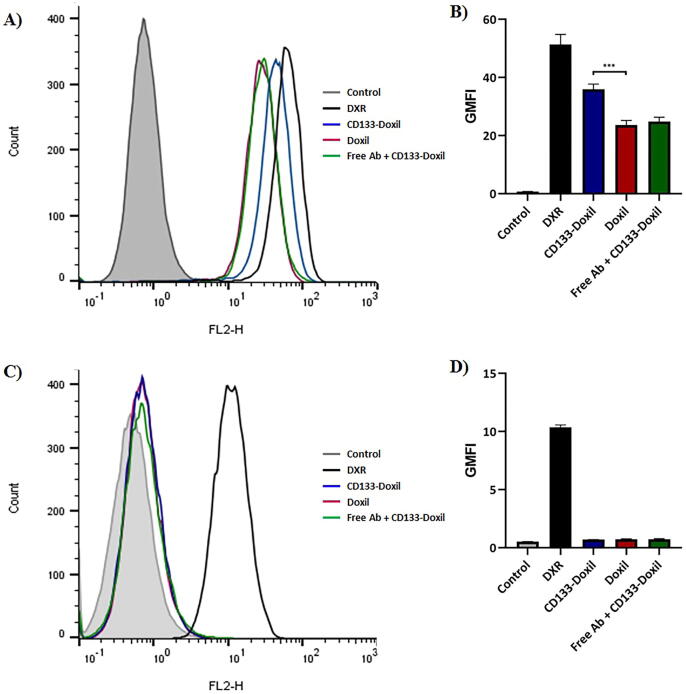
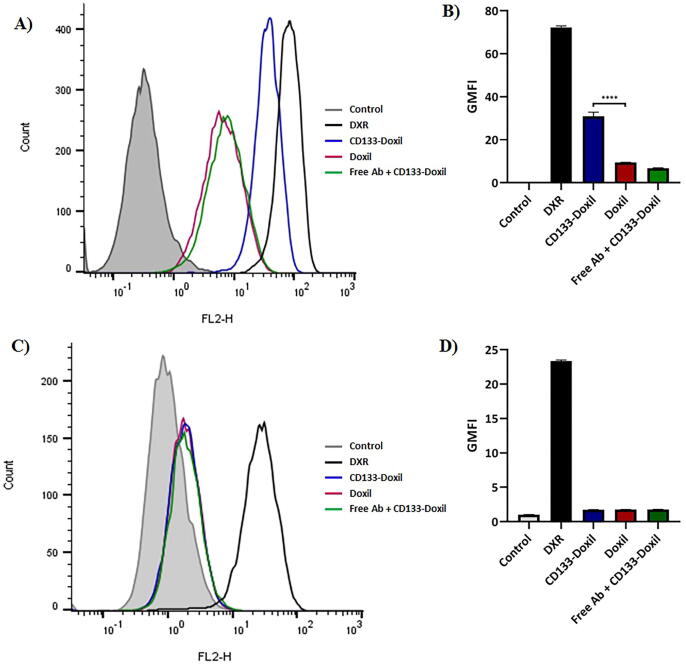
In this paper, Doxil coupled with anti-CD133 monoclonal antibodies made by either routine or optimized post-insertion technique, were compared with respect to their size, drug leakage, release pattern and the number of antibodies conjugated per single liposome. The results demonstrated that the number of antibodies conjugated per liposome in the optimized post-insertion technique was almost two times more than those in the routine post-insertion method. However, the drug release and leakage pattern was almost similar between the two methods. Furthermore, anti-tumor activity and therapeutic efficacy of the preferred CD133-targeted Doxil with Doxil was compared in terms of their in vitro binding, uptake, internalization and cytotoxicity against HT-29 (CD133+) and CHO (CD133-) cells. Flow cytometry analyses and confocal laser scanning microscopy results exhibited a significantly higher cellular uptake, binding and internalization of CD133-targeted Doxil in CD133 cells relative to Doxil. Cytotoxicity results revealed a lower in vitro inhibitory concentration for CD133-targeted Doxil compared to Doxil. However, CHO (CD133) cells displayed a similar uptake and in vitro cytotoxicity for both CD133-Doxil and non-targeted Doxil. Therefore, the results of this study can exhibit that specific recognition and binding of antibodies with CD133 receptors on HT-29 cells can result in enhanced cellular uptake, internalization and cytotoxicity. The research suggests further investigation for in vivo studies and may offer proof-of-principle for an active targeting concept.
在本文中,将常规插入后技术或优化插入后技术制备的阿霉素脂质体(Doxil)与抗CD133单克隆抗体偶联物,在尺寸、药物泄漏、释放模式以及每个脂质体缀合的抗体数量方面进行了比较。结果表明,优化插入后技术制备的每个脂质体缀合的抗体数量几乎是常规插入后方法的两倍。然而,两种方法的药物释放和泄漏模式几乎相似。此外,比较了优选的靶向CD133的阿霉素脂质体与阿霉素脂质体在体外结合、摄取、内化以及对HT-29(CD133+)和CHO(CD133-)细胞的细胞毒性方面的抗肿瘤活性和治疗效果。流式细胞术分析和共聚焦激光扫描显微镜结果显示,相对于阿霉素脂质体,靶向CD133的阿霉素脂质体在CDl33细胞中的细胞摄取、结合和内化明显更高。细胞毒性结果显示,与阿霉素脂质体相比,靶向CD133的阿霉素脂质体的体外抑制浓度更低。然而,CHO(CD133)细胞对靶向CD133的阿霉素脂质体和非靶向阿霉素脂质体表现出相似的摄取和体外细胞毒性。因此,本研究结果表明,抗体与HT-29细胞上的CD133受体的特异性识别和结合可导致细胞摄取、内化和细胞毒性增强。该研究建议进一步开展体内研究,可能为主动靶向概念提供原理证明。