Program in Molecular Medicine, The Hospital for Sick Children Research Institute, Toronto, Canada.
Department of Biochemistry, University of Toronto, Toronto, Canada.
Elife. 2020 Nov 30;9:e59018. doi: 10.7554/eLife.59018.
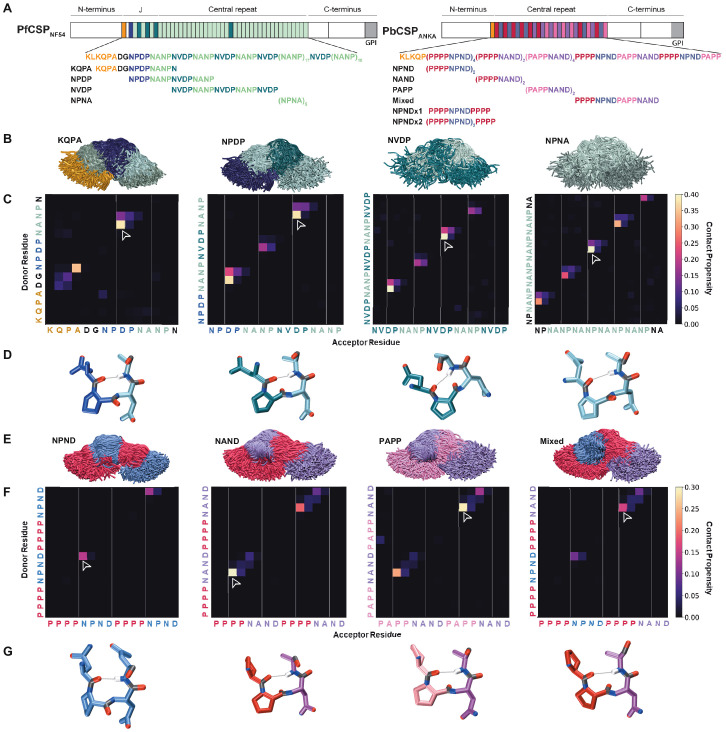
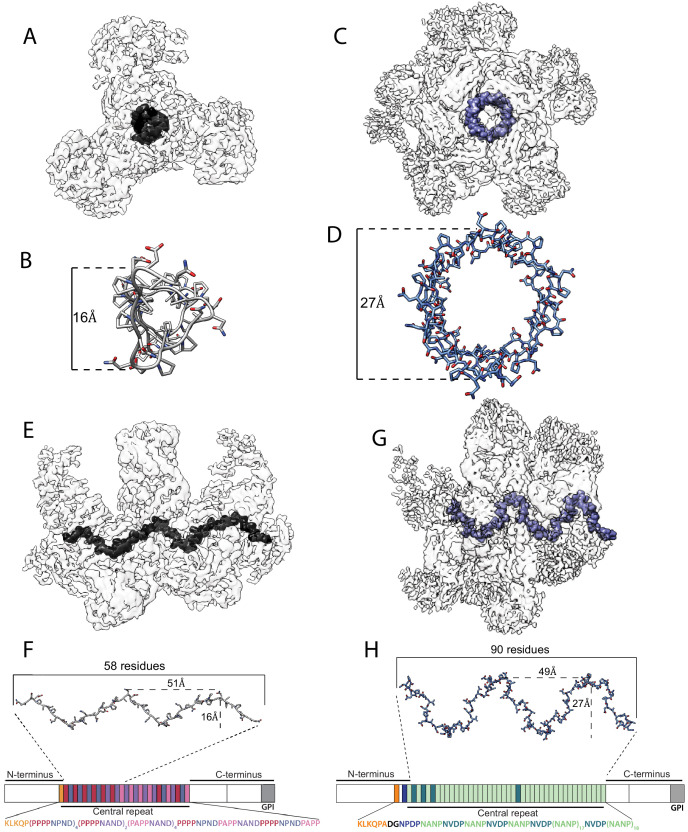
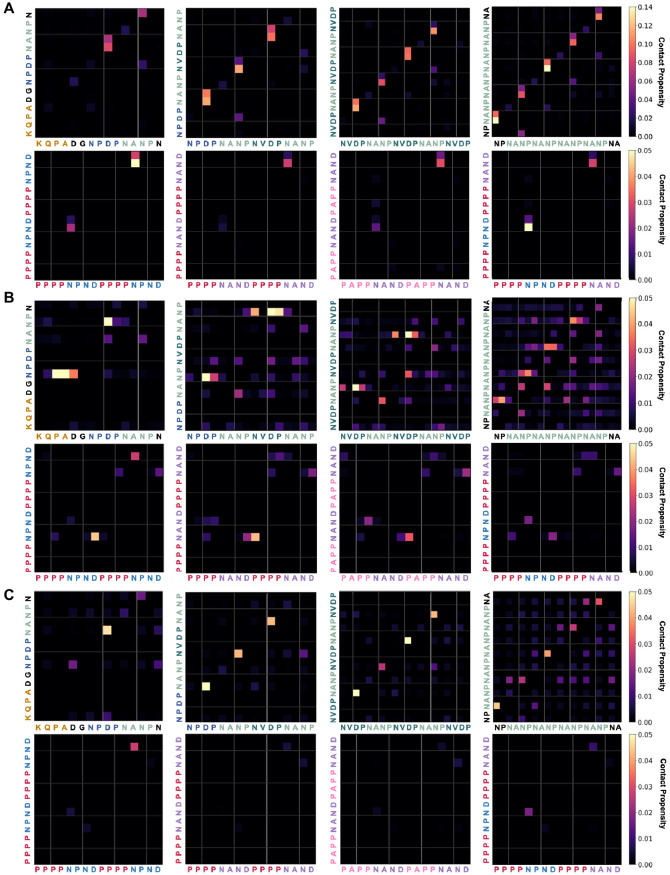
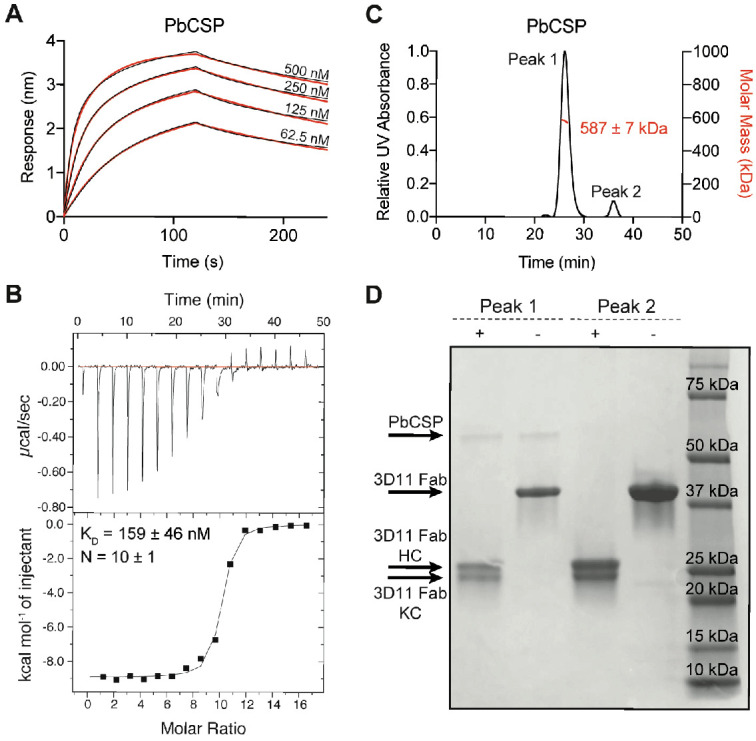
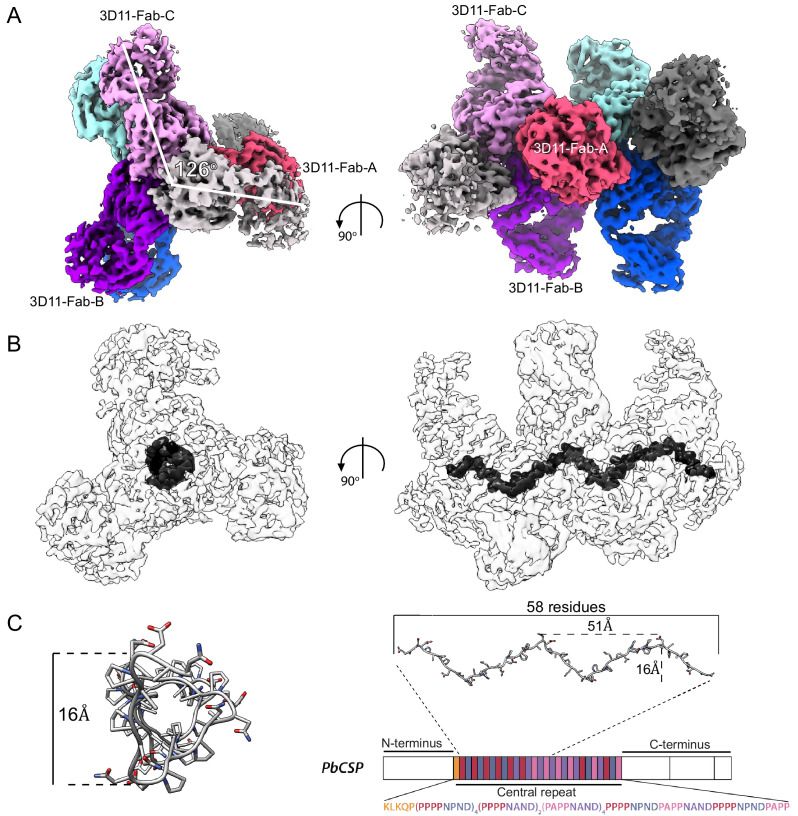
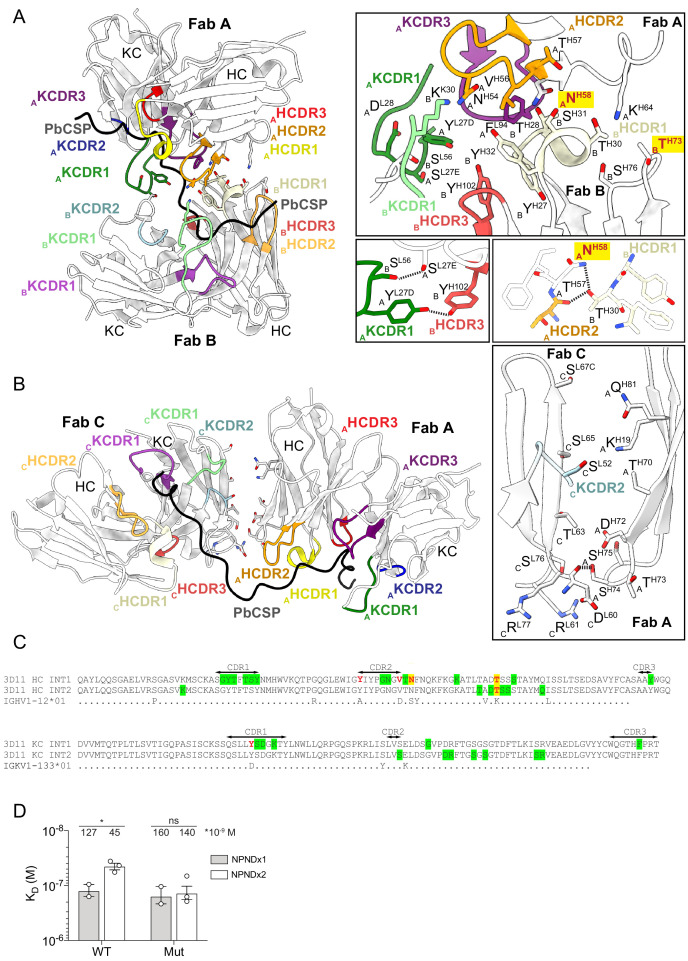
Plasmodium sporozoites express circumsporozoite protein (CSP) on their surface, an essential protein that contains central repeating motifs. Antibodies targeting this region can neutralize infection, and the partial efficacy of RTS,S/AS01 - the leading malaria vaccine against (Pf) - has been associated with the humoral response against the repeats. Although structural details of antibody recognition of PfCSP have recently emerged, the molecular basis of antibody-mediated inhibition of other Plasmodium species via CSP binding remains unclear. Here, we analyze the structure and molecular interactions of potent monoclonal antibody (mAb) 3D11 binding to CSP (PbCSP) using molecular dynamics simulations, X-ray crystallography, and cryoEM. We reveal that mAb 3D11 can accommodate all subtle variances of the PbCSP repeating motifs, and, upon binding, induces structural ordering of PbCSP through homotypic interactions. Together, our findings uncover common mechanisms of antibody evolution in mammals against the CSP repeats of Plasmodium sporozoites.
疟原虫孢子表面表达环子孢子蛋白(CSP),这是一种含有中心重复基序的必需蛋白。针对该区域的抗体可以中和感染,RTS,S/AS01——针对(Pf)的领先疟疾疫苗——的部分功效与针对重复序列的体液反应有关。尽管最近出现了抗体识别 PfCSP 的结构细节,但通过 CSP 结合介导其他疟原虫物种的抗体抑制的分子基础仍不清楚。在这里,我们使用分子动力学模拟、X 射线晶体学和 cryoEM 分析了强效单克隆抗体(mAb)3D11 与 PbCSP(PbCSP)结合的结构和分子相互作用。我们揭示了 mAb 3D11 可以容纳 PbCSP 重复基序的所有细微变化,并且在结合后通过同源相互作用诱导 PbCSP 的结构有序化。总之,我们的研究结果揭示了针对疟原虫孢子 CSP 重复序列的哺乳动物抗体进化的共同机制。