Department of Physiology, College of Korean Medicine, Kyung Hee University, Seoul 02453, Korea.
Department of Science in Korean Medicine, Graduate School, Kyung Hee University, Seoul 02453, Korea.
Toxins (Basel). 2020 Nov 24;12(12):737. doi: 10.3390/toxins12120737.
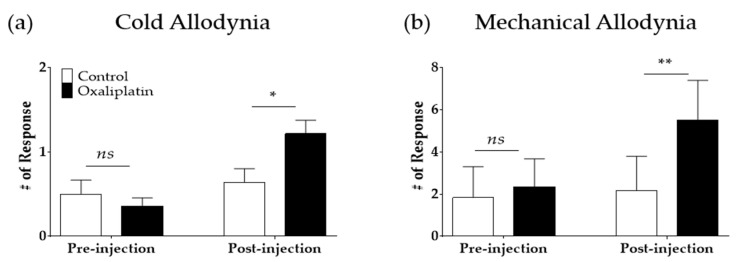
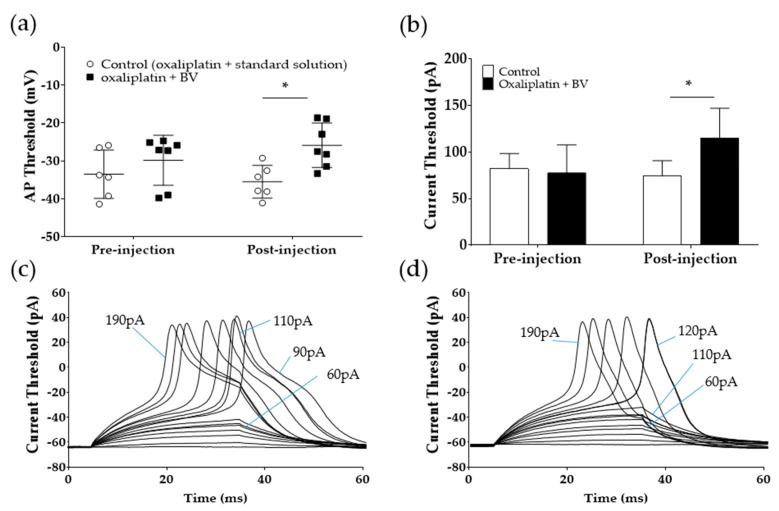
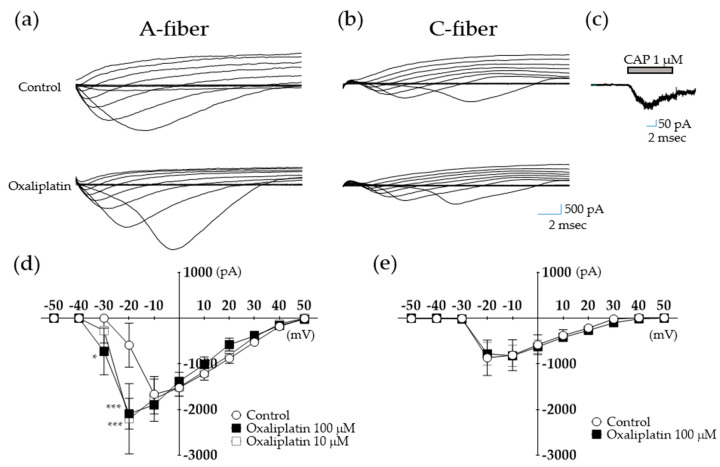
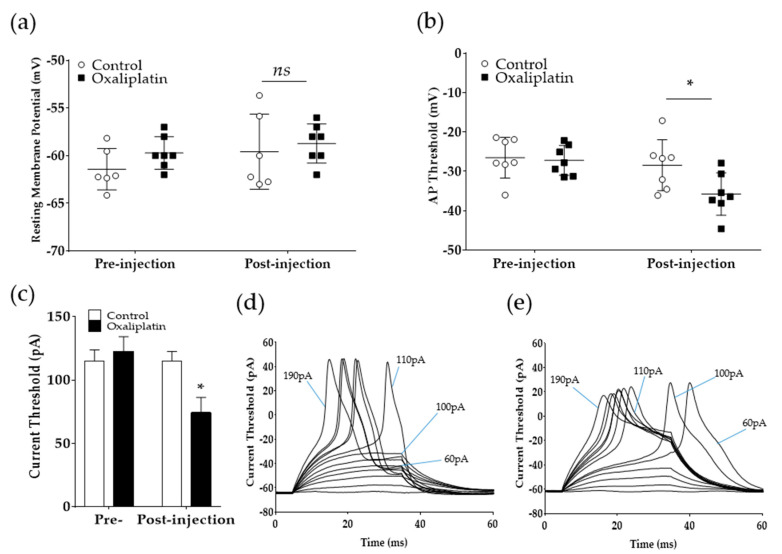
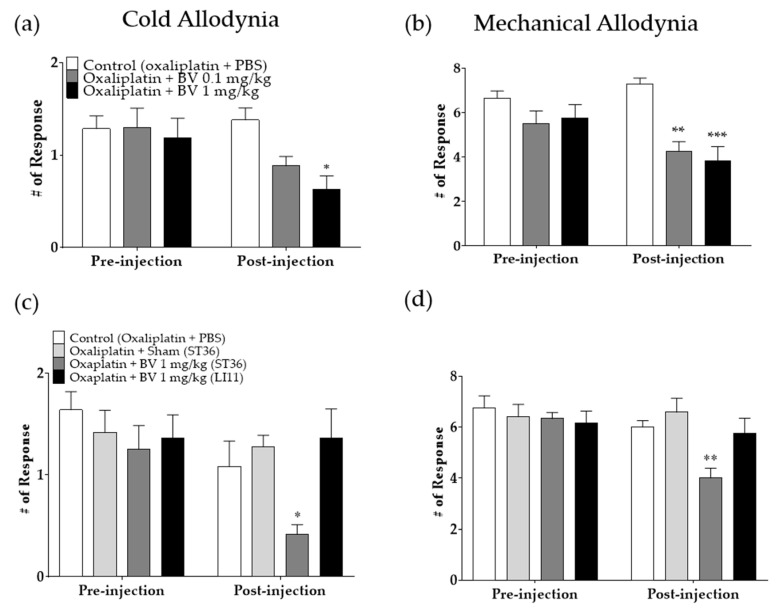
Oxaliplatin is a third-generation platinum-based chemotherapeutic drug widely used in colorectal cancer treatment. Although potent against this tumor, it can induce cold and mechanical allodynia even after a single injection. The currently used drugs to attenuate this allodynia can also cause unwanted effects, which limit their use. Bee venom acupuncture (BVA) is widely used in Korean medicine to treat pain. Although the effect of BVA on oxaliplatin-induced neuropathic pain has been addressed in many studies, its action on dorsal root ganglia (DRG) neurons has never been investigated. A single oxaliplatin injection (6 mg/kg, intraperitoneally) induced cold and mechanical allodynia, and BVA (0.1 and 1 mg/kg, subcutaneous, ST36) dose-dependently decreased allodynia in rats. On acutely dissociated lumbar 4-6 DRG neurons, 10 min application of oxaliplatin (100 μM) shifted the voltage-dependence of sodium conductance toward negative membrane potentials in A- but not C-fibers. The resting membrane potential remained unchanged, but the action potential threshold decreased significantly compared to that of the control ( < 0.05). However, 0.1 μg/mL of BVA administration increased the lowered action potential threshold. In conclusion, these results suggest that BVA may attenuate oxaliplatin-induced neuropathic pain by altering the action potential threshold in A-fiber DRG neurons.
奥沙利铂是一种第三代铂类化疗药物,广泛用于结直肠癌的治疗。虽然对这种肿瘤有效,但即使单次注射也会引起冷和机械性痛觉过敏。目前用于减轻这种痛觉过敏的药物也会引起不良反应,限制了它们的使用。蜂针疗法(BVA)在韩国医学中被广泛用于治疗疼痛。尽管许多研究已经探讨了 BVA 对奥沙利铂诱导的神经性疼痛的作用,但它对背根神经节(DRG)神经元的作用从未被研究过。单次奥沙利铂注射(6mg/kg,腹腔内)可诱导冷和机械性痛觉过敏,而 BVA(0.1 和 1mg/kg,皮下,ST36)剂量依赖性地降低大鼠的痛觉过敏。在急性分离的腰椎 4-6 DRG 神经元上,10 分钟应用奥沙利铂(100μM)使钠电导的电压依赖性向 A 纤维而不是 C 纤维的负膜电位偏移。静息膜电位保持不变,但与对照相比,动作电位阈值显著降低(<0.05)。然而,0.1μg/ml 的 BVA 给药增加了降低的动作电位阈值。总之,这些结果表明,BVA 可能通过改变 A 纤维 DRG 神经元的动作电位阈值来减轻奥沙利铂诱导的神经性疼痛。