School of Management Science and Engineering, Shandong Technology and Business University, Yantai, People's Republic of China.
School of Information Science and Engineering, Lanzhou University, Lanzhou, People's Republic of China.
Am J Alzheimers Dis Other Demen. 2020 Jan-Dec;35:1533317520971414. doi: 10.1177/1533317520971414.
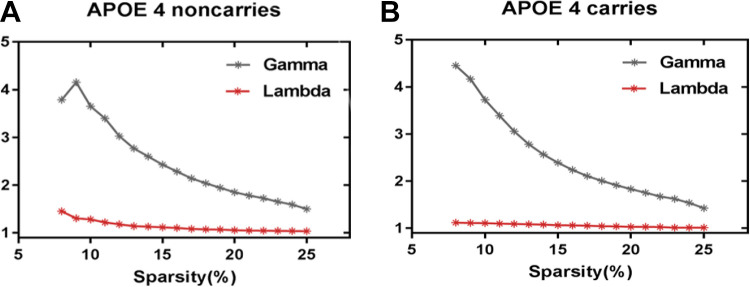
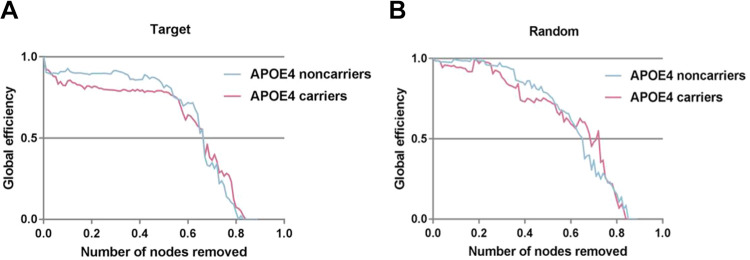
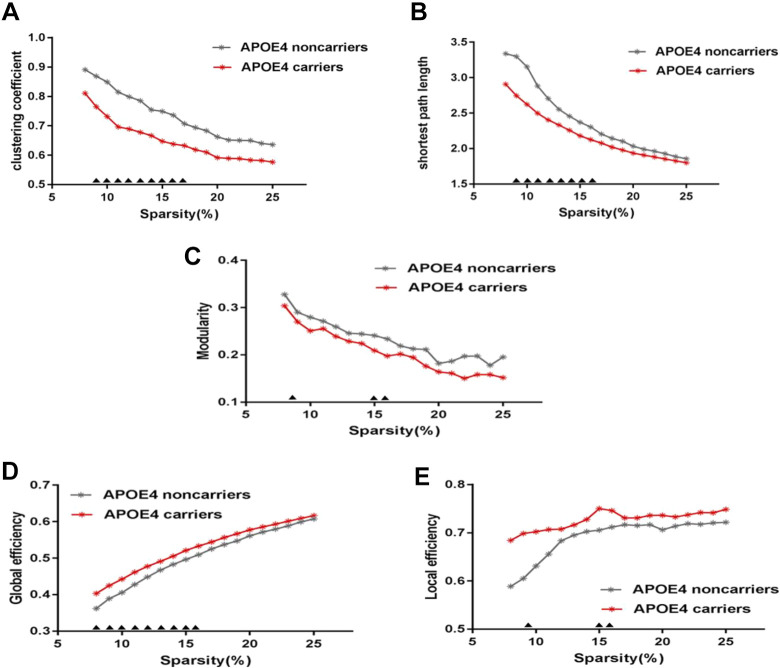
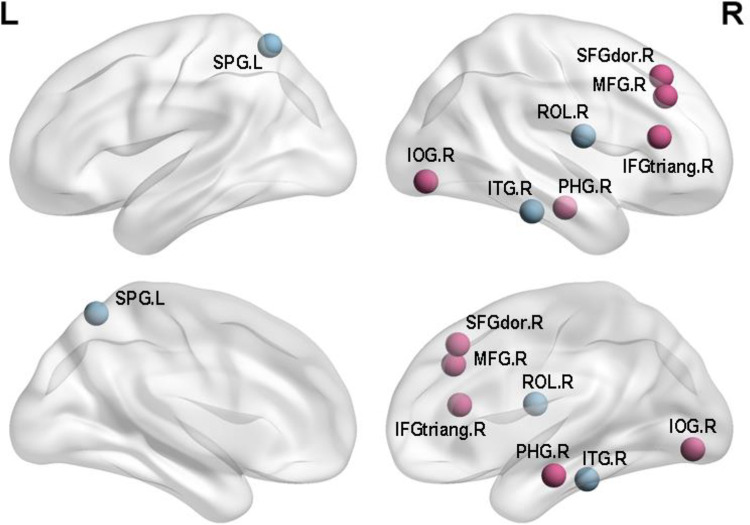
Apolipoprotein E 4 Allele (APOE 4) is an important factors in Mild cognitive impairment (MCI) and Alzheimer's disease(AD). It plays a primary role in abnormal modification of aggregated Tau protein-paired helical filaments Tau (PHF-Tau). In this study, 143 subjects with PHF-Tau PET were divided into 2 groups (APOE 4 carriers and noncarriers). The measurements of the PHF-Tau network properties and resilient were calculated for 2 group networks respectively. APOE 4 carriers group showed significant differences in all the network properties in the results. We also found significant differences of betweenness centrality in some brain regions for APOE 4 carriers. Moreover, the APOE 4 carriers showed less resilient to targeted or random node failure. Our results indicated that the effects of APOE 4 may lead to abnormalities of PHF-Tau protein network. These findings may be particularly helpful in uncovering the pathophysiology underlying the cognitive dysfunction in MCI patients.
载脂蛋白 E4 等位基因(APOE4)是轻度认知障碍(MCI)和阿尔茨海默病(AD)的重要因素。它在 Tau 蛋白聚集的异常修饰中起着主要作用——双螺旋丝 Tau(PHF-Tau)。在这项研究中,143 名 PHF-Tau PET 患者被分为 2 组(APOE4 携带者和非携带者)。分别计算了 2 组网络的 PHF-Tau 网络特性和弹性的测量值。APOE4 携带者组在结果中的所有网络特性上均显示出显著差异。我们还发现,在一些脑区,APOE4 携带者的介数中心度存在显著差异。此外,APOE4 携带者对靶向或随机节点故障的弹性较小。我们的研究结果表明,APOE4 的影响可能导致 PHF-Tau 蛋白网络的异常。这些发现可能有助于揭示 MCI 患者认知功能障碍的病理生理学基础。