Department of Rheumatology and Clinical Immunology, School of Health Sciences, Faculty of Medicine, University of Thessaly, Biopolis, GR-41334 Larissa, Greece.
Unit of Reproductive Endocrinology, 1st Department of Obstetrics and Gynecology, Medical School, Faculty of Health Sciences, Aristotle University of Thessaloniki, GR-56429 Thessaloniki, Greece.
Nutrients. 2020 Nov 27;12(12):3648. doi: 10.3390/nu12123648.
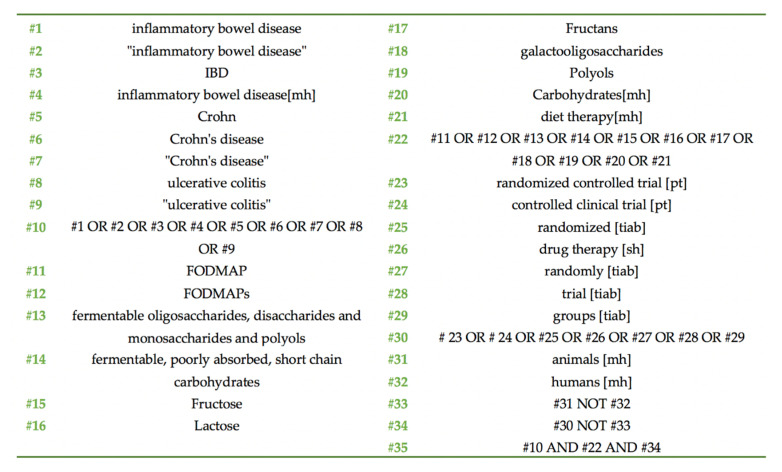
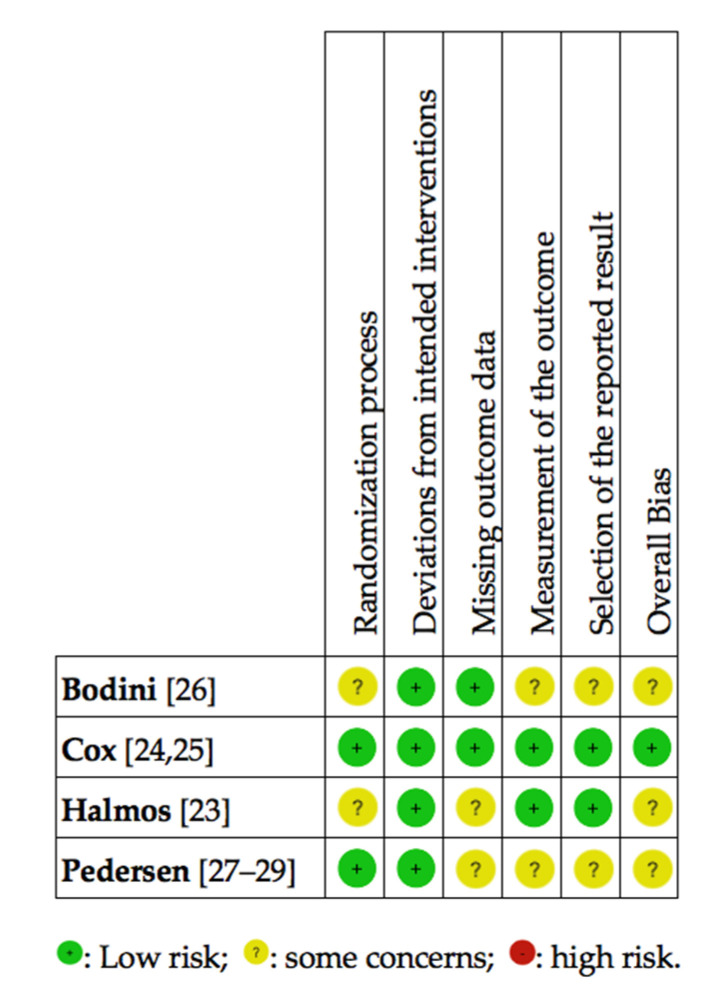
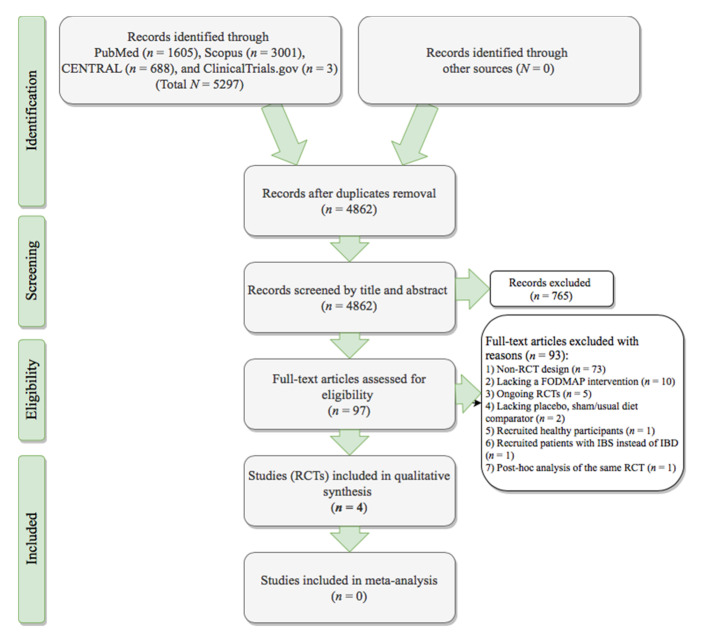
A low FODMAP diet (LFD) has been hypothesized to relieve symptoms of functional gastrointestinal disorders (FGD) in patients with inflammatory bowel disease (IBD). The aim of the study was to systematically review the literature for randomized controlled trials (RCTs) assessing the effectiveness of the LFD in patients with IBD and FGD. Four databases were searched, but a meta-analysis was not performed due to methodological and outcomes heterogeneity. Four RCTs fulfilled the criteria, with three having some concerns in their risk of bias assessment. All interventions compared the LFDs against a "typical" or sham diet, spanning in duration from 21 days to 6 weeks. Quality of life was improved in two RCTs, while revealing inconsistent findings in the third trial, based on different assessment tools. The fecal assays revealed non-significant findings for most variables (fecal weight, pH, water content, gene count, and gut transit time) and inconsistent findings concerning stool frequency and short-chain fatty acids concentration. Levels of fecal calprotectin, CRP, or T-cell phenotype did not differ between intervention and comparator arms. Two RCTs reported a reduction in abdominal pain, while results concerning pain duration and bloating were inconsistent. In one trial, energy intake was considerably reduced among LFD participants. Regarding gut microbiota, no differences were noted. A considerable degree of methodological and outcome heterogeneity was observed, paired with results inconsistency. The available data are not sufficient to justify the claim that an LFD induces relief of FGD symptoms, although it may pave the way to a placebo response.
低 FODMAP 饮食(LFD)被认为可以缓解炎症性肠病(IBD)患者的功能性胃肠道疾病(FGD)症状。本研究旨在系统地综述评估 LFD 对 IBD 合并 FGD 患者有效性的随机对照试验(RCT)的文献。检索了四个数据库,但由于方法学和结局异质性,未进行荟萃分析。四项 RCT 符合标准,但三项 RCT 的偏倚风险评估存在一些问题。所有干预措施均将 LFD 与“典型”或模拟饮食进行比较,持续时间从 21 天到 6 周不等。两项 RCT 改善了生活质量,而第三个 RCT 则基于不同的评估工具,结果不一致。粪便检测显示大多数变量(粪便重量、pH 值、水分含量、基因计数和肠道转运时间)无显著差异,粪便频率和短链脂肪酸浓度的结果不一致。干预组和对照组之间粪便钙卫蛋白、CRP 或 T 细胞表型水平无差异。两项 RCT 报告腹部疼痛减轻,而疼痛持续时间和腹胀的结果不一致。在一项试验中,LFD 组的能量摄入显著减少。关于肠道微生物群,没有差异。观察到相当程度的方法学和结局异质性,结果不一致。现有数据不足以证明 LFD 能缓解 FGD 症状,但可能为安慰剂反应铺平道路。