Essa Marwa Labib, El-Kemary Maged Abdeltawab, Ebrahem Saied Eman Mohammed, Leporatti Stefano, Nemany Hanafy Nemany Abdelhamid
Group of Nanomedicine, Institute of Nanoscience and Nanotechnology, Kafrelsheikh University, KafrElSheikh 33516, Egypt.
Pharos University, Alexandria 21648, Egypt.
Materials (Basel). 2020 Nov 27;13(23):5397. doi: 10.3390/ma13235397.
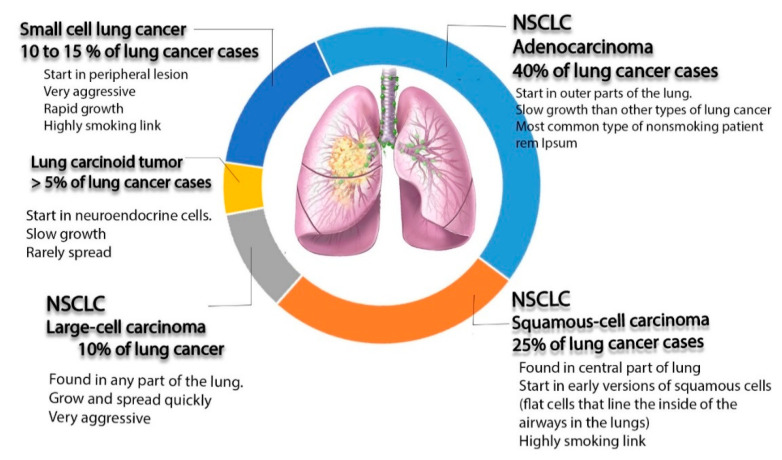
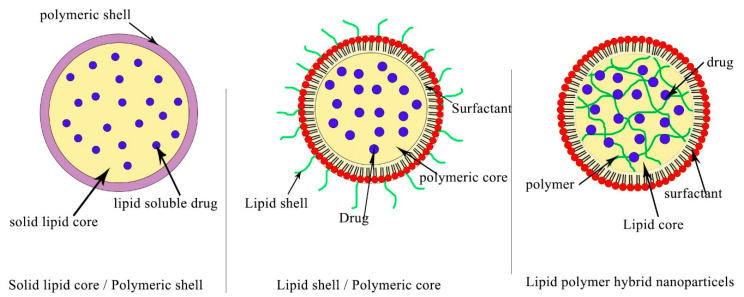
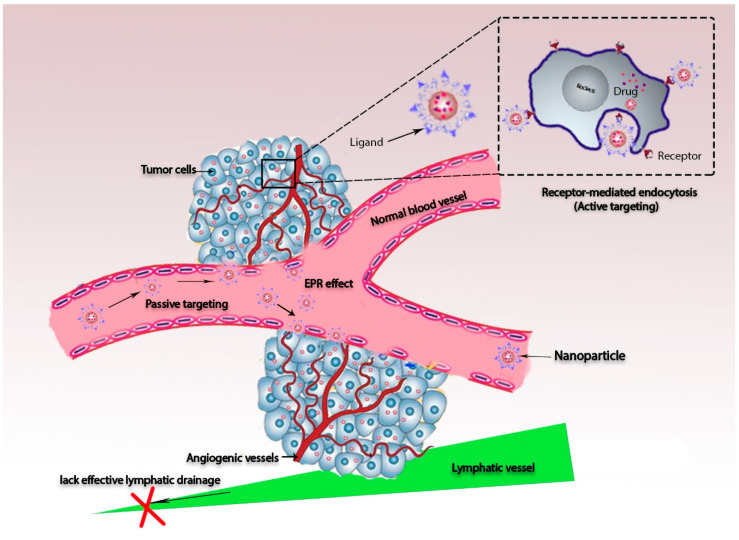
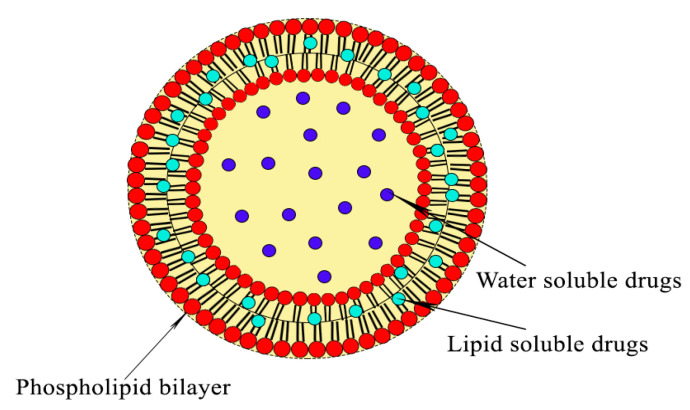
The introduction of nanoparticles made of polymers, protein, and lipids as drug delivery systems has led to significant progress in modern medicine. Since the application of nanoparticles in medicine involves the use of biodegradable, nanosized materials to deliver a certain amount of chemotherapeutic agents into a tumor site, this leads to the accumulation of these nanoencapsulated agents in the right region. This strategy minimizes the stress and toxicity generated by chemotherapeutic agents on healthy cells. Therefore, encapsulating chemotherapeutic agents have less cytotoxicity than non-encapsulation ones. The purpose of this review is to address how nanoparticles made of polymers and lipids can successfully be delivered into lung cancer tumors. Lung cancer types and their anatomies are first introduced to provide an overview of the general lung cancer structure. Then, the rationale and strategy applied for the use of nanoparticle biotechnology in cancer therapies are discussed, focusing on pulmonary drug delivery systems made from liposomes, lipid nanoparticles, and polymeric nanoparticles. Many nanoparticles fabricated in the shape of liposomes, lipid nanoparticles, and polymeric nanoparticles are summarized in our review, with a focus on the encapsulated chemotherapeutic molecules, ligand-receptor attachments, and their targets. Afterwards, we highlight the nanoparticles that have demonstrated promising results and have been delivered into clinical trials. Recent clinical trials that were done for successful nanoparticles are summarized in our review.
将由聚合物、蛋白质和脂质制成的纳米颗粒作为药物递送系统引入现代医学后取得了重大进展。由于纳米颗粒在医学中的应用涉及使用可生物降解的纳米材料将一定量的化疗药物递送至肿瘤部位,这使得这些纳米封装药物在正确的区域积累。这种策略将化疗药物对健康细胞产生的压力和毒性降至最低。因此,封装化疗药物的细胞毒性比未封装的化疗药物小。本综述的目的是探讨由聚合物和脂质制成的纳米颗粒如何成功递送至肺癌肿瘤。首先介绍肺癌类型及其解剖结构,以概述肺癌的总体结构。然后,讨论在癌症治疗中使用纳米颗粒生物技术的基本原理和策略,重点是由脂质体、脂质纳米颗粒和聚合物纳米颗粒制成的肺部药物递送系统。我们的综述总结了许多制成脂质体、脂质纳米颗粒和聚合物纳米颗粒形状的纳米颗粒,重点是封装的化疗分子、配体 - 受体连接及其靶点。之后,我们强调已取得有前景的结果并已进入临床试验的纳米颗粒。我们的综述总结了近期针对成功纳米颗粒进行的临床试验。