Verma Vandna, Singh Devendra, Kh Reeta
Department of Pharmacology, AIIMS, New Delhi 110029, India.
Brain Sci. 2020 Nov 30;10(12):923. doi: 10.3390/brainsci10120923.
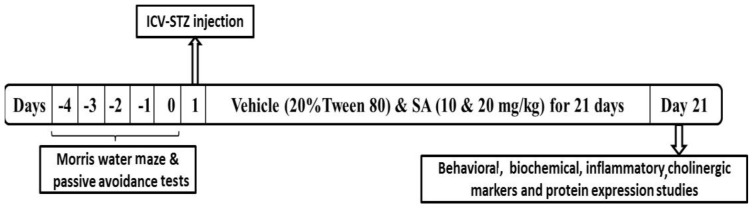
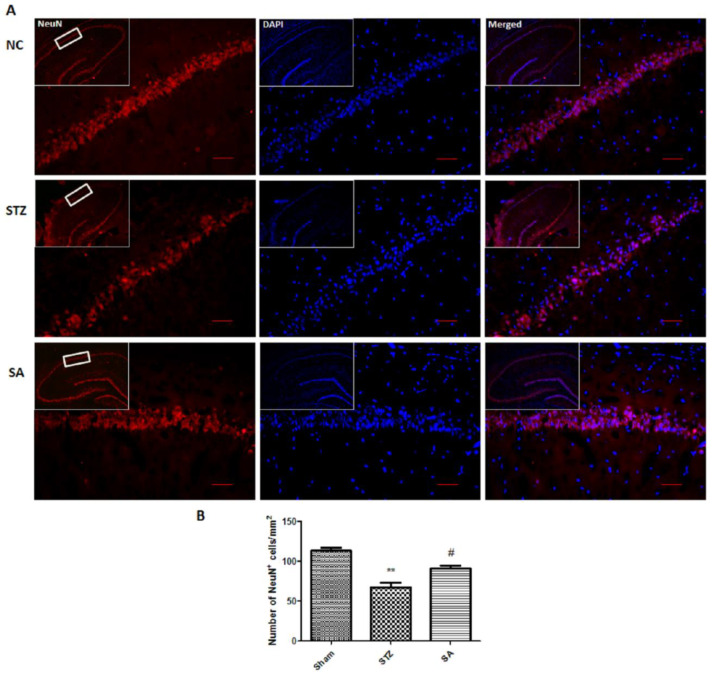
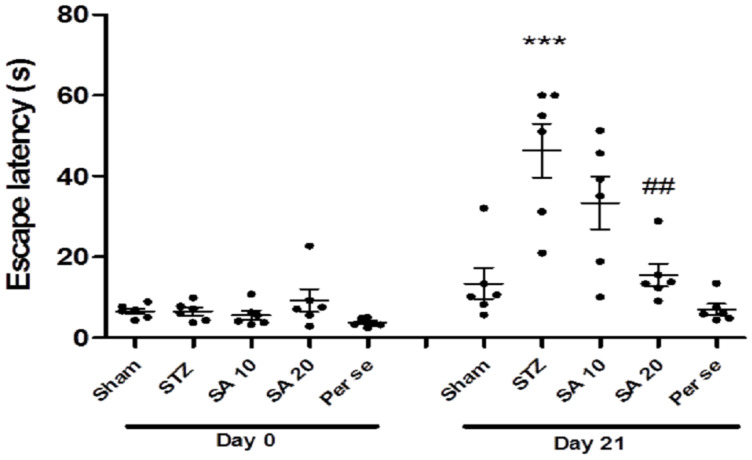
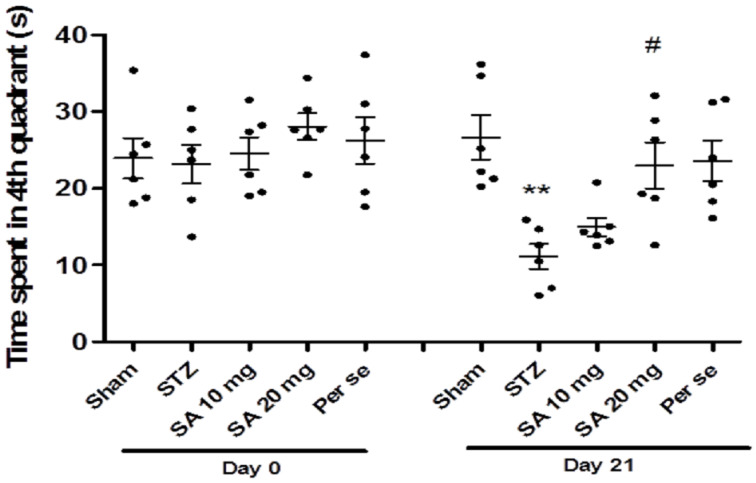
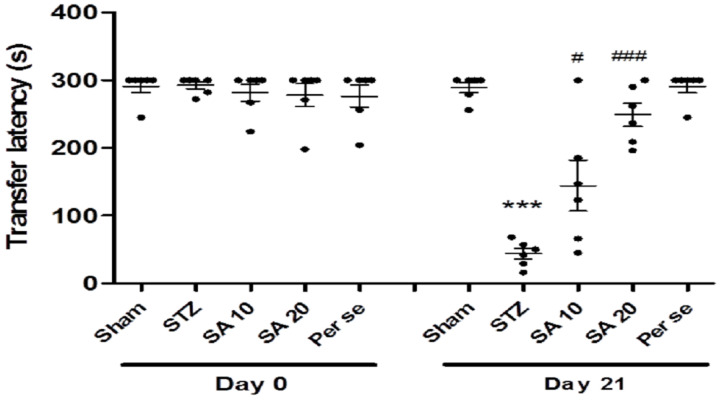
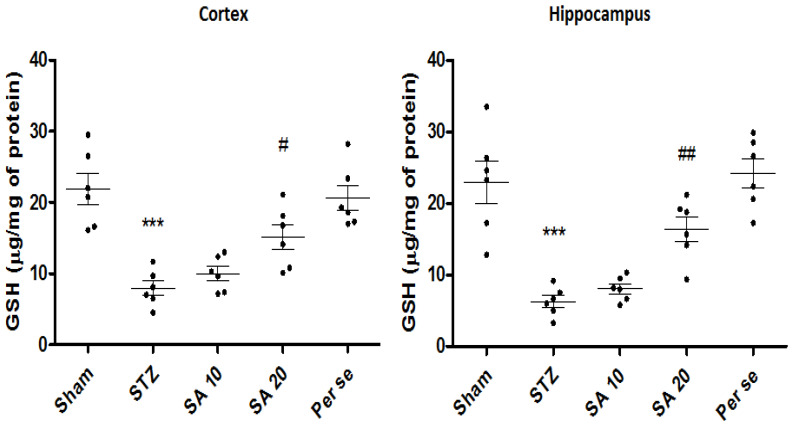
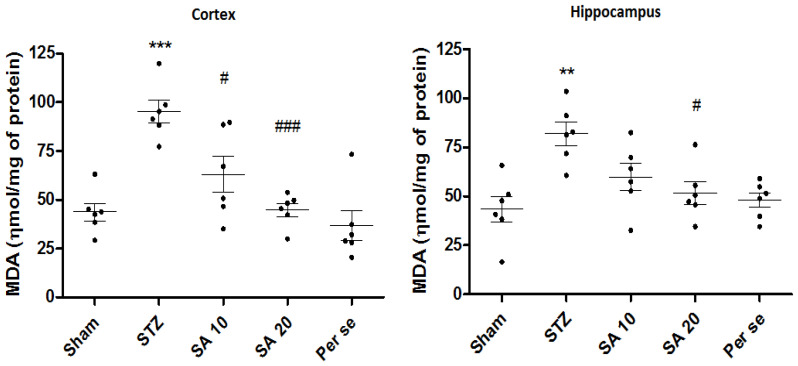
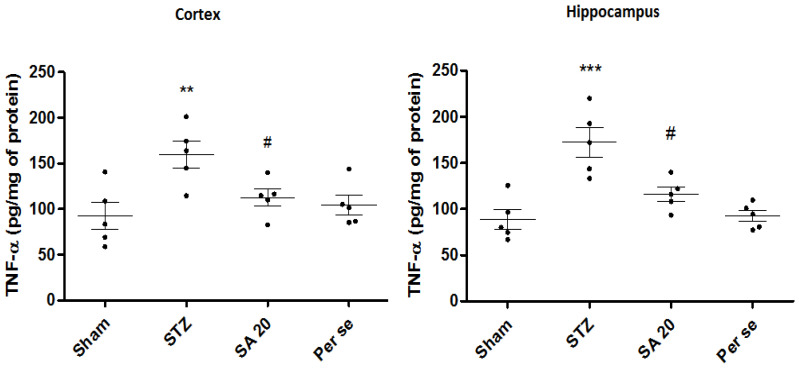
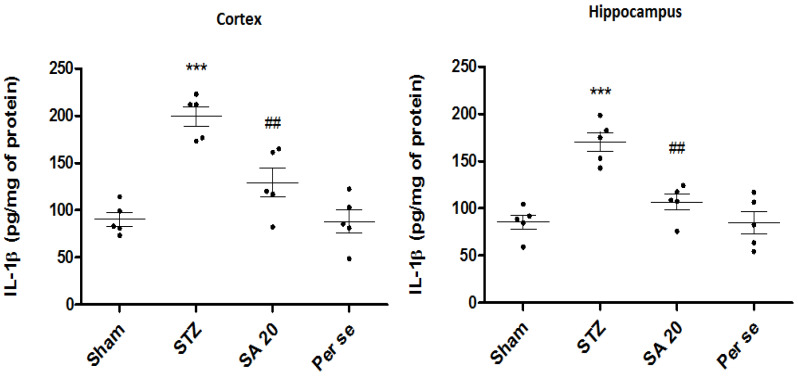
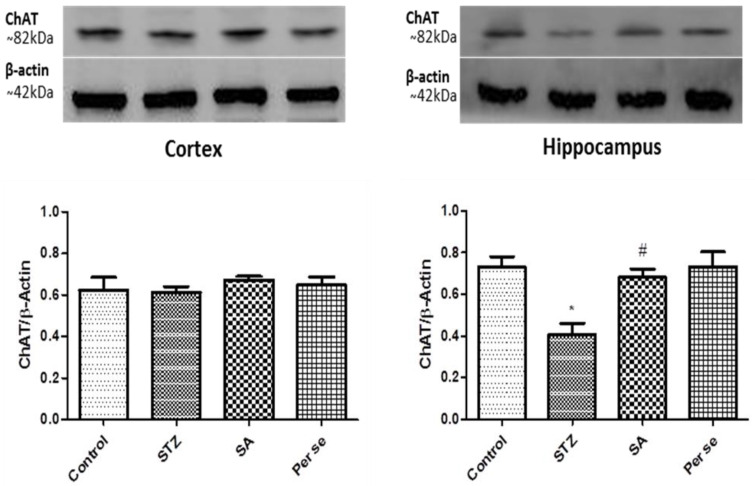
The role of oxidative stress, neuro-inflammation and cholinergic dysfunction is already established in the development of Alzheimer's disease (AD). Sinapic acid (SA), a hydroxylcinnamic acid derivative, has shown neuro-protective effects. The current study evaluates the neuro-protective potential of SA in intracerebroventricular streptozotocin (ICV-STZ) induced cognitive impairment in rats. Male Wistar rats were bilaterally injected with ICV-STZ. SA was administered intragastrically once daily for three weeks. Rats were divided into sham, ICV-STZ, STZ + SA (10 mg/kg), STZ + SA (20 mg/kg) and SA per se (20 mg/kg). Behavioral tests were assessed on day 0 and 21 days after STZ. Later, rats were sacrificed for biochemical parameters, pro-inflammatory cytokines, choline acetyltransferase (ChAT) expression and neuronal loss in the CA1 region of the hippocampus. The results showed that SA 20 mg/kg significantly ( < 0.05) improved cognitive impairment as assessed by Morris water maze and passive avoidance tests. SA 20 mg/kg reinstated the altered levels of GSH, MDA, TNF-α and IL-1β in the cortex and hippocampus. STZ-induced decreased expression of ChAT and neuronal loss were also significantly ( < 0.05) improved with SA. Our results showed that SA exhibits neuro-protection against ICV-STZ induced oxidative stress, neuro-inflammation, cholinergic dysfunction and neuronal loss, suggesting its potential in improving learning and memory in patients of AD.
氧化应激、神经炎症和胆碱能功能障碍在阿尔茨海默病(AD)的发展过程中的作用已经明确。芥子酸(SA),一种羟基肉桂酸衍生物,已显示出神经保护作用。本研究评估了SA对脑室内注射链脲佐菌素(ICV-STZ)诱导的大鼠认知障碍的神经保护潜力。雄性Wistar大鼠双侧注射ICV-STZ。SA每天一次灌胃给药,持续三周。大鼠分为假手术组、ICV-STZ组、STZ + SA(10 mg/kg)组、STZ + SA(20 mg/kg)组和SA单独给药(20 mg/kg)组。在STZ注射后第0天和第21天进行行为测试。随后,处死大鼠以检测生化参数、促炎细胞因子、胆碱乙酰转移酶(ChAT)表达以及海马CA1区的神经元损失。结果表明,通过莫里斯水迷宫和被动回避试验评估,20 mg/kg的SA显著(<0.05)改善了认知障碍。20 mg/kg的SA恢复了皮质和海马中谷胱甘肽(GSH)、丙二醛(MDA)、肿瘤坏死因子-α(TNF-α)和白细胞介素-1β(IL-1β)的改变水平。SA也显著(<0.05)改善了STZ诱导的ChAT表达降低和神经元损失。我们的结果表明,SA对ICV-STZ诱导的氧化应激、神经炎症、胆碱能功能障碍和神经元损失具有神经保护作用,表明其在改善AD患者学习和记忆方面的潜力。