Osara Jude A, Bryant Michael D
Mechanical Engineering Department, The University of Texas at Austin, Austin, TX 78712, USA.
Entropy (Basel). 2019 Jul 12;21(7):685. doi: 10.3390/e21070685.
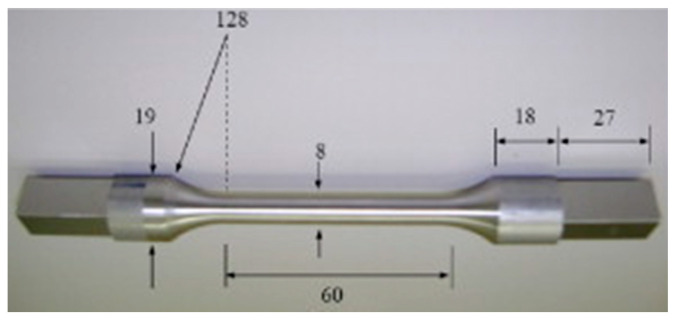
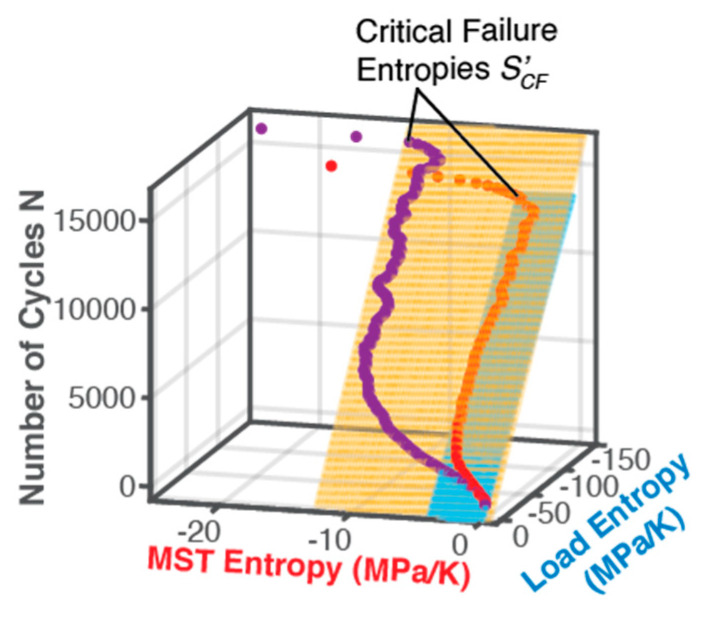
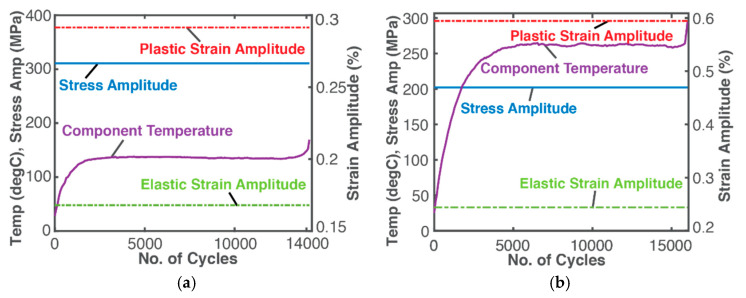
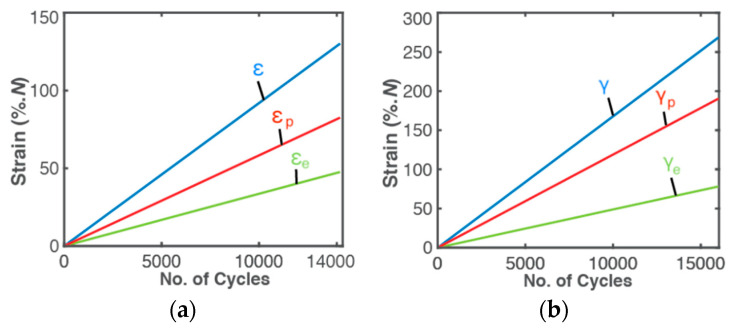
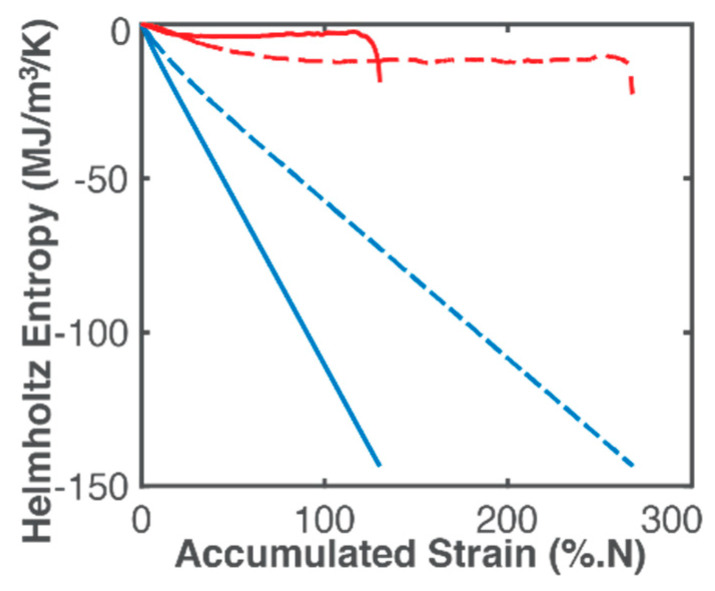
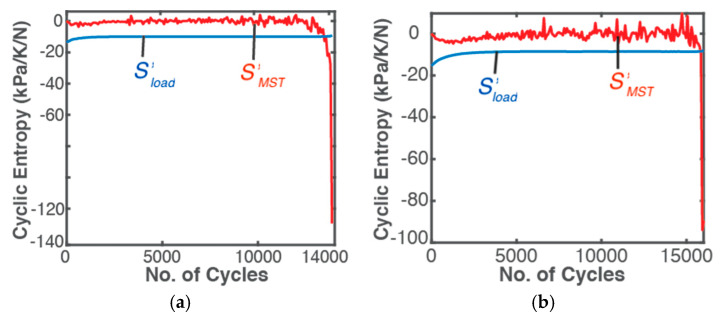
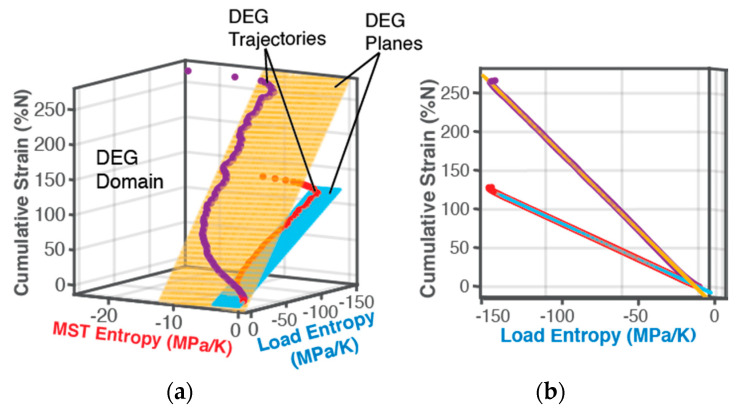
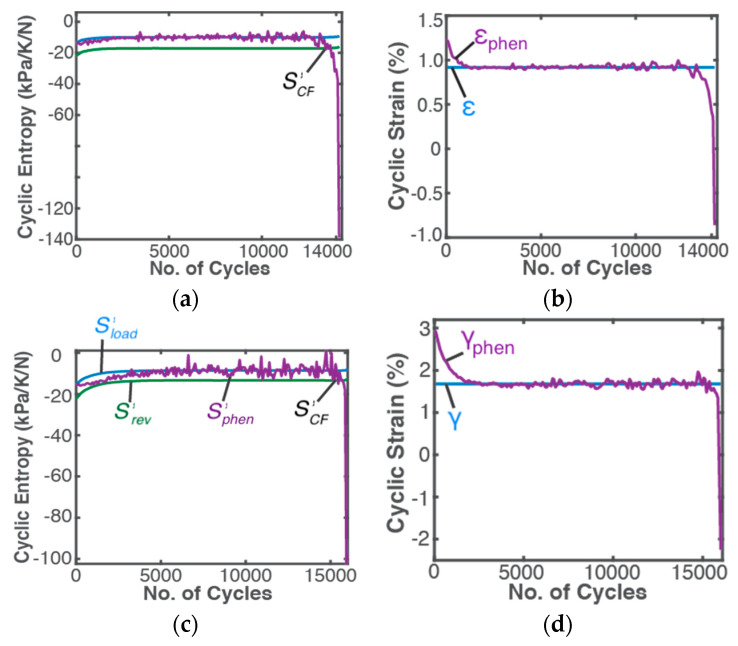
Formulated is a new instantaneous fatigue model and predictor based on ab initio irreversible thermodynamics. The method combines the first and second laws of thermodynamics with the Helmholtz free energy, then applies the result to the degradation-entropy generation theorem to relate a desired fatigue measure-stress, strain, cycles or time to failure-to the loads, materials and environmental conditions (including temperature and heat) via the irreversible entropies generated by the dissipative processes that degrade the fatigued material. The formulations are then verified with fatigue data from the literature, for a steel shaft under bending and torsion. A near 100% agreement between the fatigue model and measurements is achieved. The model also introduces new material and design parameters to characterize fatigue.
基于从头算不可逆热力学建立了一种新的瞬时疲劳模型和预测器。该方法将热力学第一定律和第二定律与亥姆霍兹自由能相结合,然后将结果应用于退化-熵产生定理,通过使疲劳材料退化的耗散过程产生的不可逆熵,将所需的疲劳量度——应力、应变、循环次数或失效时间——与载荷、材料和环境条件(包括温度和热量)联系起来。然后,利用文献中关于钢轴在弯曲和扭转情况下的疲劳数据对这些公式进行了验证。疲劳模型与测量结果之间的一致性接近100%。该模型还引入了新的材料和设计参数来表征疲劳。