Shao Liu-Jia-Zi, Zou Yi, Liu Fu-Kun, Wan Lei, Liu Shao-Hua, Hong Fang-Xiao, Xue Fu-Shan
Department of Anesthesiology, Beijing Friendship Hospital, Capital Medical University, Beijing 100050, China.
World J Gastroenterol. 2020 Nov 21;26(43):6867-6879. doi: 10.3748/wjg.v26.i43.6867.
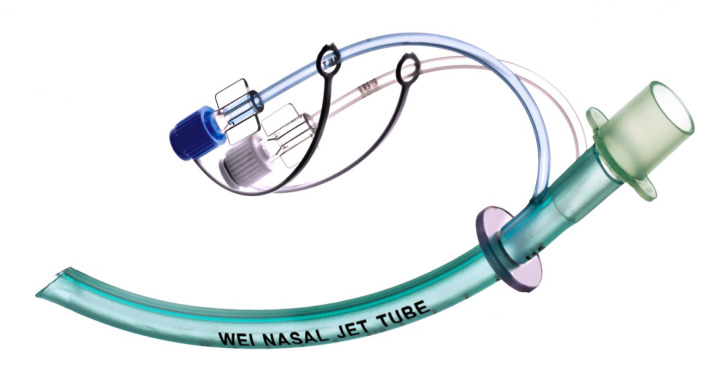
Hypoxemia due to respiratory depression and airway obstruction during upper gastrointestinal endoscopy with sedation is a common concern. The Wei nasal jet tube (WNJT) is a new nasopharyngeal airway with the ability to provide supraglottic jet ventilation and oxygen insufflation its built-in wall channel. The available evidence indicates that with a low oxygen flow, compared with nasal cannula, the WNJT does not decrease the occurrence of hypoxemia during upper gastrointestinal endoscopy with propofol sedation. To date, there has been no study assessing the performance of WNJT for supplemental oxygen during upper gastrointestinal endoscopy with sedation when a moderate oxygen flow is used.
To determine whether the WNJT performs better than the nasal prongs for the prevention of hypoxemia during gastroscopy with propofol mono-sedation when a moderate oxygen flow is provided in patients with a normal body mass index.
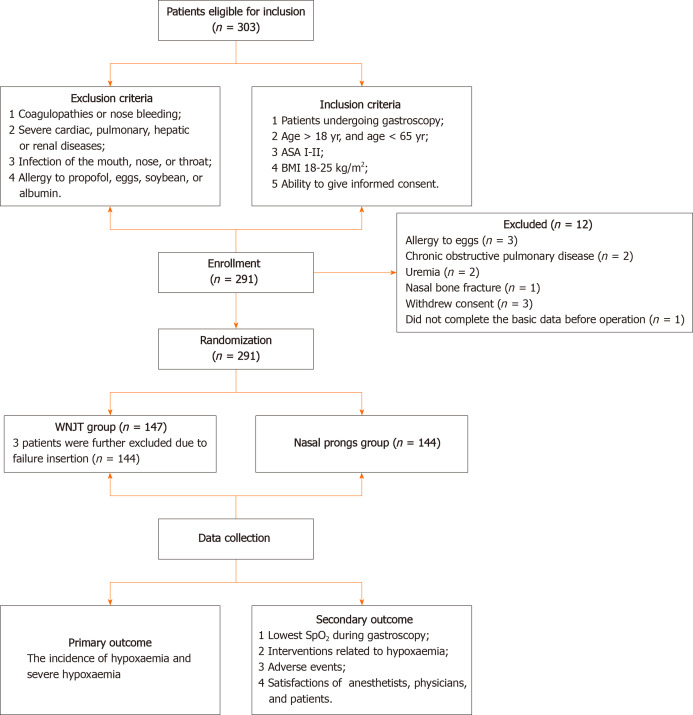
This study was performed in 291 patients undergoing elective gastroscopy with propofol mono-sedation. Patients were randomized into one of two groups to receive either the WNJT (WNJT group, = 147) or the nasal cannula (nasal cannula group, = 144) for supplemental oxygen at a 5-L/min flow during gastroscopy. The lowest SpO during gastroscopy was recorded. The primary endpoint was the incidence of hypoxemia or severe hypoxemia during gastroscopy.
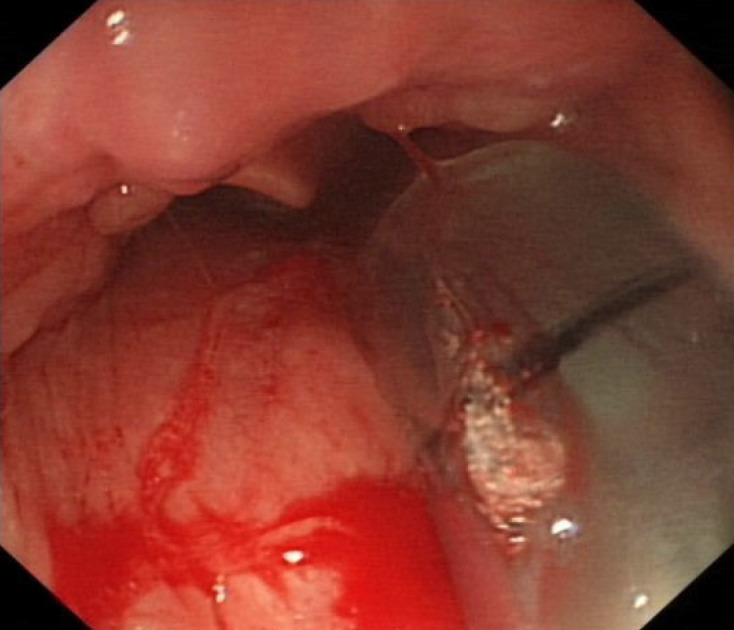
The total incidence of hypoxemia and severe hypoxemia during gastroscopy was significantly decreased in the WNJT group compared with the nasal cannula group ( = 0.000). The lowest median SpO during gastroscopy was significantly higher (98%; interquartile range, 97-99) in the WNJT group than in the nasal cannula group (96%; interquartile range, 93-98). Epistaxis by device insertion in the WNJT group occurred in 7 patients but stopped naturally without any treatment. The two groups were comparable in terms of the satisfaction of physicians, anesthetists and patients.
With a moderate oxygen flow, the WNJT is more effective for the prevention of hypoxemia during gastroscopy with propofol mono-sedation compared with nasal prongs, but causing slight epistaxis in a few patients.
在使用镇静剂的上消化道内镜检查期间,因呼吸抑制和气道阻塞导致的低氧血症是一个常见问题。魏氏鼻喷射管(WNJT)是一种新型鼻咽气道,能够通过其内置的壁通道提供声门上喷射通气和氧气吹入。现有证据表明,在低氧流量情况下,与鼻导管相比,在使用丙泊酚镇静的上消化道内镜检查期间,WNJT不会降低低氧血症的发生率。迄今为止,尚无研究评估在使用中度氧流量的情况下,WNJT在使用镇静剂的上消化道内镜检查期间用于补充氧气的性能。
确定在体重指数正常的患者中,当提供中度氧流量时,在丙泊酚单药镇静的胃镜检查期间,WNJT在预防低氧血症方面是否比鼻氧管表现更好。
本研究纳入了291例行丙泊酚单药镇静的择期胃镜检查患者。患者被随机分为两组,在胃镜检查期间分别接受WNJT(WNJT组,n = 147)或鼻导管(鼻导管组,n = 144)以5 L/分钟的流量补充氧气。记录胃镜检查期间的最低SpO₂。主要终点是胃镜检查期间低氧血症或严重低氧血症的发生率。
与鼻导管组相比,WNJT组胃镜检查期间低氧血症和严重低氧血症的总发生率显著降低(P = 0.000)。WNJT组胃镜检查期间的最低中位数SpO₂显著高于鼻导管组(98%;四分位间距,97 - 99)(96%;四分位间距,93 - 98)。WNJT组有7例患者因插入装置而发生鼻出血,但未经任何治疗自然停止。两组在医生、麻醉师和患者的满意度方面具有可比性。
在中度氧流量情况下,与鼻氧管相比,WNJT在丙泊酚单药镇静的胃镜检查期间预防低氧血症更有效,但会导致少数患者出现轻微鼻出血。