Department of Clinical Pharmacy and Pharmacology, University of Groningen, University Medical Center Groningen (UMCG), Groningen, The Netherlands.
Groningen Research Institute of Pharmacy, Unit of PharmacoTherapy, -Epidemiology and -Economics, University of Groningen, Groningen, The Netherlands.
Br J Clin Pharmacol. 2021 Jul;87(7):2807-2817. doi: 10.1111/bcp.14685. Epub 2020 Dec 18.
Polypharmacy is common in people with diabetes and is associated with the use of potentially inappropriate medication (PIM). This study aimed to assess trends in the prevalence of polypharmacy and PIM in older and middle-aged people with diabetes.
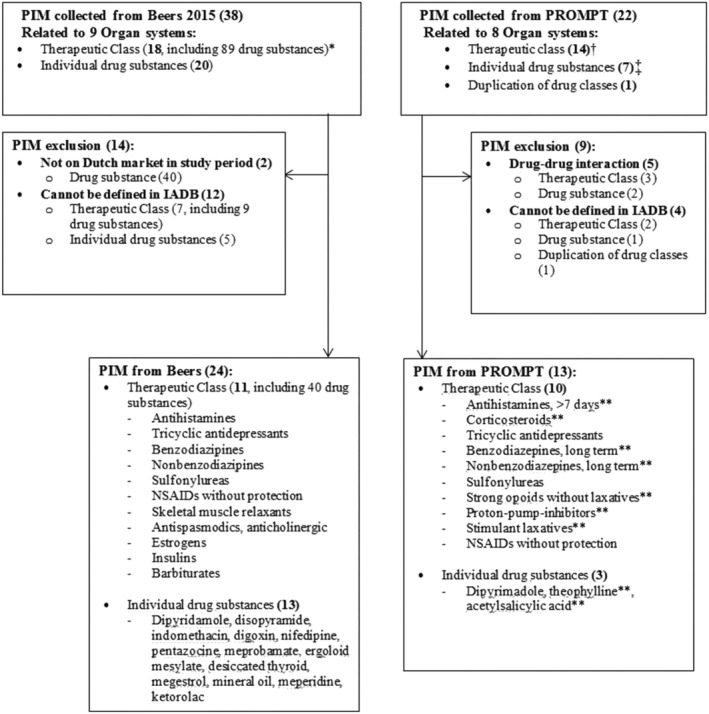
A repeated cross-sectional study using the University Groningen IADB.nl prescription database was conducted. All people aged 45 years and over who were treated for diabetes registered in the period 2012-2016 were included. Polypharmacy was assessed for three age groups. PIMs were assessed using Beers criteria for people ≥65 years old, and PRescribing Optimally in Middle-aged People's Treatments (PROMPT) criteria for 45-64 years old. Chi-square tests and regression analysis were applied.
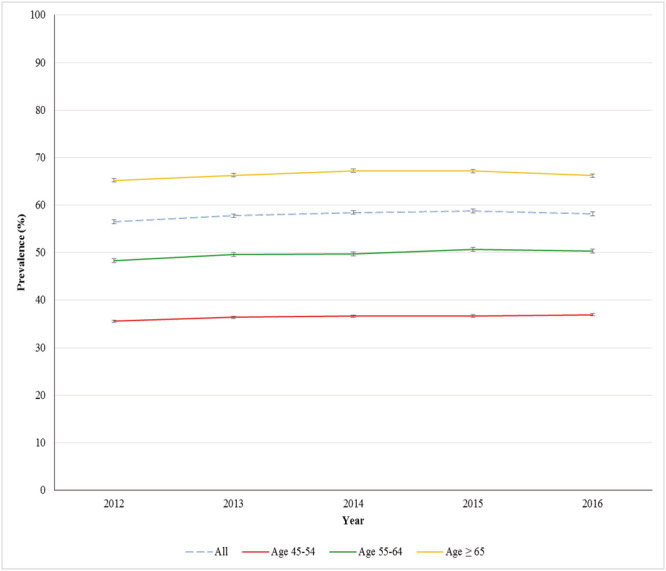
The prevalence of polypharmacy increased significantly in all age groups in the study period. In 2016, the prevalence of polypharmacy was 36.9% in patients aged 45-54 years, 50.3% in those aged 55-64 years, and 66.2% in those aged ≥65 years. The prevalence of older people with at least one PIM decreased by 3.1%, while in the middle-aged group this prevalence increased by 0.9% from 2012 to 2016. The most common PIMs in both age groups were the use of long-term high-dose proton pump inhibitors, benzodiazepines and strong opioids without laxatives. Of those, only benzodiazepines showed a decreasing trend.
Polypharmacy increased in older and middle-aged people with diabetes. While the prevalence of PIM decreased over time in older age, this trend was not observed in middle-aged people with diabetes. Efforts are needed to decrease the use of PIMs in populations already burdened with many drugs, notably at middle age.
在糖尿病患者中,同时使用多种药物(polypharmacy)很常见,且与潜在不适当药物(potentially inappropriate medication,PIM)的使用有关。本研究旨在评估老年和中年糖尿病患者中同时使用多种药物和潜在不适当药物的流行趋势。
本研究采用重复的横断面研究,使用格罗宁根大学 IADB.nl 处方数据库。纳入 2012-2016 年期间登记的所有年龄在 45 岁及以上、接受糖尿病治疗的患者。对三个年龄组进行同时使用多种药物的评估。对于年龄≥65 岁的患者,使用 Beers 标准评估潜在不适当药物,对于 45-64 岁的患者,使用 PRescribing Optimally in Middle-aged People's Treatments(PROMPT)标准评估潜在不适当药物。应用卡方检验和回归分析。
在研究期间,所有年龄组的同时使用多种药物的患病率均显著增加。2016 年,45-54 岁患者的同时使用多种药物患病率为 36.9%,55-64 岁患者为 50.3%,≥65 岁患者为 66.2%。≥65 岁人群中至少有一种潜在不适当药物的患者比例下降了 3.1%,而在中年人群中,该比例从 2012 年到 2016 年增加了 0.9%。两个年龄组中最常见的潜在不适当药物均为长期大剂量质子泵抑制剂、苯二氮䓬类和无泻药的强阿片类药物。其中,只有苯二氮䓬类药物呈下降趋势。
老年和中年糖尿病患者的同时使用多种药物的情况增加。虽然≥65 岁患者的潜在不适当药物的患病率随着时间的推移而下降,但在中年糖尿病患者中未观察到这种趋势。需要努力减少已经使用多种药物的人群(尤其是中年人群)中潜在不适当药物的使用。